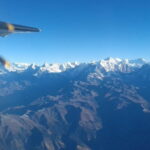
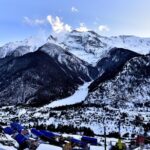
Everest in a few hours beats any trek. I love the helicopter views—you get big, sweeping glimpses of the Khumbu without days of hiking. I also like the chance to step onto Kala Patthar for short photo time at extreme altitude.
There is one trade-off to think about: the whole plan depends on weather and flight timing. If skies are poor, operations can change fast, which can mean a different date or a refund.
In This Review
- Key Highlights That Matter
- Why Fly to Everest Base Camp Instead of Trekking
- Early Mornings in Kathmandu: The Plan Starts at 5:45
- Lukla Airport: Tenzing Hillary Comes With Real Gravitas
- The Helicopter Route: Everest Views, Plus the Pheriche Shuttle Detail
- Everest Base Camp at 5,364m: What You Actually Get
- Kala Patthar Landing: Short Stop, Big Photo Payoff
- Everest View Hotel Breakfast: The Altitude Reset
- Service Quality: Guides and Teams That People Credit
- Price and Value: What $1,800 Covers (and What Adds Up)
- Altitude Reality Check: Your Gear and Limits Matter
- Duration and Timing: Why the Day Feels Tight
- Who This Heli Tour Fits Best
- Should You Book This Everest Heli Tour?
- FAQ
- What time does the tour start?
- Where is the meeting point?
- How long is the helicopter tour?
- How many people are on the tour at once?
- Do you fly to Lukla and stop there?
- Is breakfast included?
- What extra fees might I need to pay on top of the tour price?
- What happens if weather is bad?
Key Highlights That Matter
- Small group size (max 5 people) keeps the experience feeling more personal.
- A Kala Patthar landing for 10–15 minutes gives you real on-the-ground photos, not just windows.
- Pheriche shuttle logic handles the altitude limits for landing/takeoff with heavier passenger loads.
- Breakfast at Hotel Everest View puts you at a high viewpoint while you refuel for the return.
- Lukla timing and routes are built around getting you from Kathmandu to the Everest zone quickly.
Why Fly to Everest Base Camp Instead of Trekking
This tour is for people who want the Everest buzz without paying in days on the trail. You’re not trying to “solve” Everest with stamina. You’re buying a few tight hours of unforgettable views, plus the odd thrill of doing it by rotor instead of boots.
What makes the experience work is that you’re seeing multiple Everest touchpoints in one loop: Lukla, the Everest Base Camp area, Kala Patthar, and then the Everest View Hotel for breakfast. It’s a fast sampler platter of the region’s defining sights, with just enough time at the right places to make photos and memories feel real.
You can also read our reviews of more tours and experiences in Kathmandu.
Early Mornings in Kathmandu: The Plan Starts at 5:45
The day begins early—your start time is 5:45 am, with pickup from your Kathmandu hotel and transfer to Tribhuvan International Airport. Your schedule stretches across the airport formalities, then the first flight leg. It’s not a relaxed morning, but it is efficient.
One practical upside: you’re not left to figure out transport, airport logistics, or timing. Pickup and drop by tourist vehicle are included, and you get a mobile ticket. That matters a lot when the day is built around catching a specific window of flying.
Lukla Airport: Tenzing Hillary Comes With Real Gravitas
You fly to Lukla, also known as Tenzing Hillary. Lukla is commonly described as one of the deadliest airports in the world, and even if you treat that line as hyperbole, you should still respect what it implies: weather, wind, and mountain-air conditions matter here.
In this trip, Lukla is more than a dot on a map. It’s your staging point. You’ll have a short stop there, and the timing is set so the rest of your morning can continue toward the Everest zone without wasting time.
The Helicopter Route: Everest Views, Plus the Pheriche Shuttle Detail
Here’s the operational detail I really appreciate: the plan accounts for altitude limits. The helicopters can’t land and take off with more than three passengers above 4,500 meters, so if your group is full (up to 5 people), you may split at Pheriche into two smaller shuttles—like 3 and 2—then recombine into the rest of the flight pattern.
That’s not just trivia. It’s what keeps the route realistic. At high altitude, aircraft and loading rules get strict fast. Knowing the tour has a workaround tells you this operator is thinking about how to move people safely through the constraints of the mountains.
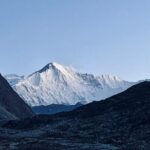
During the middle of the flight you’ll be aimed toward the Everest Base Camp area and Kala Patthar (often referenced around 5,500m). Even when you’re not landing, the helicopter approach gives you sweeping views that are hard to recreate any other way.
Everest Base Camp at 5,364m: What You Actually Get
The Everest Base Camp stop is listed at about 5,364m, which signals the kind of altitude your day is operating at. In a helicopter format, you usually won’t experience the base camp the way trekkers do with long walks, overnight stays, and time to absorb the small details.
Instead, you get a high-impact version: pass through the area, see the scale, and get the visual context—the ice formations, the geometry of the Khumbu, and the feeling of how enormous this terrain is. It’s the “you are here” perspective, without the slow build.
The value here is especially strong if your goal is photos and awe rather than foot travel. You also avoid the big energy tax that many trekkers spend just getting set up for the region.
Kala Patthar Landing: Short Stop, Big Photo Payoff
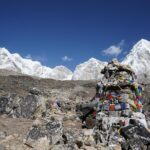
Kala Patthar is where the tour gives you something most people can’t fake: actual time on the ground. You’ll step out for 10–15 minutes for photo ops.
That time box is short on purpose. At altitude, every minute outside counts. The wind can bite, and you’ll want to move efficiently—camera ready, eyes up, and not wasting time digging for gear.
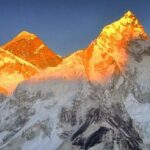
If your main reason for booking is that famous view of Everest, this is the moment that usually justifies the price. You’ll see the peak from a dramatic angle, and stepping out (even briefly) makes the photos feel earned.
Everest View Hotel Breakfast: The Altitude Reset
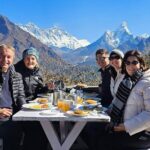
After the high parts of the morning, you’ll head to Hotel Everest View for breakfast at around 3,880m (12,730 ft). The stop is longer—about 1–2 hours—so you’re not just grabbing food and disappearing.
Two things make this breakfast stop more useful than it sounds:
- It gives you a planned break while you’re still high up, so the day doesn’t feel like one long sprint.
- It adds a steady viewpoint moment. You’re eating while you look at big glacier-and-peak scenery rather than just watching through a window.
One note to double-check: the package details say breakfast is included via the Everest View Hotel stop, but the pricing section also lists breakfast as not included. That contradiction is worth clarifying before you go, so you don’t end up surprised by what is or isn’t covered.
Service Quality: Guides and Teams That People Credit
This tour stands or falls on coordination. In past experiences shared by customers, the organization and guiding got repeated praise, with people naming guides such as Madan, Raj, Narayan, Ram, Kalika, and Nimesh. Porters led by Kaji also come up for their support.
What I take from that pattern is practical: your day has a lot of moving pieces—airport transfer, early flights, landing constraints at altitude, and the return loop. When a guide team is sharp, you feel less like a passenger in chaos and more like you’re following a plan.
It also matters for families. One write-up specifically mentions a group that included kids and a 70-year-old mother. That doesn’t mean every person will be comfortable with the altitude and cold, but it does suggest the operator can handle mixed ages with proper attention.
Price and Value: What $1,800 Covers (and What Adds Up)
At $1,800 per person, you’re paying for a rare type of access: round-trip helicopter flying between Kathmandu and the Everest Base Camp area, plus included logistics like airport pickup/drop and administrative taxes and fuel surcharge.
Here’s what you should treat as baseline value:
- Helicopter seats are capped at a small group size (maximum 5 people).
- The day includes the key flights and stops, including landing at Hotel Everest View for your meal time.
- Administrative expenses and government taxes are included, so you’re not doing a second round of surprises.
Here’s what can affect your final real cost:
- Park and local fees are listed as NPR 6,000 (Sagarmatha National Park and Pasang Lhamu RM fees) and an additional airport tax NPR 500.
- Breakfast is marked both as included and not included, so confirm what’s actually covered.
- Down jacket and personal gear are not included, and you’ll want warm clothing at high altitude.
- If a flight is delayed, any extra expenses may not be covered.
So is it worth it? For many people, yes—if you want the Everest visuals without trek time. But you should budget for the likely extra fees and be mentally ready for weather risk. You’re buying speed, not certainty.
Altitude Reality Check: Your Gear and Limits Matter
You’ll be operating across big altitude jumps: Lukla (around 2,804m), the Everest zone (Base Camp area near 5,364m), Kala Patthar (around 5,500m), and then breakfast at Hotel Everest View (around 3,880m). That’s not a place to show up underprepared.
At minimum, you should plan for cold and wind. The tour lists that down jackets and personal gear are not included, which is a strong hint that you should bring your own warm layers rather than hoping you’ll manage with a light jacket.
There’s also a weight note: total weight per passenger is listed as 176 lbs. If you’re near or above that, it’s smart to verify how the operator measures and whether there’s any flexibility, because helicopters are strict about loading.
Duration and Timing: Why the Day Feels Tight
The tour runs about 5–6 hours. That compact duration is exactly why it’s attractive. But tight timing also means you need to be ready to move on cue.
Expect:
- An early airport start and formalities.
- Flight legs with short stops (like a brief Lukla stop and a Pheriche shuttle moment).
- A return loop that includes refueling in Lukla before you fly back to Kathmandu.
If you hate rushing, this might not feel relaxing. If you like a plan that’s built to maximize one day in the mountains, you’ll probably like it a lot.
Who This Heli Tour Fits Best
This is a strong choice for:
- People with limited time who still want the Everest Base Camp and Kala Patthar viewpoints.
- Families or older travelers who may not want a full trekking plan but still want meaningful mountain time.
- Anyone who prefers seeing the region quickly from the air, with a short, high-impact land stop.
It may be a mismatch if you want lots of hours on trails, deep trekking immersion, or slow sightseeing at ground level. This tour compresses everything. The trade is speed over wandering.
Should You Book This Everest Heli Tour?
Yes, if your priority is Everest views with minimal travel time, and you’re okay with the reality that weather can change flight plans. I’d book it if Kala Patthar landing time is a must for you, because that step-out moment is a big part of why this route feels special.
I’d hesitate if you’re highly price-sensitive after adding park fees, or if you need a guaranteed schedule no matter the weather. Also be sure to confirm breakfast coverage at Hotel Everest View, since the details conflict between included and not included.
If you want, tell me your travel dates (and your group size and approximate luggage/gear plan). I can help you think through what to pack, what to double-check, and how to budget for the on-the-ground fees.
FAQ
What time does the tour start?
Pickup begins in the early morning with a start time of 5:45 am from your Kathmandu hotel area, and you’ll be taken to Tribhuvan International Airport for required airport formalities.
Where is the meeting point?
The meeting point is Tribhuvan International Airport (Ring Rd, Kathmandu, Nepal). The activity ends back at the meeting point.
How long is the helicopter tour?
The tour duration is about 5 to 6 hours.
How many people are on the tour at once?
The helicopter seats are limited to a maximum of 5 people, and the tour has a maximum of 5 travelers.
Do you fly to Lukla and stop there?
Yes. You’ll fly to Lukla (also known as Tenzing Hillary) and have a short stop there.
Is breakfast included?
The details mention landing at Hotel Everest View for breakfast, but the pricing section also lists breakfast under not included. Check with the operator to confirm what’s covered in your package.
What extra fees might I need to pay on top of the tour price?
Sagarmatha National Park and Pasang Lhamu RM fees are listed as NPR 6,000, and an airport tax is listed as NPR 500.
What happens if weather is bad?
This experience requires good weather. If it’s canceled due to poor weather, you’ll be offered a different date or a full refund.