REVIEW · KATHMANDU
Annapurna Base Camp Trekking
Book on Viator →Operated by Accessible Adventure Pvt. Ltd · Bookable on Viator
A trip to Annapurna Base Camp is all about timing. In 12 days, you’ll climb from Kathmandu into the Annapurna Sanctuary, with logistics handled and daily guidance from a licensed English-speaking trekking guide.
What makes this one feel practical is the built-in support and equipment. I like that you’re not just pointed at a trail; you have a porter pairing plus the right cold-weather gear on hand, including a down jacket and sleeping bag for the trek.
One thing to plan for: trek meals and drinks cost extra. Breakfast, lunch, and dinner during the hike are not included, and even cold drinks aren’t covered—so budget beyond the headline price.
In This Review
- Key things I’d book for (and why)
- Kathmandu arrival: getting your bearings on Day 1
- The Kathmandu to Pokhara road day that sets the tone
- Day 3 climb: from Nayapul area to Ulleri and on to Ghorepani
- Poon Hill sunrise and Tadapani’s quieter trekking rhythm
- Sinuwa and Deurali: acclimatization that feels like real work
- The Annapurna Base Camp day: reaching 4,130m
- Descending to Bamboo and then Jhinu Danda’s hot springs reset
- The return to Kathmandu: closing the loop in Day 11 and Day 12
- Price and logistics: what $749.90 really buys you
- Who this Annapurna Base Camp trek suits best (and who should skip)
- Should you book this Annapurna Base Camp trek?
- FAQ
- What are the transfers included in this trip?
- Is a licensed guide included?
- How does porter support work?
- What permits are covered?
- What trekking gear is provided?
- Are meals included during the trek?
- Are hot springs at Jhinu Danda included?
- What time does the experience start?
Key things I’d book for (and why)
- Licensed guide + porter support means fewer “what now?” moments on a high-altitude trek
- Gear package included (duffle bag, sleeping bag, down jacket, plus a first aid kit) cuts rental hassle
- Permits handled with TIMS and the Annapurna Conservation Area Permit built in
- Kathmandu–Pokhara round-trip by tourist bus with additional private transfers around the trailhead
- Tea house accommodations included, so you’re not scrambling for lodging each night
Kathmandu arrival: getting your bearings on Day 1
Your trip starts in Kathmandu with a simple airport welcome and a transfer to your hotel. Later that day, you’ll meet your trek leader for a pre-trip briefing, which is a smart way to learn what to expect before you’re dealing with altitude, early starts, and cold mornings.
This matters more than it sounds. A trek like Annapurna Base Camp has a lot of small moving pieces: where you sleep, how long you walk, how you dress for temperature swings, and what “normal” fatigue feels like at elevation. A clear briefing is how you avoid the awkward guesswork.
If you’re the kind of person who hates surprises, you’ll appreciate that your representative is dealing with the first logistics. You also get a trip leader who’s responsible for safety decisions, not just “showing up on the day.”
One more practical detail: the meeting point start time is listed as 6:00 am, so you’ll want an early rhythm from the first morning.
You can also read our reviews of more hiking tours in Kathmandu
The Kathmandu to Pokhara road day that sets the tone
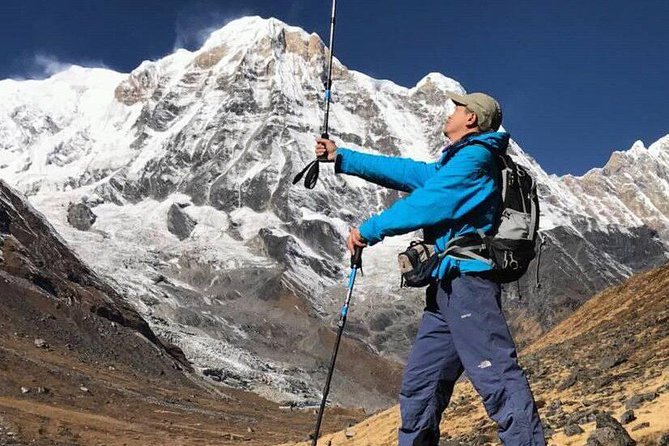
On the drive day, you’ll head from Kathmandu to Pokhara Lakeside by tourist bus. The route is scenic, and Pokhara is where the Annapurna area starts to feel real: lakeside energy at the start, then mountain-focused trekking as you get closer.
This leg is worth doing with the group setup. You’re saving time and energy, and you’re arriving near the start of your trekking “world”—shops, tea houses, and the general Annapurna vibe—rather than jumping straight into trail logistics on arrival day.
In a 12-day schedule, that pacing helps. Your body needs a bit of a ramp-up, and your brain needs time to transition from city life to layered clothing, trekking socks, and the constant question of how much water you should carry.
Also, note what you’re not getting here: hotel accommodations in Kathmandu and Pokhara aren’t included. So you’ll want to line up your nights there separately, then let the trekking package take care of everything once the trail starts.
Day 3 climb: from Nayapul area to Ulleri and on to Ghorepani
Once you’re in the Annapurna trekking corridor, the first big challenge is getting up to the zone where sunrise viewpoints and overnight tea houses begin. You’ll start by moving toward the trail start near Nayapul, then work your way through key villages such as Birethanti and Ulleri.
Ulleri is one of those places where the trail feels like it’s working for you and against you at the same time. It’s a climb, it’s step-heavy, and it sets your pacing for the days ahead. The good part is that this stage is also where you start seeing the Annapurna region’s “layered” mountain views take shape.
By the end of the day, you’ll reach Ghorepani, a common base for hikers heading toward Poon Hill. Ghorepani puts you in the right position for an early-morning push without having to wake up at the absolute start of the trek.
Expect a full day. Even if you’re fit, day 3 is where you’ll feel that you’re not on a casual hike anymore. This is a trek where consistent effort beats racing.
Poon Hill sunrise and Tadapani’s quieter trekking rhythm
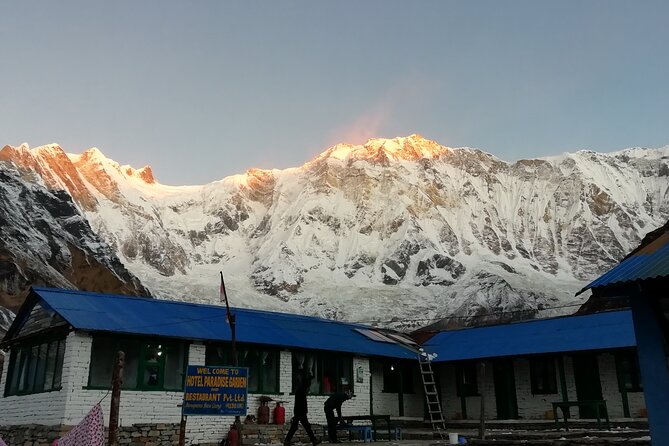
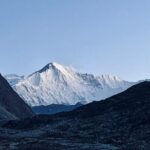
Day 4 is built around the classic Poon Hill sunrise. You’ll start with a pre-dawn hike from Ghorepani, then climb just enough for the reward: broad panoramic views of major peaks in the Annapurna region.
This is a high-value day even if sunrise trips aren’t your thing. It’s not only about the view. It’s also about learning how your breathing and body temperature handle altitude. You’re up early, cold, and working lightly but steadily. That becomes a rehearsal for later, harder days.
After the sunrise moment, you’ll continue onward to Tadapani (a scenic village at around 2,630m). The route from Tadapani onward is where trekking becomes more about comfort and rhythm: steady walking, short rests, and finding a pace you can repeat.
Tadapani is also a good checkpoint mentally. The walk isn’t just “go up.” It starts to feel like the trek has a plan and a sequence, with each night’s lodging placed to help you keep moving.
If you tend to get impatient on steep switchbacks, bring patience anyway. This area teaches it fast.
Sinuwa and Deurali: acclimatization that feels like real work
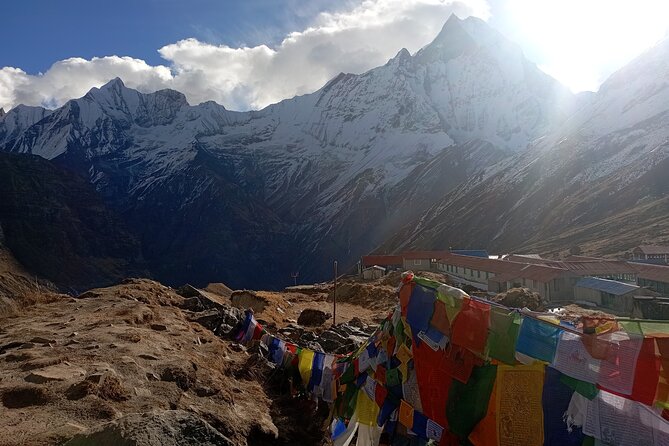
The days leading up to Annapurna Base Camp are where you’ll notice altitude most. You’re moving through villages like Sinuwa (Lower Sinuwa and Upper Sinuwa) at roughly 2,340m to 2,360m, then turning toward Deurali.
Sinuwa is a useful kind of stop. It’s not the end goal, but it’s close enough to the major ascent that it helps your body adjust without jumping straight from low altitude into a huge altitude shock.
You’ll keep trekking toward Deurali, and this is the kind of climb that makes you slow down naturally. That’s what you want. At altitude, “slower” is often the fastest way to arrive feeling okay.
A practical note: the package includes a down jacket for use during the trek. That’s helpful because the cold can hit harder at night and during early starts. Still, I’d plan to bring your own layered system too, since every person runs warmer or colder.
This is also where a good guide makes a difference. You’ll want steady pacing advice, hydration reminders, and realistic expectations for how long it should take to move between tea houses.
The Annapurna Base Camp day: reaching 4,130m
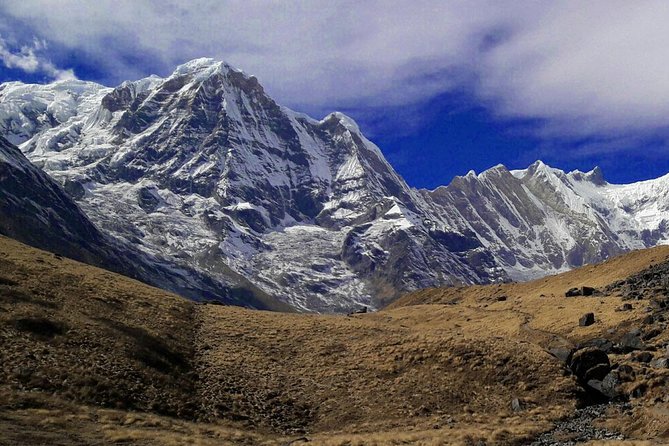
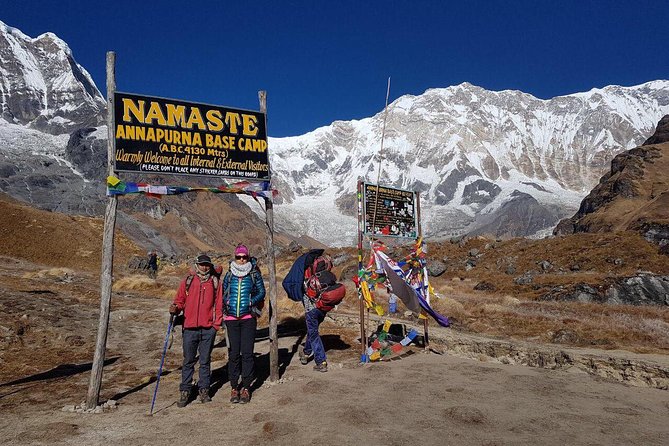
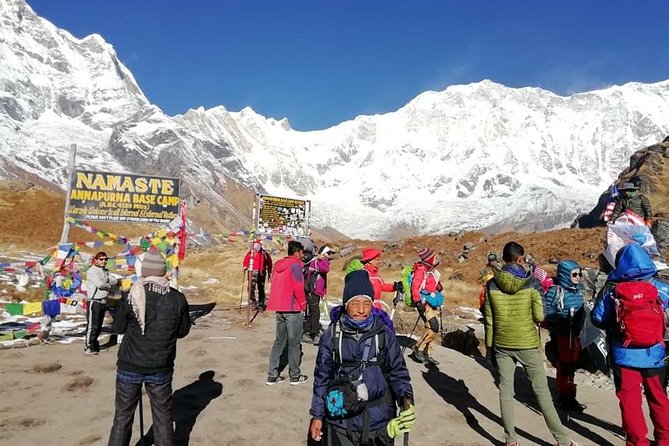
The big day is the walk to Annapurna Base Camp at about 4,130m. You’ll typically rise from the Deurali area and work your way up through Machhapuchhare Base Camp, then arrive at the sanctuary’s core.
The trail is described as taking around six hours on this main ascent. Six hours doesn’t sound long until you’re climbing at high altitude, where every step has a cost. This is the day you’ll be glad you’ve already warmed up with the earlier villages and acclimatization stops.
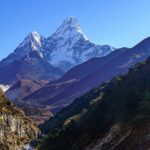
What makes this day special is the payoff: the base camp sits amid the Annapurna region’s major peaks, and it’s a place where the view isn’t just pretty—it’s a moment of achievement. You’re not only “seeing mountains,” you’re reaching a specific point of elevation and terrain.
I also like that the trek includes a Machhapuchhare Base Camp stop. It gives the route a sense of structure, and it offers another milestone before the final push.
At Base Camp, you’ll likely want time for photos, but don’t treat it like a long sightseeing day. Your body is still adjusting, so keep moving at a reasonable pace and save energy for the descent. That descent matters just as much as the ascent.
Descending to Bamboo and then Jhinu Danda’s hot springs reset
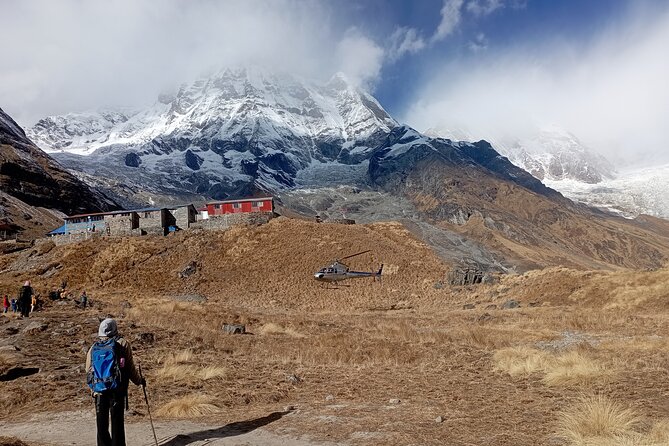
After reaching Annapurna Base Camp, the next phase is the descent back down toward Bamboo. You’ll drop from around 4,130m to Bamboo near 2,350m, with the schedule showing about seven hours for this leg.
This drop is a relief, but it can also be rough on your knees. Long descents often feel easier than climbs, yet they can be the most punishing day if you don’t manage your steps and footwear.
Bamboo is where the trek starts to feel more human again: lower altitude, more comfortable temperatures, and a clearer sense that you’re on the final stretch.
Then you’ll continue downhill toward Jhinu Danda at around 1,780m. Jhinu Danda is famous for natural hot springs, and your day includes time at those hot springs. The hot spring admission is listed as not included, so you’ll want to carry a little extra cash for that one.
This is a smart end-of-trek kind of stop. A soak helps tired legs, and it gives you a moment to slow down after the altitude roller coaster.
After Jhinu Danda, you’ll continue toward the lower route options near Siwa or Ghandruk Phedi (around 1,150m), depending on how your final approach is routed, then connect back toward Pokhara Lakeside.
The return to Kathmandu: closing the loop in Day 11 and Day 12
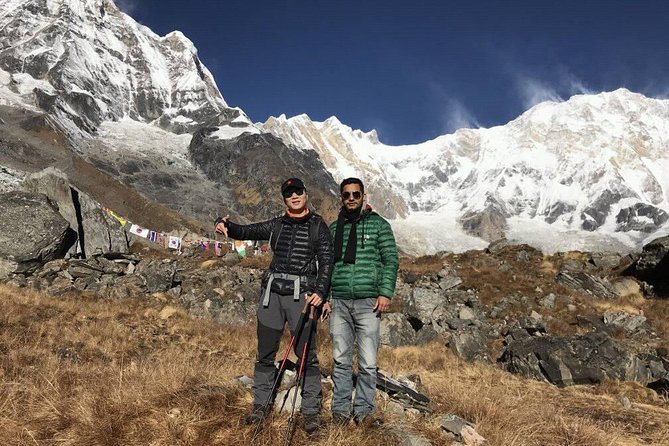
Once you’re back on the lower-elevation side, your schedule shifts from trekking pace to transfer pace. You’ll drive from Pokhara to Kathmandu on Day 11 (about 200 kilometers). It’s a long ride, but it’s the kind of ride that feels earned.
Your Day 12 is mostly travel-day: transfer to Tribhuvan International Airport for departure. This is helpful because it keeps the final day straightforward. You won’t have to make last-minute decisions about how to get to the airport.
One more logistics detail: you’ll have private transfers to the trek starting and ending points. That matters on travel days because it reduces the chance you’re stuck coordinating taxis while tired and cold.
Price and logistics: what $749.90 really buys you
At $749.90 per person for a 12-day package, the value comes from what’s included, not just the headline cost. You’re paying for a guided experience with real services layered in.
Here’s what you get included that usually costs extra when booked separately:
- Licensed English-speaking trekking guide
- Porter support (listed as 1 porter for two trekkers)
- Permits (TIMS and the Annapurna Conservation Area Permit)
- Tea house accommodations during the trek
- Major transfers: Kathmandu to Pokhara and back by tourist bus, plus private transfers to the trek start and end, and a taxi to Nayapul to begin
- Trek gear loan: duffle bag, sleeping bag, and down jacket
- Trip staff costs (salary, food, equipment, insurance, transportation)
What’s not included, so you can avoid surprise budgeting:
- Meals during the trek (breakfast, lunch, dinner)
- Accommodation in Kathmandu and Pokhara
- Cold drinks (including common soft drinks and juice)
- Hot spring admission at Jhinu Danda
- For solo trekkers: a porter isn’t included
So this is best seen as a guided logistics and gear package, where you still budget for day-to-day food and extra paid activities. If you want a single all-in price that covers meals and hotels everywhere, this setup might feel incomplete. If you like control over what you eat and where you spend money, it can actually be a good fit.
Also, you’ll likely save stress by booking in the time window typical for this trek. It’s often booked about 40 days in advance on average, so waiting too long can mean fewer options.
Who this Annapurna Base Camp trek suits best (and who should skip)
This trek fits you best if:
- You want a private group where you’re not sharing decisions with strangers
- You value a licensed guide for pacing and safety at altitude
- You’d rather focus on the trail than track permits, transfers, and tea house logistics
- You appreciate having major cold-weather gear provided (down jacket, sleeping bag)
It may be less ideal if:
- You need all meals and city hotels included in the price
- You’re a solo trekker and want porter help beyond the 1 porter for two trekkers setup
- You hate budgeting extras like hot spring admission and daily drinks
If you’re aiming for a classic Annapurna Base Camp experience with a guide-porter team, this format is a solid choice. It’s not a luxury hike, but it’s organized enough that you can enjoy the climb without drowning in details.
And yes, I’d pay extra attention to your guide and porter. On one past trek, the guide Avi and porter Robin were specifically noted for being patient and focused on safety. That kind of calm, steady teamwork is exactly what you want at altitude.
Should you book this Annapurna Base Camp trek?
I’d book it if your priority is an organized, guided Annapurna Base Camp hike where permits, transfers, and core gear are handled for you. The guide and porter setup, plus the included sleeping bag and down jacket, help you show up prepared without a last-minute gear scramble.
I wouldn’t book it if you want a fully all-inclusive package where meals and city lodging are covered too. This trek covers tea house stays and the big logistics, but it still leaves room for you to manage daily food choices and a few paid add-ons like hot springs.
If you’re ready for a real mountain trek and you like having a team behind you, this is a straightforward way to reach Annapurna Base Camp with less stress and more confidence.
FAQ
What are the transfers included in this trip?
The package includes Kathmandu to Pokhara and Pokhara to Kathmandu transfers by tourist bus. It also includes private transfers to the trek starting point and ending point, plus a taxi to Nayapul to start the trek.
Is a licensed guide included?
Yes. The trip includes one licensed professional trekking guide who is described as English-speaking.
How does porter support work?
A porter is included at a ratio of 1 porter for two trekkers. For solo travelers, a porter is listed as not included.
What permits are covered?
The trip includes TIMS and the Annapurna Conservation Area Permit.
What trekking gear is provided?
You’ll have a duffle bag, sleeping bag, down jacket, and a first aid kit provided for use during the trek.
Are meals included during the trek?
No. Food (breakfast, lunch, and dinner) during the trek is not included. Tea house accommodations are included, but you’ll still pay for meals and other items you choose.
Are hot springs at Jhinu Danda included?
The trip includes Jhinu Danda and its hot springs time, but hot spring admission is listed as not included.
What time does the experience start?
The start time is listed as 6:00 am at the meeting point.