REVIEW · KATHMANDU
Annapurna Base Camp Trek
Book on Viator →Operated by Green Valley Nepal Treks & Research Hub Pvt Ltd · Bookable on Viator
Annapurna Base Camp is front-row Himalaya time. This 14-day small-group trek (max 10) is built for active hikers who want small-group attention and a route that’s handled end to end, including all meals included on the trail. The trade-off is altitude and effort: you’ll hike roughly 4 to 7 hours per day at a moderate high elevation, and the teahouse setup is simple.
I like that the pacing is realistic and you don’t have to stress about finding good lodges or guessing the trail. Still, if you’re not used to uphill walking for hours, the best views will feel like they come with homework—especially once you start moving higher.
In This Review
- Key things to know before you go
- Small-group guiding, not map roulette
- What you pay for on a $925 Annapurna Base Camp trek
- The real value question
- Your 14-day rhythm: from Thamel to Annapurna Base Camp and back
- Day 1: Kathmandu arrival and Thamel orientation
- Day 2: Drive to Pokhara (200 km) and a guesthouse night
- Day 3: Nayapool to Birethani via the Modi River
- Day 4: Ulleri to Banthanti to Ghorepani through forests
- Day 5: Poon Hill sunrise-style views (3210m)
- Day 6: Tadapani to Gurjung to Chhomrong
- Day 7: Chhomrong steps, suspension bridge, and Sinuwa
- Day 8: Bamboo forests to Himalaya, with a temple-minded quiet
- Day 9: Deurali to Machhapuchhre Base Camp
- Day 10: Annapurna Base Camp sunrise, then downhill return
- Day 11: Chhomrong lunch stop and continued route
- Day 12: Jhinu Danda hot springs for recovery
- Day 13: Malekhu lunch stop
- Day 14: Final drive via Pashupatinath for photos
- Meals and teahouses: simple, included, and predictable
- Weather, altitude, and effort: what to consider before you commit
- Guides people trust: Krishna, Tulsi, Suvi, Arjun, Anil, and Sumon
- Should you book this Annapurna Base Camp trek?
- FAQ
- What’s the group size for this Annapurna Base Camp trek?
- How long is the trek?
- How many hours do you hike each day?
- What’s included in the price?
- What meals are not included?
- Is airport pickup included?
- Where do you get major viewpoints during the trek?
- What if weather is bad?
Key things to know before you go
- Small-group cap (max 10): you’ll get more real attention from your guide than on big treks
- Meals on the trail are covered: breakfast, lunch, and dinners are included during trekking days
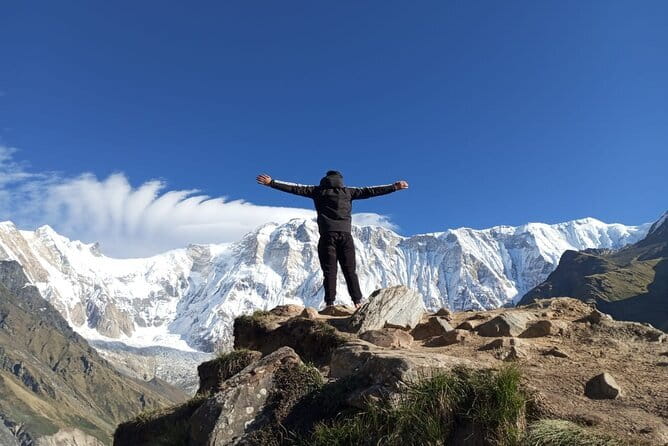
- Iconic viewpoints are built in: Poon Hill (3210m) plus sunrise time near Annapurna Base Camp
- Route includes classic villages and bridges: rhododendron and oak forests, stone steps, and suspension bridges
- Acclimatization is part of the plan: you spend time in places like Deurali and Machhapuchhre Base Camp
- A practical recovery stop: Jhinu Danda hot spring is timed after the hardest days
Small-group guiding, not map roulette
The big appeal of this Annapurna Base Camp trek is that it runs like a guided hike should: a professional guide, a small group (maximum 10), and a route where you’re not expected to figure everything out on the fly. On a trek where elevations change fast, that matters. You want your energy going into walking and taking photos, not into constant route-checking.
You also get transfers that reduce friction. On arrival, you’re met at Tribhuvan International Airport and taken into Kathmandu by private tourist vehicle. Later, you move to Pokhara by tourist bus (about 200 km, roughly a 6-hour drive), with lunch along the way. For me, this is the kind of planning that makes a mountain trek feel doable, even if you’re not a hardcore backpacker.
One more practical win: because the trek is small, the guide can adjust pacing and respond to small issues. In feedback from recent travelers, guides such as Krishna, Tulsi, Suvi, and Arjun are highlighted for being attentive and helpful, even when someone arrives feeling under the weather. That kind of flexibility is what you want when you’re adjusting to Nepal time and altitude.
You can also read our reviews of more hiking tours in Kathmandu
What you pay for on a $925 Annapurna Base Camp trek
At $925 per person for a 14-day trip, you’re not only paying for the hike. You’re paying for the structure that makes the hike smooth: guide-led route management, included accommodations during the itinerary, and most of your food costs on trekking days.
Here’s what’s included on paper:
- Professional guide
- Accommodation as per itinerary
- Round-trip shared transfer
- Meals during the trek: breakfast (13), lunch (10), dinner (10)
- All taxes, fees, and handling charges
- Pickup offered, plus a mobile ticket
And what’s not included:
- Lunch and dinner in Kathmandu and Pokhara
That “mostly covered” food plan is a big deal on trek days. Once you’re hiking, you don’t want to stop to negotiate meals, prices, or quality. Teahouse food is never gourmet, but it’s reliable when you know it’s already part of the schedule.
The real value question
For $925, the value comes from how much of your day-to-day burden gets lifted. If you’ve ever planned a trek and then discovered how quickly time and stress add up—lodging calls, transport mismatches, and route uncertainty—this kind of package is a sanity saver. It’s especially helpful because this trek is moderate high-altitude with daily walking time that adds up.
Your 14-day rhythm: from Thamel to Annapurna Base Camp and back
This trek strings together Kathmandu, Pokhara, and a classic Annapurna region route with good variety: riverside walking, forest trails, a viewpoint morning at Poon Hill, a climb into Chhomrong, then the long approach toward base camp country and a return that includes hot springs and cultural stops.
Day 1: Kathmandu arrival and Thamel orientation
You’ll land in Kathmandu, get met at the airport, and be dropped at your hotel area in Thamel via private tourist vehicle. If you want to settle in, you can rest. If not, you can also connect with the team at their office for the itinerary details.
Practical tip: use this day to keep things simple—early sleep, light food, and hydrate. Kathmandu altitude isn’t extreme, but you’ll still benefit.
Day 2: Drive to Pokhara (200 km) and a guesthouse night
After breakfast, you travel from Kathmandu to Pokhara by tourist bus, with lunch along the route. You spend the night at a guesthouse in Pokhara.
Why Pokhara matters: it’s your launching pad into the hills and forests. You’ll want an easy evening to prepare for the next day’s trail start.
Day 3: Nayapool to Birethani via the Modi River
From Pokhara you drive to Nayapool (about an hour). The trek begins with a short walk along the banks of the Modi River, then continues toward Birethani. This is a gentle start, and teahouses are common along the path.
Think of this day as getting your legs ready for rhythm work—steady steps, not heroics.
Day 4: Ulleri to Banthanti to Ghorepani through forests
The trail begins from Ulleri with a gentle ascent. You pass through rhododendron and oak forests to reach Banthanti. From there, after a couple of hours, you arrive in Ghorepani.
This section is scenic and also a good test of your trekking legs. Forest paths often feel easier than exposed climbs, but they still add up.
Day 5: Poon Hill sunrise-style views (3210m)
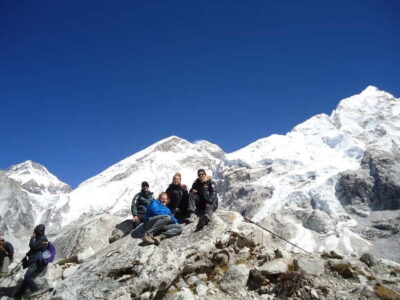
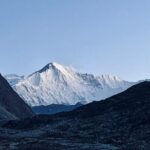
Today’s highlight is a short hike to Poon Hill for a top viewpoint. The climb takes about 45 minutes to reach the summit at 3210m, and it’s built for photographers.
Why I like this stop: it gives you big-mountain payoff without requiring you to be near base camp yet. Even if weather changes higher up, you still get a strong view opportunity here.
Day 6: Tadapani to Gurjung to Chhomrong
After breakfast in Tadapani, you move through forests, gradually going down before crossing the Kimsung River. Then you ascend toward Gurjung, a Gurung village, and continue with a straight climb to Chhomrong.
Chhomrong is one of the emotional gears of this trek. The effort feels more serious, and the surroundings start to look like true Annapurna terrain.
Day 7: Chhomrong steps, suspension bridge, and Sinuwa
This day mixes steep and technical-feeling trail segments. Stone steps drop you toward Chhomrong Khola, where you cross a suspension bridge. Then it’s a steep climb to Sinuwa, followed by an easy downhill walk to Bamboo.
If you’re not used to step-downs, your knees will notice. The good news: the included meal schedule means you can recover quickly once you reach your tea house.
Day 8: Bamboo forests to Himalaya, with a temple-minded quiet
The walk from Dovan to Himalaya is described as quiet, with noise restrictions in the jungle due to a temple on the way. You start in bamboo forest, then change into rhododendron forest as you continue toward Himalaya.
It’s a small detail, but it changes how you move. The trail feels more like you’re visiting a sacred place than just passing through.
Day 9: Deurali to Machhapuchhre Base Camp
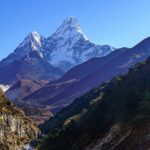
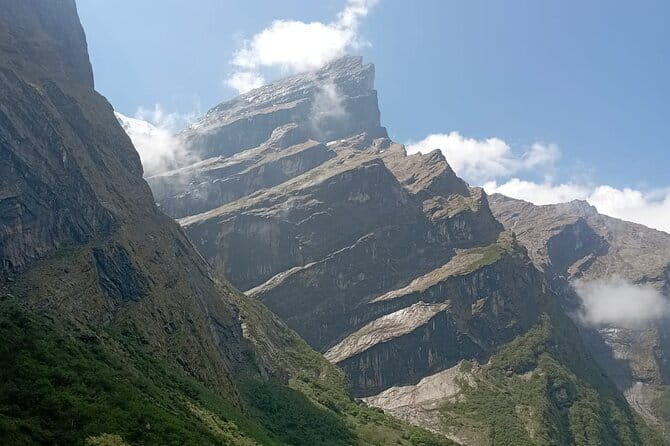
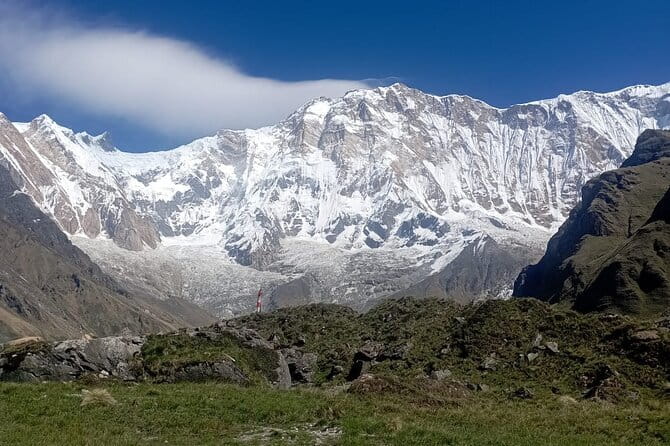
From Deurali, the route passes through a river bed, then includes a tedious climb to Machhapuchhre Base Camp. You’re surrounded by mountains and get views of peaks like Annapurna, Machhapuchhre, Gangapurna, and Himchuli (among others).
This is a key day because it brings you into the base camp neighborhood. You’ll likely feel the altitude more here, so keep your pace controlled.
Day 10: Annapurna Base Camp sunrise, then downhill return
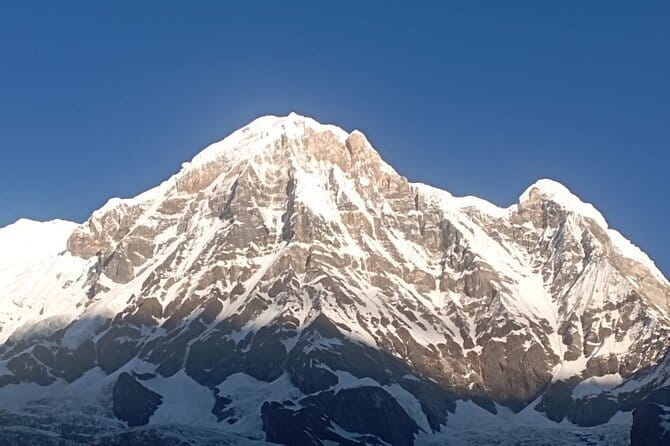
After a spectacular sunrise from Annapurna Base Camp, you head back following a familiar path through Machhapuchhre Base Camp, Deurali, Himalaya, and Bamboo to Sinuwa. Most of this is downhill and generally described as an easy walk.
That sunrise is the moment you’ve been walking toward. It’s also why you want a controlled effort earlier: you don’t want to burn yourself out before the payoff.
Day 11: Chhomrong lunch stop and continued route
The itinerary includes a stop in Chhomrong for lunch and a pause for the hillside views of the Annapurnas and Machhapuchare (Machhapuchhre). It’s a short stop built for enjoying the scenery without draining your energy.
Day 12: Jhinu Danda hot springs for recovery
Jhinu Danda is your recovery break. You have natural hot springs with ponds, and it’s about a 20-minute walk from your hotel in the area. This is a great way to loosen legs after the long days near base camp.
Day 13: Malekhu lunch stop
You stop for lunch around Malekhu for about 30 minutes. It’s noted for fish species and fish products.
If you’re thinking, How does fish fit into base camp? It’s exactly why I like trekking packages: you get a break from just mountain monotony.
Day 14: Final drive via Pashupatinath for photos
On the last day, you’re driven via Pashupatinath Temple, with a brief chance (about five minutes) for photos.
This is a good ending style: you finish with culture rather than a pure logistics grind, and then you’re back on the road system.
Meals and teahouses: simple, included, and predictable
One of the best parts of this trek package is how the meal plan supports your pacing. You get all meals on the trek (breakfast, lunch, dinner across the trekking days), with only lunch and dinner in Kathmandu/Pokhara left to you. That means you can plan your energy without constantly checking menus.
Teahouses on this route are basic by design: warm rooms when you can get them, simple dining, and an atmosphere where everyone’s exchanging notes about tomorrow’s weather. You’ll do best if you travel with patience. The service is usually friendly, but the infrastructure is limited at altitude.
Here’s a practical mindset: treat teahouse meals as fuel, not entertainment. If you’re hungry, the food does its job. If you’re tired, the schedule helps you stop at the right time.
Weather, altitude, and effort: what to consider before you commit
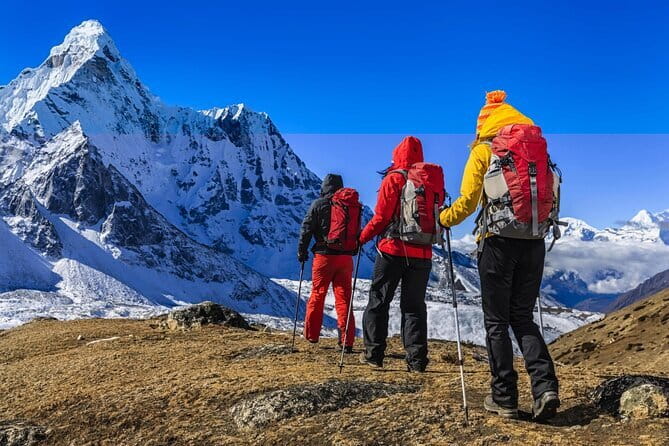
This trek is described as moderate high-altitude with daily hikes between 4 and 7 hours. That’s a useful range because it tells you what kind of trekking day you’ll be building: not a sprint, not a stroll.
But altitude changes your walking speed and breathing even if you’re fit. You’ll want to be ready for:
- days that feel harder than the distance suggests
- cold mornings (especially around sunrise viewing)
- slow, steady climbing rather than fast bursts
If you’ve never done a multi-day trek before, build confidence with local hills at home first. And once you’re on the trail, keep your effort even. It’s the safest way to make the sunrise moments feel exciting, not punishing.
Guides people trust: Krishna, Tulsi, Suvi, Arjun, Anil, and Sumon
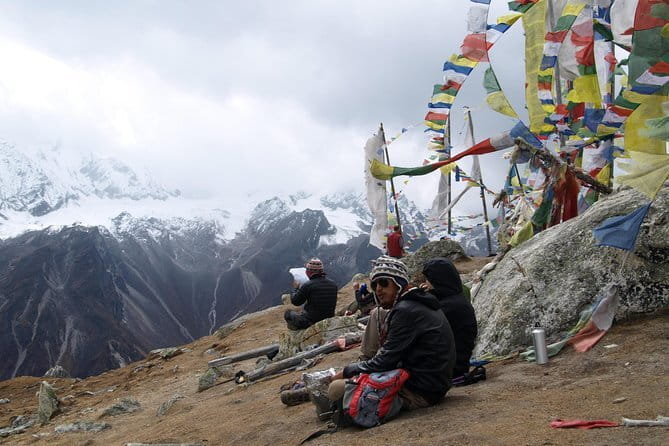
A pattern shows up in the positive feedback: the guide role isn’t treated like a formality. Guides such as Krishna and Tulsi are highlighted for being fun, personable, and supportive. Suvi is mentioned for being knowledgeable about the area and peaks. Arjun is credited with clear communication, while Anil and porter Sumon are praised for professional care on the trek.
You can use this as a decision filter. When you choose a guided Annapurna Base Camp trek, look for teams that respond to you as a person, not just as a booking number. In real trekking situations, that difference shows up when someone feels unwell, needs a porter adjustment, or just needs the day paced correctly.
Should you book this Annapurna Base Camp trek?
If you want the Annapurna Base Camp experience without turning your vacation into a project, I think this trip fits well. The small-group limit, included trek meals, and guided logistics are exactly what you want when altitude is part of the challenge.
You should skip it if:
- you hate basic teahouses and long days of walking
- you have very limited hiking fitness and no plan to train
- you want full freedom to choose every meal and stop (this schedule is structured)
If you’re an active traveler who likes clear plans and wants the mountains to be the focus, this is a strong choice.
FAQ
What’s the group size for this Annapurna Base Camp trek?
The trek has a maximum of 10 travelers, so it stays small-group.
How long is the trek?
The duration is 14 days (approx.).
How many hours do you hike each day?
The overview states you’ll hike about 4 to 7 hours each day.
What’s included in the price?
The price includes a professional guide, accommodation as per itinerary, round-trip shared transfer, and meals on the trek (breakfast 13, lunch 10, dinner 10). It also includes all taxes, fees, and handling charges.
What meals are not included?
Lunch and dinner in Kathmandu and Pokhara are not included.
Is airport pickup included?
Yes. You’re met at Tribhuvan International Airport and taken to the hotel by private tourist vehicle, with transfers included as part of the itinerary.
Where do you get major viewpoints during the trek?
You get a Poon Hill viewpoint at 3210m and sunrise time from Annapurna Base Camp.
What if weather is bad?
This experience requires good weather. If it’s canceled due to poor weather, you’ll be offered a different date or a full refund. You can cancel for free up to 24 hours in advance for a full refund.