REVIEW · KATHMANDU
Annapurna Base Camp Trek – 11 Days
Book on Viator →Operated by Base Camp Adventure Pvt. Ltd. · Bookable on Viator
That first mountain light hits different. An Annapurna Base Camp trek delivers big Himalayan views with real village walking, step by step. I like that this trip pairs classic trekking days with useful support—you’re not left to guess permits, routes, or logistics.
I also like the extra comfort and safety pieces: included down jacket and sleeping bag, plus an oxymeter to check pulse and oxygen. The only drawback to weigh is effort and altitude: it’s labeled moderate fitness, but you’ll still be climbing, descending, and doing early starts—especially around Poon Hill and the main approach to base camp.
In This Review
- Key highlights worth your attention
- Why the Annapurna Base Camp route still feels worth the effort
- Price and logistics: what $986 really covers (and why it matters)
- Kathmandu to Pokhara: the start that sets your pacing
- Day 2 to Day 4: Nayapul entry, suspension bridges, and the Poon Hill payoff
- Day 2: Nayapul to Birethanti and the Modi River crossing
- Day 3: Forest walking to Ghorepani
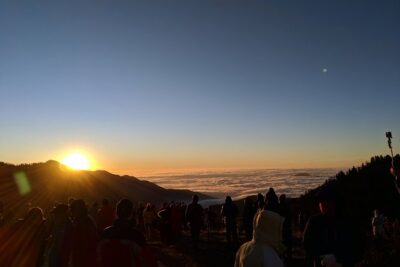
- Day 4: Poon Hill sunrise (and the big-view morning wake-up)
- Day 5: Jhinu Danda hot springs after the Kimrong Khola bridge
- Day 6 to Day 7: Chhomrong rhythm, Sinuwa, and Machhapuchhre Base Camp country
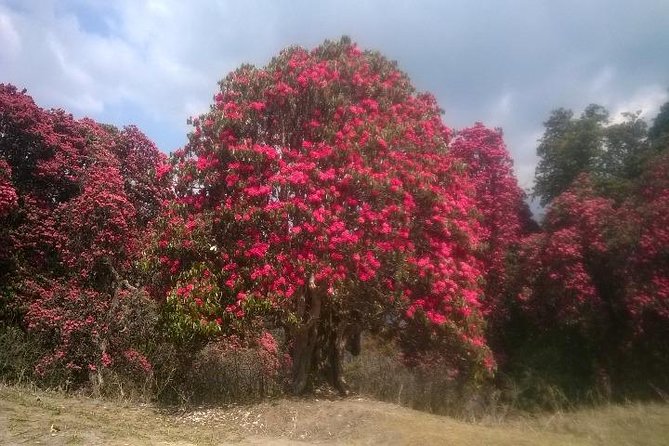
- Day 6: Rhododendron and the Chhomrong–Sinuwa climb pattern
- Day 7: Deurali to Machhapuchhre Base Camp (around 3700m)
- Day 8 to Day 9: Moraine routes, Modi Khola valleys, and the return climb loop
- Day 8: Down from Machhapuchhre Base Camp to the Modi Khola trail
- Day 9: Upper Chhomrong, Jhinu Danda again, and that warm dip
- Day 10 to Day 11: Nayapul exit, Pokhara comfort, and back to Kathmandu
- Day 10: Down to Nayapul via Modi Khola scenery
- Day 11: Pokhara back to Kathmandu
- Who this trek fits best (and what to consider if you’re cautious)
- Guides and support: the small details that change the whole feel
- Packing for comfort: what’s included vs what you must bring
- Should you book Annapurna Base Camp on this 11-day plan?
- FAQ
- What’s the starting time and where does the trek start and end?
- How long is the trek?
- What’s included in the price?
- What’s not included?
- Do you provide any oxygen or health monitoring?
- What happens if weather is bad?
Key highlights worth your attention
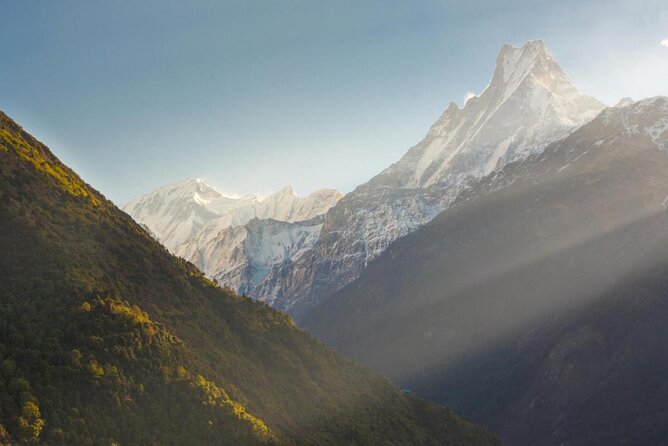
- Poon Hill sunrise: an early ascent timed for dramatic first light over Annapurna and Dhaulagiri ranges
- Rhododendron + stone-stair walking: forest trails through villages, then that familiar stair rhythm
- Jhinu Danda hot spring: a real reward day after hiking and crossing the Kimrong Khola area
- Machhapuchhre Base Camp (about 3700m): a strong vantage point before the long trek back
- Oxygen monitoring on the trail: an oxymeter included for pulse and oxygen saturation checks
Why the Annapurna Base Camp route still feels worth the effort
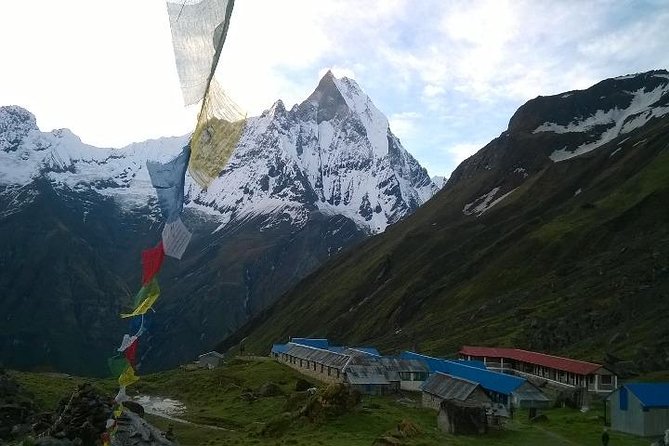
Annapurna Base Camp is famous for a reason. You get a wide mix of Nepal trekking life: forested trails, terraced villages, suspension bridges, and the classic “get higher, see more” rhythm. And unlike some routes that feel like one long climb with little variety, this one keeps changing the scenery and the mood.
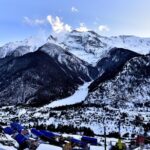
You also get the payoff moments built into the calendar. Sunrise at Poon Hill sets your expectations early with big peak silhouettes. Later, the approach to base camp and the days around Machhapuchhre Base Camp make the trek feel purposeful, not just scenic.
That said, this is still a mountain trek. Even with good pacing, you’ll be on your feet for hours, and mornings can start early. Plan for sore calves, tired lungs, and the very real need to hydrate.
You can also read our reviews of more hiking tours in Kathmandu
Price and logistics: what $986 really covers (and why it matters)
At $986 per person, you’re paying for more than a guide and a route. This package includes trekking permits and entry fees, surface transfers (Kathmandu in and out), and daily trekking operations for staff. It also includes best available guest house accommodation during the trek, mainly in twin sharing.
The biggest “value lever” for many hikers is gear support: you get a down jacket, sleeping bag, and duffel bag included. For people traveling light—or people who don’t want to buy winter gear for one trip—this can be the difference between a smooth trip and a stressful one.
Meals are also built in: the plan includes 10 breakfasts, 9 lunches, and 8 dinners (so you’re not constantly figuring out what’s open and what’s safe to eat). What you’ll need to budget for is mostly personal comfort items: alcoholic drinks, hot and cold drinks, laundry, travel insurance, and your personal trekking equipment.
If you like structure and dislike last-minute scrambling, this setup fits you.
Kathmandu to Pokhara: the start that sets your pacing
The trek begins with a very practical first move: a drive from Kathmandu to Pokhara via the Prithvi Highway on a tourist bus. This isn’t a scenic detour for its own sake—it’s a transfer that gets you into trekking country while you’re still fresh.
One nice thing about the way this schedule is laid out is that you don’t jump straight into uphill climbing on day one. You use the travel time to settle in, then day two starts the trek properly.
When you’re in Pokhara, you’re basically staging for the first real walking day. Your body still needs adjustment, but at least the trek rhythm starts with manageable “walk into it” steps rather than a sudden shock.
Day 2 to Day 4: Nayapul entry, suspension bridges, and the Poon Hill payoff
Day 2: Nayapul to Birethanti and the Modi River crossing
You leave Pokhara by driving to Nayapul, then start trekking by crossing a suspension bridge over the Modi River before heading toward Birethanti and nearby villages. This is a typical Annapurna opener: it gets you moving, introduces the village trail vibe, and helps you find your footing (literally) before bigger climbs.
If you’re someone who hates wasted time, you’ll appreciate that day two is “real hiking,” not a sightseeing shuffle.
Day 3: Forest walking to Ghorepani
Day three leans into the classic Annapurna forest feel. You walk an easier trail through rhododendron thick forest, crossing villages like Banthanti and Nangethanti on the way to Ghorepani. You also get uphill stone stair sections. Expect that mix: gentle walking that slowly tips into effort.
This day is a good indicator of how your legs are adapting. If your knees complain early, you’ll know you need to go slower and keep steps short.
Day 4: Poon Hill sunrise (and the big-view morning wake-up)
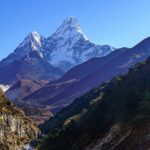
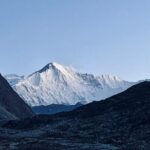
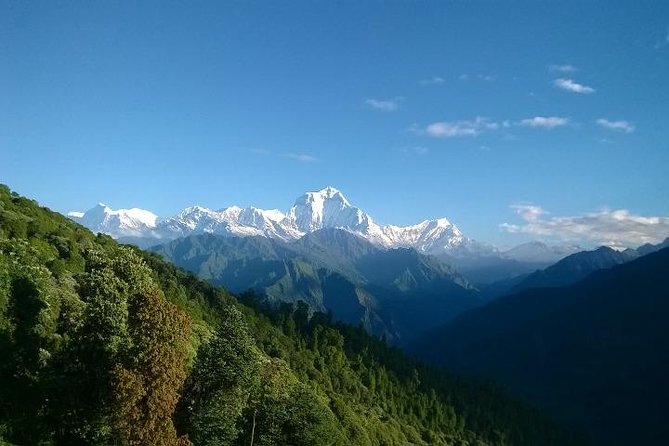
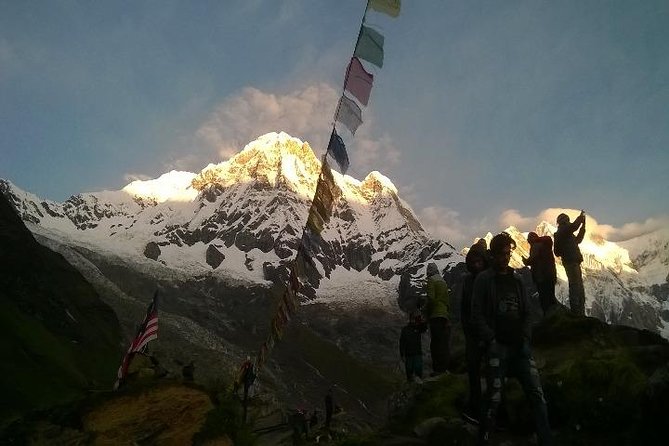
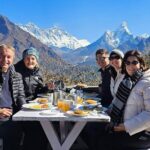
This is the headliner morning: an early ascent to Poon Hill for sunrise over the Annapurna and Dhaulagiri ranges, plus peaks listed along the route (Nilgiri and Lamjung Himal are named in the schedule). Even if clouds steal part of the show, the effort is still worth it because the entire hike becomes part of the experience.
Practical tip: this is an early start day. Bring layers you can manage quickly, and don’t go out too fast. Sunrise looks best when you arrive breathing steady, not gasping and stumbling around.
Day 5: Jhinu Danda hot springs after the Kimrong Khola bridge
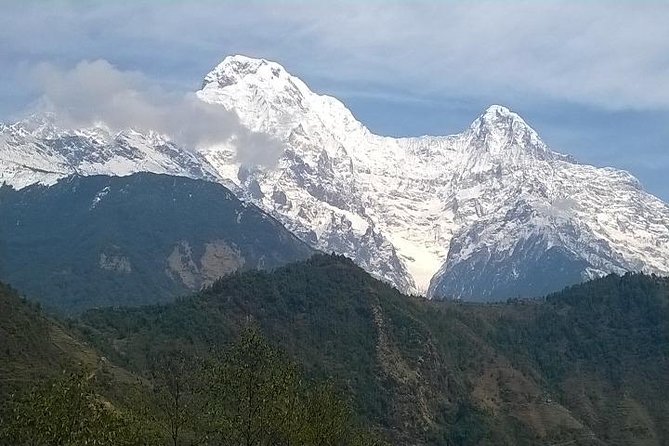
Day five shifts the tone. You ascend, then descend through forest trail and cross the suspension bridge over Kimrong Khola. From there, you reach Jhinu Danda hot spring.
Hot springs are not just a nice break here—they act like a planned recovery session. After several days of stair-stepped walking and forest trails, soaking helps your legs feel human again. That matters on a trek like this because tomorrow and the next days keep climbing toward higher viewpoints.
If you tend to overthink routines, you’ll like how this day gives you a clear reward: walk hard, then earn the soak.
Day 6 to Day 7: Chhomrong rhythm, Sinuwa, and Machhapuchhre Base Camp country
Day 6: Rhododendron and the Chhomrong–Sinuwa climb pattern
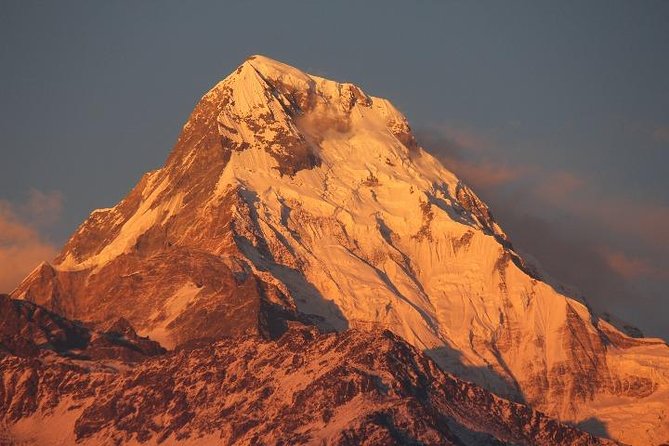
Day six is described as an easy walk through rhododendron forest with orchids and ferns. You descend stone stairs, cross the Chhomrong Khola, then ascend to Sinuwa, followed by more descent through stone-stair sections.
This “down, cross, up, repeat” pattern is a hallmark of the Annapurna region. It’s not one straight grind; it’s controlled suffering. The key is pacing: keep moving, but keep it steady. If you rush the uphill sections, you’ll pay later with heavier breathing.
Day 7: Deurali to Machhapuchhre Base Camp (around 3700m)
Day seven brings the climb to Deurali, with stone stair walking toward a viewpoint area and then onward to Machhapuchhre Base Camp (about 3700m).
This is a turning point day. You’re now closer to the core big-mountain country, and it starts to feel more “alpine” in your surroundings even if your lodge comfort stays simple.
What I like about this design is that you don’t just reach a famous site and stop. You get a trail with variety: ascents, stairs, and enough scenery changes that you stay mentally engaged.
Day 8 to Day 9: Moraine routes, Modi Khola valleys, and the return climb loop
Day 8: Down from Machhapuchhre Base Camp to the Modi Khola trail
Day eight starts with descending back through the moraine route from Machhapuchhre Base Camp. Then you follow trails along the Modi Khola through rhododendron and fir forest.
This day is where you’ll feel the “altitude memory.” Your legs may still feel tired even when the trail seems straightforward on paper. Go slower than you think you need to, especially early in the morning.
If you’re chasing that mix of views and walking comfort, this is a solid day.
Day 9: Upper Chhomrong, Jhinu Danda again, and that warm dip
Day nine is a recovery-to-next-challenge blend. You ascend to Sinuwa again via the described forest, then go down to Chhomrong Khola and climb stone stairs to upper Chhomrong. After that, you descend to Jhinu Danda and enjoy a warm dip in the hot spring area.
A second hot-spring stop is a big deal. It’s basically a built-in “reset button” before the final trek out to Nayapul.
Practical note: even if you feel fine, treat soaking as recovery, not as an all-day spa plan. Short and steady works best for your next hiking day.
Day 10 to Day 11: Nayapul exit, Pokhara comfort, and back to Kathmandu
Day 10: Down to Nayapul via Modi Khola scenery
After the trek, day ten descends to Nayapul following trails along Modi Khola and the surrounding landscapes. Then you drive back to Pokhara by bus.
This day is about movement and decompressing. You’ll probably feel equal parts proud and ready for normal sleep. If your group has flexibility, it’s a good evening to eat something comforting in Pokhara and enjoy the fact that your elevation life is winding down.
Day 11: Pokhara back to Kathmandu
Early morning drive from Pokhara back to Kathmandu. This is another tourist bus transfer along greenery and villages on the highway. You end back where the experience began.
Day eleven can feel long just because you’re not in “active trekking mode,” but it’s still a clean finish that removes travel hassle.
Who this trek fits best (and what to consider if you’re cautious)
This plan is designed for people with at least moderate physical fitness. That doesn’t mean you need to be an athlete, but it does mean you should be ready for long walking days, a fair number of stair sections, and cold mornings.
The biggest “consideration” is altitude management and fatigue. The schedule includes an oxymeter to check pulse and oxygen saturation and heart rate, and that’s useful because it gives your guide a tool to respond if you’re struggling. Still, tools don’t replace smart choices: slow pace, hydration, and listening to your body are your best insurance.
If you want a trek where the logistics are handled—permits, guide, licensed support, and guest house arrangements—this is a strong match. If you want total independence with no organization, you’ll probably find it too structured.
Guides and support: the small details that change the whole feel
One thing that comes up in the strongest feedback around this trek is the attention to people. Names that show up include guides like Dhakal Saroj, Mansing, and Prakash/Pracash, along with other guides such as Shiva and Naba. The company owner Shree is also mentioned for arranging details and hotels.
Even when guides differ day-to-day, the underlying structure matters: you get a local government licensed English-speaking trekking guide during the trek, plus staff support including food, accommodation, insurance, equipment, medicine, and transportation for trekking personnel.
And you also get practical safety extras: first aid medical kits and the oxymeter mentioned earlier. This is the kind of support that makes you feel cared for, even when the mountains do what they do.
Packing for comfort: what’s included vs what you must bring
You’ll start with a big win: down jacket, sleeping bag, and duffel bag are included. That covers the cold-weather sleep portion, which is often where hikers lose time and money.
What isn’t included is your personal trekking equipment, plus drinks and laundry. So you’ll still want to bring the essentials you control: your layers, footwear you trust on stone stairs, and the items you need for your own routine.
A smart approach is to pack for early mornings and temperature swings. Even on days described as forested and easier, you can still feel cold when walking starts before the sun fully warms things up.
Also plan your hydration and snack strategy. Meals are included, but you’ll likely want your own small comfort foods for days when you’re working uphill and your mind needs a quick boost.
Should you book Annapurna Base Camp on this 11-day plan?
I’d book it if you want a classic Annapurna experience with the big checkpoints baked in—Poon Hill sunrise, rhododendron village trails, Jhinu hot springs, and the climb into Machhapuchhre Base Camp country—while having permits, transfers, and daily support handled for you.
Skip or rethink if you’re trying to do this at an ultra-relaxed pace or if you know altitude and cold mornings are major issues for you. This trek can be demanding even with careful monitoring.
Best move: choose this if you like structure, value included gear, and want a guide who can keep things safe and smooth. Annapurna is the star here; your job is to show up ready, then let the route do its work.
FAQ
What’s the starting time and where does the trek start and end?
The experience starts at 6:15 am in Kathmandu, Nepal, and it ends back at the same meeting point.
How long is the trek?
It runs for about 11 days.
What’s included in the price?
It includes trekking permits and entry fees, surface transfers from and to Kathmandu, guest house accommodation during the trek (mainly twin sharing), a licensed English-speaking trekking guide, the route map, meals (breakfast 10, lunch 9, dinner 8), the included down jacket, sleeping bag, and duffel bag, plus an oxymeter and first aid medical kits.
What’s not included?
Not included are alcoholic and non-alcoholic drinks, laundry, travel insurance, international airfare and airport departure tax, personal trekking equipment, and tips for trekking staff.
Do you provide any oxygen or health monitoring?
Yes. An oxymeter is included to check pulse and oxygen saturation and heart rate.
What happens if weather is bad?
The experience requires good weather. If it’s canceled due to poor weather, you’ll be offered a different date or a full refund. You can cancel up to 24 hours in advance for a full refund.