REVIEW · KATHMANDU
Walking tour of real Kathmandu through back streets.
Book on Viator →Operated by Anil Manandhar · Bookable on Viator
Kathmandu changes fast when you walk. This route takes you off the main drags and into daily routines, temple courtyards, and old markets that feel like they still run the city.
I love the focus on Ason bazar as more than a sight stop. And I especially like pairing it with the Kathmandu Durbar Square complex, where religious life and street life sit side-by-side.
One consideration: this is a 3 to 4 hour walking experience, and it depends on good weather. If you’re sensitive to uneven sidewalks or crowds, plan for slower pace and comfortable shoes.
In This Review
- Key Highlights You’ll Actually Feel
- Starting Point: Garden of Dreams and Getting Your Bearings
- Why the Back Streets Matter (And What You’ll Notice)
- Kathmandu Durbar Square: Temples, Courtyards, and Everyday Presence
- Ason Bazar: The Open-Air Marketplace You Can Read Like a Story
- Indra Chowk and the Lanes Between Big Landmarks
- Kumari Temple and Hanuman Dhoka Palace: Where Ceremony Meets Space
- Freak Street: Kathmandu’s Traveler Layer, Seen at Street Level
- What Your Guide Adds (Anil Manandhar, Licensed Service)
- Duration and Group Size: How the Walk Will Feel
- Price and Value: Why $68 Can Make Sense Here
- Weather, Comfort, and How to Prepare
- Who This Tour Fits Best
- Should You Book This Kathmandu Walking Tour?
- FAQ
- How long is the walking tour?
- What is the meeting point for the tour?
- Does the price include entrance fees?
- What does the tour include?
- What places will we visit during the walk?
- How much does the tour cost?
- Is this a private tour?
- What are the tour hours?
- Do I need to worry about weather?
- Is confirmation provided after booking?
Key Highlights You’ll Actually Feel
- Ason bazar as an open-air “supermarket” with vegetables and grocery shopping you can watch up close
- Kathmandu Durbar Square plus the Kumari temple area, Hanuman Dhoka Palace, and courtyards full of temple activity
- Freak street as a recognizable slice of Kathmandu’s modern traveler history, encountered the local way
- Indra Chowk as a busy intersection that helps you understand how people move through the city
- Licensed guide service from Anil Manandhar, with deep context for what you’re seeing (including palace-day cultural moments)
Starting Point: Garden of Dreams and Getting Your Bearings
Your tour begins at the Garden of Dreams on Tridevi Sadak in Kathmandu (and it ends back at the same meeting spot). That matters more than it sounds. Garden of Dreams gives you a calmer starting frame before you step into lanes where the day’s commerce and worship are already in motion.
The timing window is daytime, with the schedule listed between 9:15 AM and 2:15 PM. For me, that’s an ideal rhythm: you get the morning-to-afternoon energy of markets without being forced into the earliest hours. If you’re the kind of traveler who hates wasting daylight, this works.
Also note the tour runs for about 3 to 4 hours. That’s long enough to feel like you learned the city, but short enough that you still have the rest of the day to explore on your own.
You can also read our reviews of more walking tours in Kathmandu

Why the Back Streets Matter (And What You’ll Notice)
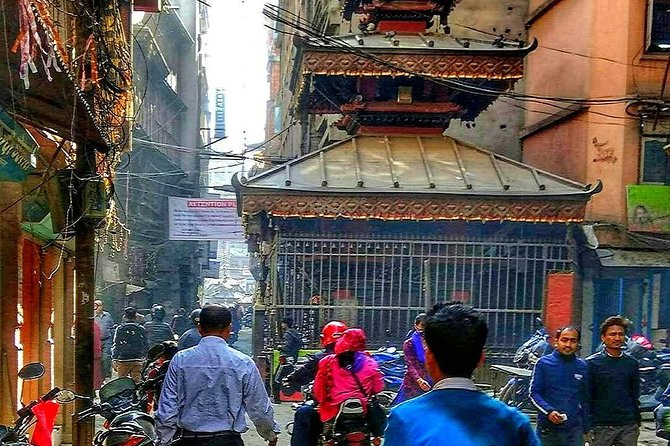
This is a walking tour of day-to-day Kathmandu through back streets, not a checklist sprint. You’re not just moving between famous places—you’re watching the city function around them. In practice, that means you’ll repeatedly notice three things:
First, the city’s religious and daily lives overlap constantly. Courtyards and temple areas aren’t separate from neighborhood life; they’re part of the same flow.
Second, markets here are social spaces. People don’t only buy stuff. They talk, bargain, carry, wait, and reorganize goods. A good guide helps you read what you’re seeing instead of treating it like background noise.
Third, old streets teach you scale. Kathmandu is dense. Walking helps your brain map distance quickly, so later, you won’t feel lost every time you turn a corner.
This is one of the most valuable styles of tours in Kathmandu because it gives you context for everything else you’ll do—food spots, nearby temples, and even how to navigate between neighborhoods.
Kathmandu Durbar Square: Temples, Courtyards, and Everyday Presence
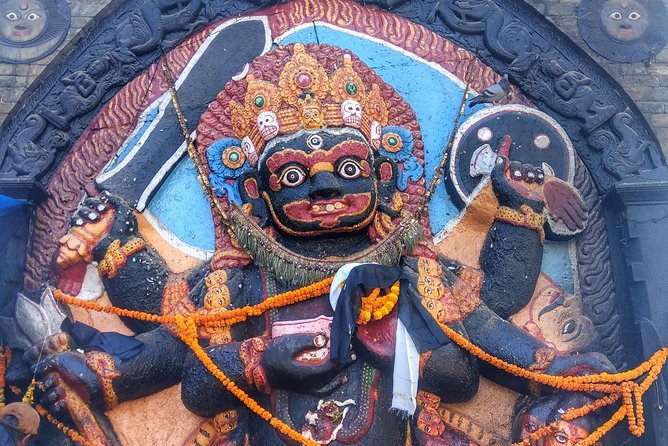
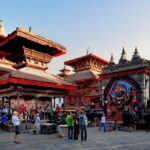
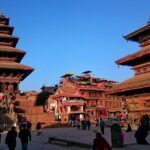
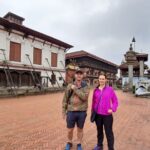
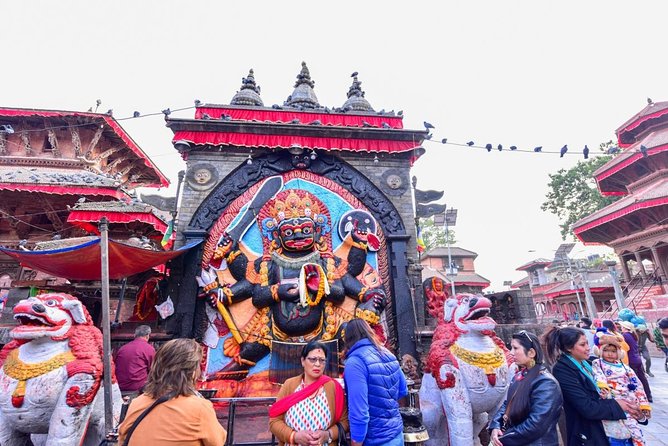
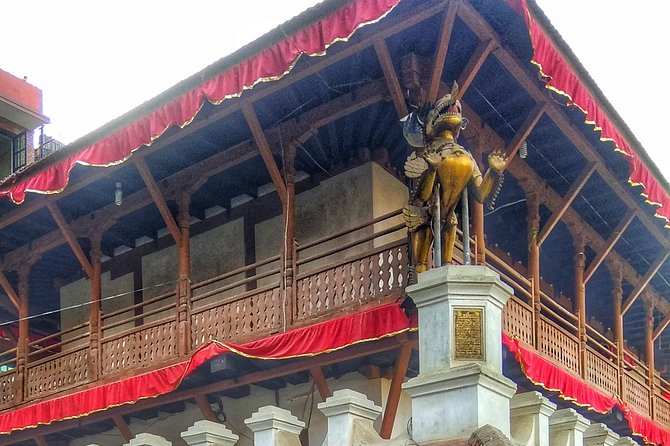
Kathmandu Durbar Square is where the tour really locks in the sense of place. You’ll spend time in the complex area that includes a mix of Buddhist stupa, Hindu temple spaces, and public courtyards. The mix is the point: you’ll see how different traditions coexist in the same urban fabric.
What I like here is that it doesn’t feel like a museum moment. Even if you’re not sure what every detail means, the spatial layout does the teaching. Courtyards create pockets of activity. Temples pull your attention upward. And surrounding areas keep reminding you that this is a living neighborhood, not a sealed-off site.
You’ll also encounter key highlights tied to the old royal core, including the Kumari temple area and Hanuman Dhoka Palace surroundings. The Kumari connection matters because it’s one of the most recognizable cultural symbols in the Kathmandu Valley, and the surrounding setting makes it easier to understand why people treat it with care.
Possible drawback: you’ll likely be surrounded by other visitors and local activity. If you prefer quiet, empty viewpoints, the square won’t deliver that mood. It’s more about observation and understanding than solitude.
Ason Bazar: The Open-Air Marketplace You Can Read Like a Story
If there’s a single anchor stop for this tour, it’s Ason bazar. It’s described as the traditional and ancient market place of Kathmandu, and that reputation shows in how people use it. Think of it as an open-air supermarket—vegetable and grocery lanes packed with the rhythm of everyday buying and selling.
This is where the tour becomes practical in a travel sense. A guide can point out what you’re seeing—what’s being traded, how stalls are arranged, and how locals move through the space. Without that, it’s easy to see “lots of stuff” and miss what makes it meaningful.
I like markets most when you can connect them to daily needs. Ason does that. You’ll get a clearer picture of what’s common to eat, what families purchase regularly, and how the city’s supply chain shows up in public.
One extra bonus from the guide experience: a strong guide can also connect the market to nearby cultural landmarks so you understand why these places sit where they do. The tour includes Durbar Square and other nearby points, so the market isn’t floating alone—it’s part of a larger city map.
Indra Chowk and the Lanes Between Big Landmarks
Indra Chowk appears as another key checkpoint on the route. Even if you don’t think of it as a “destination,” it helps you understand how Kathmandu connects districts and neighborhoods through busy intersections and street patterns.
On foot, a place like Indra Chowk works as a mental reset. You’ll stop looking like you’re sightseeing, and start looking like you’re navigating a city. That’s valuable for first-timers because you begin to understand the direction of traffic, pedestrian flow, and how streets funnel people into markets and temple areas.
If you plan to explore Kathmandu after the tour, the benefit is immediate: you’ll have a better sense of where to head next and how far locations feel on the ground.
Kumari Temple and Hanuman Dhoka Palace: Where Ceremony Meets Space
The tour doesn’t treat the Kumari temple area and Hanuman Dhoka Palace as separate “photo zones.” It treats them as part of the same cultural landscape you’re walking through.
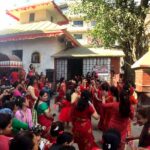
In the guide’s telling, these palace-adjacent spots aren’t just impressive architecture. They’re tied to how people participate in tradition. In one of the strongest highlights shared from the experience, the most memorable moment was seeing Pachali Bhairav dance at the palace.
Even if you don’t know the term beforehand, that kind of event makes the site feel alive. You stop thinking about history as text and start sensing it as something that still moves through the city.
A practical consideration: if an event is happening, you may need a bit of patience for positioning and viewing. Try to focus on the experience rather than the perfect angle for a single photo.
Freak Street: Kathmandu’s Traveler Layer, Seen at Street Level
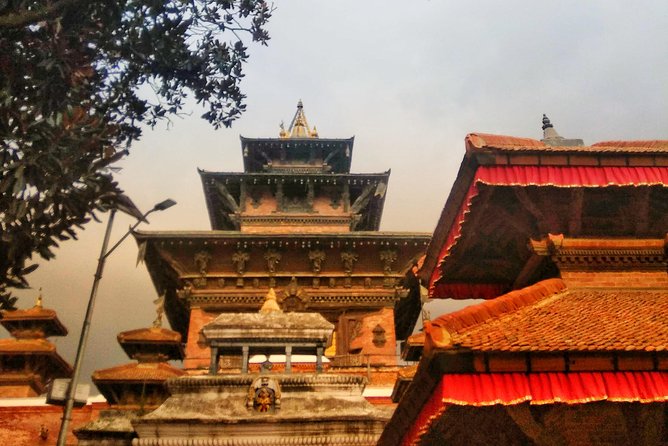
Freak street is included as part of the route, and that’s a good choice because you see it in context. Instead of only treating it as a quirky “name,” you get the feel of how it connects to the rest of old Kathmandu.
This stop helps bridge two worlds: the local religious and market atmosphere you’ve been seeing, and the area’s reputation from past decades as a magnet for travelers. When you encounter it on a walking route, it doesn’t feel like a random detour. It feels like a lens on Kathmandu’s meeting points—where locals and visitors have intersected for years.
If you’re curious about how Kathmandu has changed over time, this is an easier way to understand it than trying to read everything online.
What Your Guide Adds (Anil Manandhar, Licensed Service)
The tour includes a licensed guide service, and the experience provider is Anil Manandhar. From the feedback shared, Anil is known for being experienced and well-informed, with the kind of guidance that makes places click instead of staying vague.
That matters for a tour like this because Kathmandu can overwhelm you if you’re only scanning for landmarks. A good guide gives structure to your walking route and explains what you’re seeing in plain terms.
The extra value isn’t just facts. It’s timing and attention—knowing what to point out, when to slow down, and how to connect market life with temple and palace spaces. That’s why the tour works well even if you’re not an expert in Nepalese culture.
Duration and Group Size: How the Walk Will Feel
The tour is priced at $68.00 per group, up to 10 people, and lasts about 3 to 4 hours. I like this setup because it keeps costs reasonable while still allowing a real walking experience with a guide.
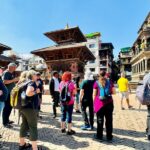
A small group (up to 10) means you won’t feel like you’re lost in a crowd of strangers, and you’re more likely to hear the guide’s explanations. It’s also described as private, so only your group participates. That tends to improve the flow—especially when you’re moving through market lanes.
Bring energy for walking. This isn’t a sit-and-stare tour, and you’ll cover multiple zones around the city center.
Price and Value: Why $68 Can Make Sense Here
At $68 per group (up to 10), you’re not paying a per-person “sky-high” rate. But the real value comes from what you’re getting: a licensed guide and access to key cultural and market areas in a single connected route.
You should also expect entrance fees are not included. That means the final cost can vary depending on what you choose to pay at each site. Still, for a 3 to 4 hour walking tour that ties Ason bazar, Durbar Square, and other major stops together, it’s a practical use of money.
In Kathmandu, one of the biggest costs is time. Paying for a guide like this can save you from wandering aimlessly, because you walk with a plan and context. That’s usually a better deal than spending money on multiple separate stops without guidance.
Weather, Comfort, and How to Prepare
The experience requires good weather. That’s not just a line item—it’s important because walking in Kathmandu is comfortable when streets are dry and visibility is good, especially around crowded temple and market zones.
For comfort, I’d plan around:
- comfortable walking shoes
- sun coverage or a light layer, depending on your day
- a water bottle (simple, but it matters when you’re on your feet)
If it rains or conditions aren’t favorable, you may be offered a different date or a refund. The key point is that the tour operator takes weather seriously, which is exactly what you want for a walking route.
Who This Tour Fits Best
This tour is a strong match if you want:
- a real sense of daily life in Kathmandu, not just a few landmark photos
- market culture plus temple and palace context in one half-day
- a guide-led route that helps you understand what you’re looking at
It’s also a good fit for first-timers who want to get oriented quickly. If you already know Kathmandu well and want deep technical history for each monument, you might still enjoy it—but the emphasis is on street-level culture and movement across major city areas.
Should You Book This Kathmandu Walking Tour?
Yes, if you want Kathmandu to feel lived-in and readable. This tour focuses on the city’s nerve centers—Ason bazar for daily commerce, Kathmandu Durbar Square for spiritual and civic space, plus key stops like Indra Chowk and Freak street for a broader picture of how the city works.
Book it if you’ll value context as much as sights, and if you’re okay with a bit of crowd energy in historic areas. Skip it only if you strongly prefer quieter, low-footprint experiences or you can’t manage a 3 to 4 hour walk.
FAQ
How long is the walking tour?
It runs about 3 to 4 hours.
What is the meeting point for the tour?
The tour starts at the Garden of Dreams, Tridevi Sadak, Kathmandu 44600, Nepal.
Does the price include entrance fees?
No. Entrance fees are not included.
What does the tour include?
It includes a licensed guide service.
What places will we visit during the walk?
The route includes Kathmandu Durbar Square, Kumari temple, Hanuman Dhoka Palace, Indra Chowk, Ason bazar, and Freak street.
How much does the tour cost?
It costs $68.00 per group, up to 10 people.
Is this a private tour?
Yes. It’s private, and only your group participates.
What are the tour hours?
The listed operating hours are Monday to Sunday from 9:15 AM to 2:15 PM.
Do I need to worry about weather?
Yes. The tour requires good weather, and if it’s canceled due to poor weather you’ll be offered a different date or a full refund.
Is confirmation provided after booking?
Confirmation is received at the time of booking.