REVIEW · KATHMANDU
Lumbini Pilgrimage Tour by Flight- 2 Days
Book on Viator →Operated by Alpine Club of Himalaya · Bookable on Viator
Two days in Lumbini, no guesswork. You get Kathmandu to Bhairahawa flights plus airport transfers, and you still spend focused time at major sacred sites. One thing to weigh: it is a tight schedule, and Day 1 doesn’t include meals beyond the basics (breakfast only comes in on Day 2).
I really like how the route is designed for meaning, not just ticking boxes. You start with the Maya Devi Temple area and work through key monuments like the Ashoka Pillar and the Buddha-focused areas. The main consideration is weather: the experience requires good conditions, and your date could shift if conditions are poor.
If you want a short pilgrimage-style trip that handles the logistics for you, this is a strong option. It’s also set up as a private group activity, so your pace stays in your hands more than in a big public bus shuffle.
In This Review
- Key things you’ll like about this Lumbini pilgrimage tour
- How the Kathmandu–Bhairahawa flights make the 2-day timing work
- Day 1 in Lumbini: arriving, settling, then walking the spiritual core
- Maya Devi Temple area: the emotional center of the day
- The key sights you’ll visit: what each one adds to your pilgrimage
- Ashoka Pillar: history you can see up close
- Puksani Pond: a quiet pause in the middle of monuments
- Buddha Temple + World Peace Pagoda: devotion plus a big-picture message
- Lumbini Museum: where context turns into understanding
- Tilaurakot: connecting to the Buddha’s early life
- Day 2: the main temple visit, then the return to Kathmandu
- Price and value: what $499 per person really buys you
- Logistics that affect your comfort: timing, meals, and weather
- Who should book this Lumbini pilgrimage tour
- Customer care angle: what to look for from the tour provider
- Should you book this Lumbini pilgrimage tour?
- FAQ
- How long is the Lumbini Pilgrimage Tour by flight?
- What is the meeting and travel flow from Kathmandu?
- Is accommodation included?
- Is breakfast included?
- Are flights included in the tour price?
- Are entrance fees included?
- What is not included in the price?
- What happens if the weather is poor?
Key things you’ll like about this Lumbini pilgrimage tour
- Flight + transfers built in: you’re met on arrival and moved to/from Kathmandu with a driver.
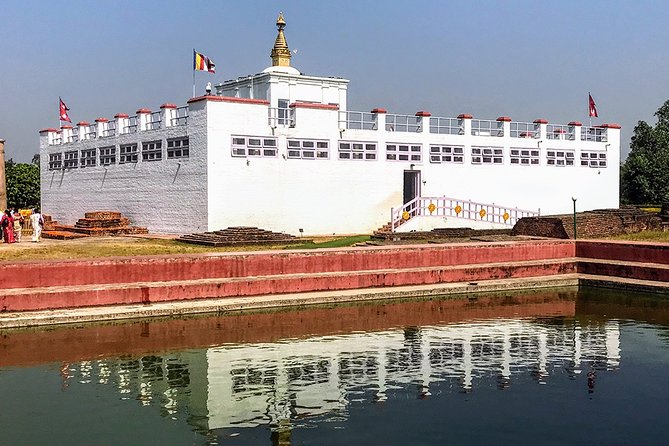
- Maya Devi Temple focus: the tour centers on the Buddha birthplace area and related sacred gardens.
- Monuments and learning stops: Ashoka Pillar, Lumbini Museum, and multiple monastery/pagoda sites are included.
- Tilaurakot gets time: you visit the ancient region tied to the Buddha’s early life.
- Twin-share Lumbini stay: one night accommodation is included so you’re not racing between cities.
- Guided by the tour team: you’ll have a tour guide included for the sightseeing loop.
How the Kathmandu–Bhairahawa flights make the 2-day timing work
The biggest value here is simple: you’re not trying to cram Lumbini into a long, slow overland day. The tour handles the jump from Kathmandu to Bhairahawa by flight, then organizes pickup and transfer on both sides. That turns a 2-day pilgrimage into something you can actually enjoy without spending the whole time stuck in traffic.
Day 1 starts early. You’re asked to be ready around 7:00 a.m. for transfer to Kathmandu airport. From there, you fly to Bhairahawa (the Lumbini area) and a driver meets you to take you to your hotel, around 45 minutes away (give or take depending on traffic and weather).
This matters because Lumbini sites include a mix of temple courtyards, garden paths, and monument zones. When your timing is managed, you can slow down where it counts. When timing is not managed, you end up rushing through sacred areas like they’re a checkout line.
You can also read our reviews of more tours and experiences in Kathmandu

Day 1 in Lumbini: arriving, settling, then walking the spiritual core
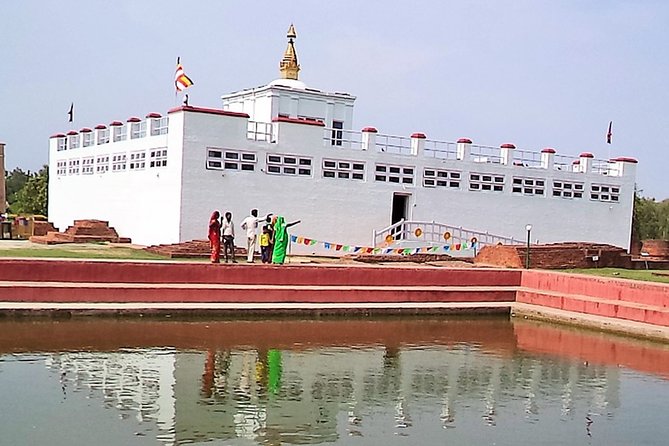
After your flight and transfer, you check in and get a refreshment break. Then you meet your guide for a city tour focused on the spiritual heart of Lumbini.
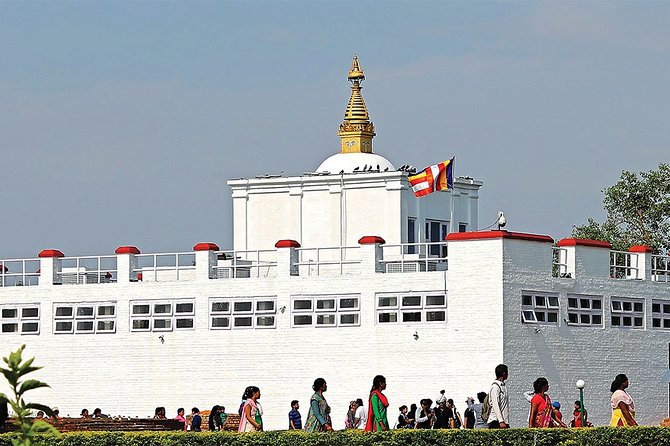
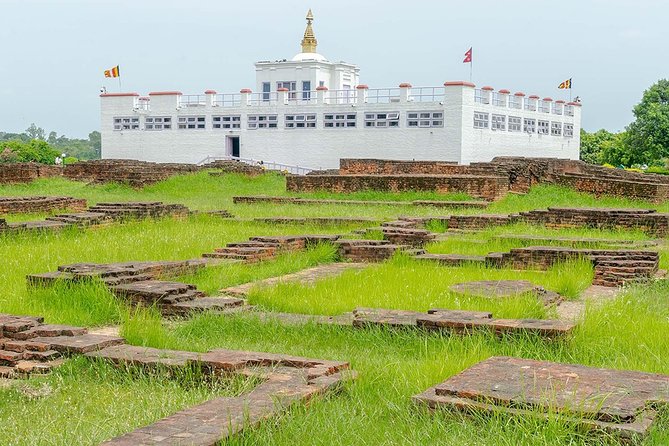
Your tour loop includes Maya Devi Temple, the site connected to where the Buddha was born under a Bodhi tree. The area around the temple is the kind of place where silence and attention feel natural. You’ll also spend time around the Sacred Garden area, which is often where the whole experience starts to feel personal. Even if you’ve read about Lumbini before, seeing how the sacred spaces are laid out helps the story click.
From there, you move through major highlights that people travel across the world for:
- Ashoka Pillar
- Buddhist monasteries
- World Peace Pagoda
- Lumbini Crane Sanctuary
- Puksani Pond
- Buddha Temple
- Lumbini Museum (included as one of the key sights)
One more important detail: this is guided, and that’s not fluff. A guide helps you understand what you’re looking at—like why a pillar matters, or what the pond and garden areas represent. Without that context, you might still enjoy the scenery, but you lose some of the meaning.
Maya Devi Temple area: the emotional center of the day
If you’re coming for pilgrimage energy, the Maya Devi Temple area is your anchor. It’s not just another temple stop. The way the site is connected to the Buddha’s birth story makes it the most emotionally loaded part of your short trip.
Here’s what to keep in mind: temples and sacred gardens usually involve some walking and standing. Wear shoes you can handle. If you prefer to pause often for photos or prayer, the guided pacing helps so you don’t feel rushed.
The key sights you’ll visit: what each one adds to your pilgrimage
Lumbini is not one single building. It’s a complex of sacred zones tied to story, memory, and devotion. This tour does a good job covering a spread of types of sites, not just temple walls.
Ashoka Pillar: history you can see up close
The Ashoka Pillar is the kind of stop that makes the past feel physical. You’re not reading about it—you’re standing near it. Even if you’re not a monument nerd, it’s a clear landmark and a point where your guide can connect political history to Buddhist heritage.


Puksani Pond: a quiet pause in the middle of monuments
The tour includes Puksani Pond. Water features often get overlooked in short trips, but this one fits well as a breathing space. It’s a slower, more reflective moment between bigger-ticket structures like temples and pagodas.
If you like photography, this is where you can usually get a different feel than you get in temple courtyards—more open angles, calmer visuals, and a place to reset your attention.
Buddha Temple + World Peace Pagoda: devotion plus a big-picture message
The Buddha Temple and World Peace Pagoda balance spiritual focus with broader themes. The pagoda is especially interesting if you’re traveling beyond pure pilgrimage and want the place to connect with modern Buddhist ideas about peace and living values.
The drawback of these stops is that they can feel visually similar to other Buddhist temple complexes you might have visited elsewhere. The upside is that your guide ties them back to Lumbini specifically, so the meaning stays anchored to your trip.
Lumbini Museum: where context turns into understanding
A museum stop can go either way on tours. Here, it helps because your time in Lumbini is only two days. A museum gives you context fast—so when you see the outdoor monuments, you understand what matters and why.
You likely won’t spend hours like you would on a full museum day, but for a short pilgrimage schedule, it’s a smart inclusion. If you prefer fast, focused learning over slow browsing, this fits your style.
Tilaurakot: connecting to the Buddha’s early life
Your highlights also include Tilaurakot, the ancient region linked with the Buddha’s early years. In a two-day plan, adding Tilaurakot is a win because it extends the story beyond the birthplace area.
The main consideration: ancient sites can vary in how much you can walk depending on conditions (paths, uneven ground, and weather). Go in with the expectation that part of the value is the feeling of place, not just a few photo angles.
Day 2: the main temple visit, then the return to Kathmandu
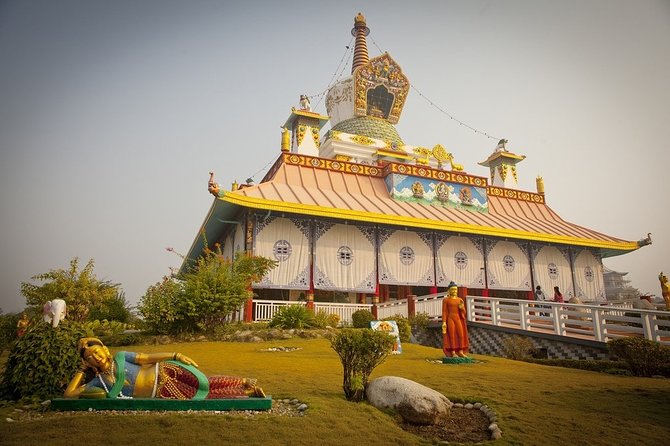
Day 2 starts with breakfast, then it’s back into the rhythm of sacred sightseeing and connection—before heading to the airport.
After breakfast, you transfer to Bhairahawa/Lumbini airport for the flight back to Kathmandu. A driver picks you up from Kathmandu airport and returns you to your hotel. That round-trip setup keeps you from dealing with tickets, timing, and local transportation stress on your travel day.
The key sightseeing on Day 2 centers around the main Lumbini Temple. This is the part of the schedule that gives you a second chance to sit with the sacred heart of the area after your first-day circuit. If you felt you wanted more time at the biggest spiritual sites, Day 2 helps even that out—without forcing you to add extra nights.
Price and value: what $499 per person really buys you

At $499 per person for a 2-day experience, the real question is not just cost—it’s what you’re getting that’s hard to do well on your own.
This package includes:
- Round-trip flights between Kathmandu and Bhairahawa
- One night accommodation in Lumbini (twin sharing)
- A tour guide and entrance fees
- Necessary airport transfers with a driver
- Government taxes and service charges
- Breakfast (included, with Day 2 specifically listed)
That’s a lot of moving parts for a short trip. If you tried to assemble it yourself, you’d spend time comparing flights, coordinating airport rides, and figuring out entrance costs and the best route. Even when DIY travel works, it’s often slow and messy right around travel days. Here, the chaos is mostly removed.
What’s not included matters too:
- Lunch and dinner
- Personal expenses, phone/laundry
- Tips
- Bar and drinks
For value, I suggest budgeting meals separately so the schedule doesn’t pressure you. Since Day 1 doesn’t list included meals beyond what’s stated, plan for the possibility that you’ll pay for lunch or snacks on that first sightseeing block.
Also note the tour is listed as private for your group, and there are group discounts. If you’re traveling with others, it can become even better value because the fixed costs (guide, transfers, internal coordination) get spread out.
Logistics that affect your comfort: timing, meals, and weather
This trip is built around flights and short sightseeing windows. That makes it efficient, but it also means you should travel with the right mindset.
A few practical points:
- Expect an early morning start on Day 1 (around 7:00 a.m.).
- Day 1 includes no stated meals beyond what’s specified, so plan snacks or lunch spending.
- Wear shoes for temple areas and uneven outdoor ground.
- The experience requires good weather, and dates can change if conditions are poor.
One more note: you’re staying just one night in Lumbini. That’s perfect for people who want a short pilgrimage, but it also means you’ll have to accept that you’re choosing highlights over slow exploration.
Who should book this Lumbini pilgrimage tour
I think this tour fits best if you:
- Want a 2-day Lumbini visit without dealing with flight scheduling and airport logistics
- Prefer guided context for the sites (temples, monuments, museum)
- Are okay with an early start and a structured sightseeing plan
- Want one night in Lumbini so you’re not bouncing back and forth in a day
It’s also a decent fit if you’re traveling with a small group that wants privacy. The tour is set up so it’s only your group participating, which often means less waiting and fewer mismatches in pace.
If you prefer to wander freely without a timed guide, you might feel constrained. If you want deep time in museums and ancient sites, you’ll probably want a longer trip than two days.
Customer care angle: what to look for from the tour provider
The most praised theme in the feedback is customer care. One recent reviewer specifically mentioned Sujan Lamichhane of Alpine Club of Himalaya and credited strong support for making the pilgrimage run smoothly.
That matters because Lumbini travel depends on weather and timing. When something changes, you want a provider that can handle it calmly—without dumping the stress on you.
Should you book this Lumbini pilgrimage tour?
Yes, I’d book it if your goal is a short, guided pilgrimage with flights and transfers handled. It’s strong value for what’s included: air travel, a night in Lumbini, guide time, and entrance fees, all wrapped into a tight schedule.
I’d pause before booking if you hate early mornings, if you want lots of included meals during sightseeing days, or if you need lots of free time for slow wandering. This is a structured route with a clear set of highlights, and that’s exactly why it works for two days.
If you want the most satisfying plan, come ready for walking, bring patience for weather-related adjustments, and treat the main temples as the center of your day—not just photo stops.
FAQ
How long is the Lumbini Pilgrimage Tour by flight?
It’s listed as 2 days (approx.).
What is the meeting and travel flow from Kathmandu?
You’re transferred to Kathmandu airport in the early morning, fly to Bhairahawa (Lumbini), and then a driver transfers you to your hotel. On the second day, you return by flight to Kathmandu and get picked up from the airport to your hotel.
Is accommodation included?
Yes. You get one night of accommodation in Lumbini on a twin-sharing basis.
Is breakfast included?
Breakfast is included (Day 2 breakfast is specifically listed, and breakfast is included in the package details).
Are flights included in the tour price?
Yes. Kathmandu to Bhairahawa and return flights are included.
Are entrance fees included?
Yes. Entrance fees are included in the tour.
What is not included in the price?
Lunch and dinner, personal expenses, bar and drinks, telephone and laundry bills, and tips are not included.
What happens if the weather is poor?
The experience requires good weather. If it’s canceled due to poor weather, you’ll be offered a different date or a full refund.