REVIEW · KATHMANDU
Temples and Stupas Tour in Kathmandu Valley
Book on Viator →Operated by Royal Mountain Travel · Bookable on Viator
Three faiths. One long Kathmandu Valley day.
This tour strings together three UNESCO-listed icons—Durbar Square, Pashupatinath, and Boudhanath—with an English-speaking guide to explain what you’re seeing, not just where to stand. I especially liked how smoothly it fits into a 7-hour day without you having to line up transport or bargain with drivers.
Two things I really appreciated: you get a small group (up to 10 people), and the guiding time goes beyond quick photo stops so you understand the temples and rituals you’re walking into. The main catch is simple: entrance fees are not included, so you’ll want cash for on-site tickets.
If you’re sensitive to gaps in commentary, consider one practical note: between sights, the tour can have quieter stretches where you may not hear detailed explanations the whole time.
In This Review
- Key highlights worth your attention
- UNESCO Kathmandu Valley in one guided circuit
- Price and what you really get for $34
- Getting going at 9:00 and beating the haggling
- Stop 1: Pashupatinath Temple and the Shiva-centered world
- Stop 2: Durbar Square (Patan) and the Malla kings angle
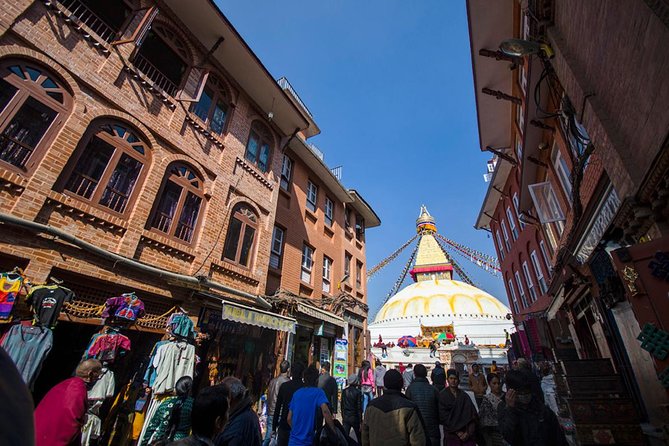
- Stop 3: Boudhanath Stupa and cross-religious respect
- The guide experience: where the best tours get made
- Pacing, timing, and what to plan for in a 7-hour day
- Entrance fees: budget for them, don’t get surprised
- Who should book this tour (and who might want a different style)
- Should you book the Temples and Stupas Tour in Kathmandu Valley?
- FAQ
- What are the main stops on this Kathmandu Valley tour?
- How long is the tour?
- What time does the tour start and where is the meeting point?
- Is the tour guided, and what language is used?
- Are entrance fees included in the price?
- What about food and drinks?
- How is transportation handled?
- Is there a mobile ticket?
- Is free cancellation available?
Key highlights worth your attention
- UNESCO World Heritage trio in one day: Durbar Square, Pashupatinath, and Boudhanath
- Small-group setup (max 10) with an English-speaking guide
- Pashupatinath experience centered on Shiva devotion, plus possible cremation-activity viewing
- Durbar Square time focused on royal Malla-era stories and Newari architecture
- Boudhanath Stupa visit where Buddhist practice is front and center—and Hindus show respect too
UNESCO Kathmandu Valley in one guided circuit
Kathmandu Valley can feel like a maze of temples, courtyards, squares, and lanes. This tour helps you tackle the big classics in a single outing, with transport and a guide handling the “how do we get there?” part of the day. You’re not just collecting stamps—you’re learning the logic behind each stop: royal power in Durbar Square, Hindu devotion and life-cycle rituals at Pashupatinath, and Buddhist practice around Boudhanath.
I like that the itinerary is built around recognizable landmarks. It’s easy to tell what you’re visiting, and it’s easy to compare your impressions afterward—what changes when you shift from Hindu temple space to a cremation-rite river setting to a Buddhist stupa courtyard.
The tone is practical: you get guiding and air-conditioned transport, but you bring your own appetite for a long sit-in-the-car day and a willingness to move. Expect roughly two hours at each stop, so you’ll see more than a quick drive-by.
You can also read our reviews of more tours and experiences in Kathmandu.

Price and what you really get for $34
At $34 per person, this tour lands in the “reasonable value” zone for a guided day with air-conditioned transport. What you’re paying for is not entrance access (that’s extra), but the human part: an English-speaking guide and coordination across three heritage sites.
Here’s the value math I’d use: if you tried to do this on your own, you’d need a plan for transport, you’d need to figure out where to go inside each site, and you’d likely lose time asking questions mid-trip. Paying for a guide can easily be worth it in Kathmandu, where history and religious meaning are tied to small details—things you can miss if you’re just walking fast.
One important budget note: entrances are excluded. In one example from a past participant, total entrance fees came to 2000 rupees, split as 1000 rupees at two stops. You should treat that as a guide for what to expect, not a guarantee.
Getting going at 9:00 and beating the haggling
The tour runs from 9:00 am and starts at Royal Mountain Travel on Lal Durbar Marg. You’ll return to the same meeting point at the end. That matters because it removes uncertainty. You don’t have to negotiate a drop-off location deep in the city, and you don’t have to worry about where you’ll end up when the day is done.
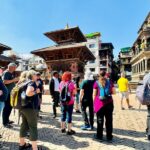
Transport is air-conditioned, and the group limit is up to 10 travelers. That cap makes a difference: you’re less likely to get lost in a crowd at the most crowded points, and your guide can actually talk to you instead of simply rallying a large bus group.
Also, you get a mobile ticket. It’s a small thing, but in practical travel terms it means less fumbling with paper and less time wasted at check-in.
Stop 1: Pashupatinath Temple and the Shiva-centered world
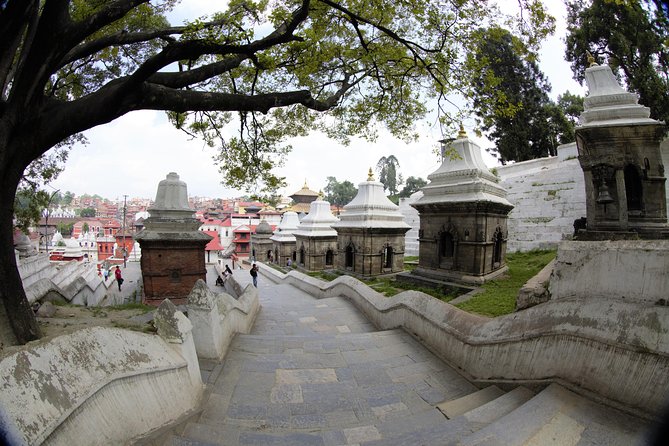
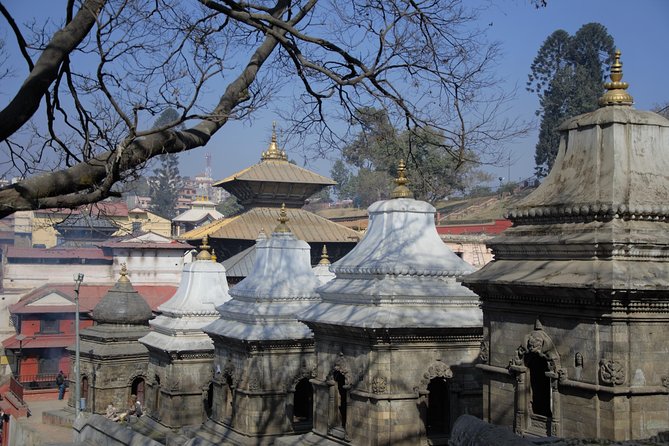
Pashupatinath is dedicated to Shiva, known here as Pashupatinath (Lord of Animals). If your mind likes meaning, this stop will reward you. You’re walking into a place where devotion isn’t abstract. It’s expressed through rituals, the way people gather, and the way the grounds are organized around the sacred.
You should also be ready for the fact that Pashupatinath is associated with final rites. The tour description points you toward the possibility of seeing cremation activity. In practice, this can feel intense. If you’re uncomfortable with death-related rituals, you’ll still learn a lot from the setting, but your emotional tolerance matters.
A realistic expectation: you’ll have about two hours here. That’s enough to explore the temple area at a measured pace and to take in the different forms of worship you may see. Just plan to dress respectfully and keep your headspace steady. This isn’t a theme park; it’s a working religious site.
Stop 2: Durbar Square (Patan) and the Malla kings angle
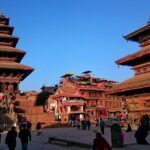
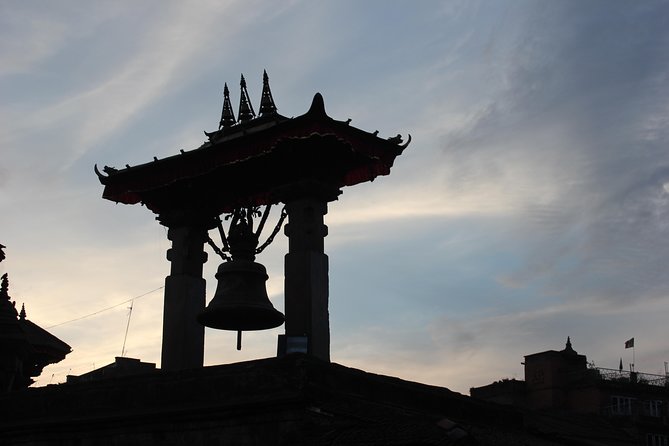
Durbar Square is the “follow the kings” portion of the day. In this route, you’ll focus on Durbar Square in Lalitpur, described as Patan Durbar Square. It’s known for Newari architecture and for its deep ties to the Malla kings—so you’re not only seeing buildings. You’re seeing power written in stone.
This is where a good guide earns their keep. The architecture is detailed, and without context you can end up doing the typical tourist shuffle: look, photo, move on. With guiding, you’re more likely to notice what those courtyards, temples, and palace-era spaces were designed to communicate.
You’ll get about two hours at this stop, which gives you time to slow down. One drawback to keep in mind: if you prefer highly structured “must-see only” tours, this kind of heritage square can feel like you’re walking through history at your own pace. That’s the trade. You gain depth, but you also need a little curiosity.

Stop 3: Boudhanath Stupa and cross-religious respect
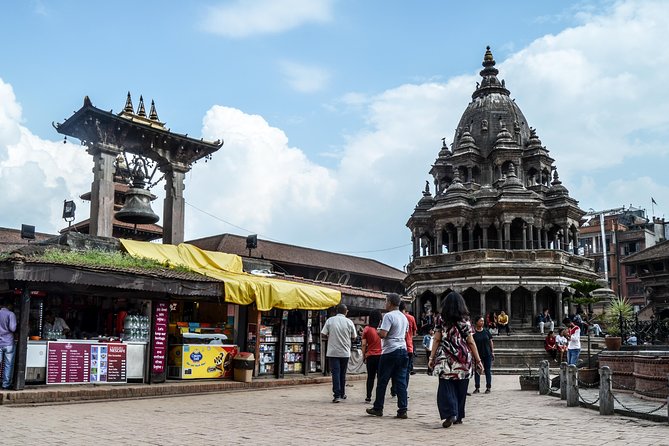
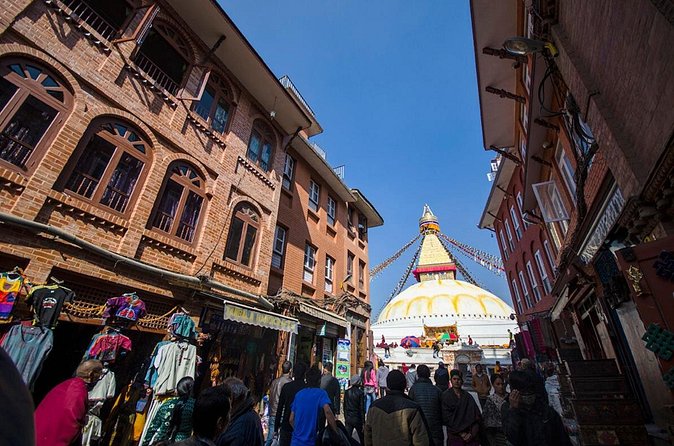
Boudhanath Stupa is one of Nepal’s holiest Buddhist sites. What makes this stop memorable is scale and atmosphere: the stupa is the center of gravity. Even if you don’t fully understand the religious language, you’ll recognize devotion in how people move around it.
The tour framing also notes that Hindus in Nepal show equal respect to this pious Buddhist site. That matters because it’s not a hard wall between religions. In Kathmandu Valley, sacred spaces often overlap in how people view them. You’ll likely see that blend in the way visitors behave and how the area feels.
You’ll have about two hours here. That’s plenty of time to walk around the stupa and pause for long enough to actually notice details—things like the flow of people moving, prayer rhythms, and the way the space holds attention.
The guide experience: where the best tours get made
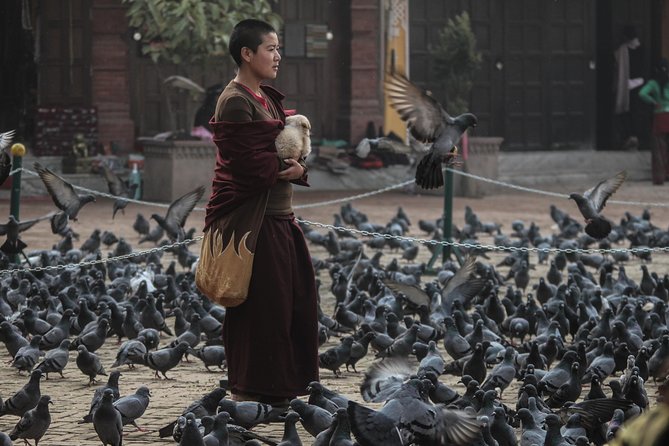
The biggest quality difference on this kind of day is the guide. In strong examples, the guiding really leads the day. One guide named Ms. Deepa was praised for organizing the tour well and for explaining the history behind the landmarks. Another standout guide named Kalpana impressed people with extensive local cultural knowledge and was happy to answer questions even during lunch time.
That’s the kind of touring I enjoy: not just a script, but a willingness to talk. If you like learning while you walk—why a temple looks a certain way, what a ritual means, what people are doing and why—this tour is the right format.
One small caution from a less-perfect experience: there can be stretches between major stops where you may get less commentary. In one account, the guide and driver spoke to each other in Nepalese, and the participant found themselves not getting much narration in the car. You can avoid feeling stranded by preparing a question or two ahead of time—then when your guide has your attention again, you’ll get more out of it.
Pacing, timing, and what to plan for in a 7-hour day
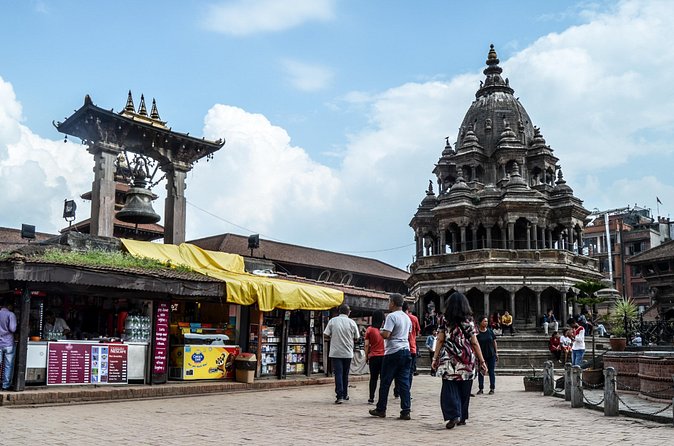
With roughly 7 hours total, and about two hours per main stop, this is a “see a lot, sit a little, walk a bit” day. You’ll be on your feet in sacred areas, and you’ll be in transit enough that you’ll notice time passing.
I’d plan your day like this:
- Wear comfortable shoes you can stand in for a while.
- Bring a layer. Temple areas can feel different in temperature depending on wind and shade.
- Keep your phone charged for navigation and reminders, since you’ll be hopping between neighborhood-style points.
You’re also near public transportation, which is helpful if you want flexibility, but the tour is designed to handle transport for you. The point isn’t to make you play logistical chess. It’s to remove the stress.
Also, this is a heritage-focused route, so it can be busy at peak moments. Don’t rush. Slow down where you see details; speed up only when you’re moving between cleared walking paths.
Entrance fees: budget for them, don’t get surprised
Entrance fees are not included, and that can catch some people off guard. One example gave a clear picture: 2000 rupees total, with 1000 rupees at two stops.
So what should you do? Bring cash and expect on-site payment. And don’t assume the fees will be identical for every site every day; systems can vary. But you can treat that 2000-rupee figure as a solid planning number for an adult, based on actual experience.
If you want a smooth day, do this before you arrive at the gates: keep a little extra money in a separate pocket so you’re not rummaging while your group is waiting.
Who should book this tour (and who might want a different style)
This tour fits you best if:
- you want a guided introduction to Kathmandu Valley’s religious and royal heritage
- you like structure but still want time at each stop (not just a quick drive-by)
- you prefer a small group over a huge bus crowd
- you’re okay with a day that includes solemn, ritual-linked spaces at Pashupatinath
It might not fit you as well if:
- you want nonstop commentary with zero quiet downtime in transit
- you dislike any exposure to cremation-related activity, even if it’s only something you might see
- you’re traveling ultra-light and don’t want to think about cash for entrances
Also, because the tour starts at 9:00 am, build in buffer time for getting to the meeting point. If your day is vulnerable to flight delays, you’ll need to factor that in so you don’t miss the start time.
Should you book the Temples and Stupas Tour in Kathmandu Valley?
I’d book it if you want a high-efficiency day with real guidance and a clear hit list of Kathmandu Valley’s big UNESCO sites. The combination of air-conditioned transport, an English-speaking guide, and a cap of 10 travelers makes this a comfortable way to get your bearings fast and understand the meaning behind what you’re seeing.
Skip it or reconsider if entrance fees would be a headache for you, or if you know you’ll struggle with the emotional weight of Pashupatinath’s setting. Otherwise, this is a smart-value route—especially for first-timers—because it turns three iconic places into a connected story of Nepal’s Hindu and Buddhist life.
FAQ
What are the main stops on this Kathmandu Valley tour?
The tour visits Pashupatinath Temple, Durbar Square (Lalitpur side / Patan Durbar Square), and Boudhanath Stupa.
How long is the tour?
The duration is about 7 hours.
What time does the tour start and where is the meeting point?
It starts at 9:00 am. The meeting point is Royal Mountain Travel, Lal Durbar Marg, Kathmandu 44601, Nepal.
Is the tour guided, and what language is used?
Yes. It includes an English-speaking tour guide.
Are entrance fees included in the price?
No. Entrance fees are not included, and they may apply at sites.
What about food and drinks?
Food and drinks are not included.
How is transportation handled?
The tour includes transport by an air-conditioned vehicle, as per group size.
Is there a mobile ticket?
Yes, it includes a mobile ticket.
Is free cancellation available?
Yes. You can cancel up to 24 hours in advance for a full refund.