Caves and temples in one Pokhara loop. I like how this private half-day tour string-bonds the key sights—especially Gupteswar Gupha cave time and Bindhya Basini Temple views—into one easy ride, with pickup from your hotel. One real consideration: several other stops may require you to pay entrance fees on arrival, so check your expectations before you go all-in.
I also like the variety. You get a mix of sacred sites and mountain-themed culture, plus a break to watch the Seti Gandaki river work through its gorges from a viewing spot.
Because this is transportation-first (not a full guided walkthrough), you’ll want to be comfortable reading signs and asking questions as you go. If you’re hoping for deep explanations of each site, consider bringing extra curiosity—or booking a guide for that.
In This Review
- Key highlights
- How the 5–6 Hour Private Loop Works in Pokhara
- Gupteswar Gupha Caves: the included stop you’ll remember
- Devi’s Fall: a quick view with possible extra costs
- Bindhya Basini Temple: short visit, big viewpoint
- Pokhara Museum: Gorkha history in a short dose
- World Peace Pagoda: Buddha-themed views over Pokhara and the Himalayas
- International Mountain Museum: when you want context for the ranges
- Seti Gandaki: the river-and-gorge moment that makes the drive worth it
- Price and value: $70.65 per person with a smart included-fee strategy
- Comfort, transport, and what “private tour” means here
- Best for: who should book this Pokhara tour
- Should you book this private Pokhara sightseeing tour?
- FAQ
- How long is the 5 hours private Pokhara sightseeing tour?
- Is pickup from my hotel included?
- What is included in the tour price?
- Which entrance tickets are included?
- Are entrance fees included for every stop?
- Is this tour private?
- Does it include a guide?
- What stops are included in the route?
- Is food or drinks included?
- What’s the cancellation policy?
- Are service animals allowed, and can most people participate?
Key highlights
- Private hotel pickup and drop-off keeps your day simple and reduces the hassle of switching transport
- Included admissions for Gupteswar Gupha and Bindhya Basini Temple help you control costs
- A fast, focused itinerary with short stop times (many around 10 minutes) suits tight schedules
- World Peace Pagoda + International Mountain Museum gives you both spiritual and mountain learning in one loop
- Seti Gandaki viewing from a hanging bridge area is the payoff stop for river-and-gorge scenery
- Some gates cost extra at stops like Devi’s Fall and the museums, so budget for additional entrance fees
How the 5–6 Hour Private Loop Works in Pokhara
This tour is designed as a smooth, end-to-end city circuit. You’re picked up from your hotel in Pokhara by private vehicle and then driven to a sequence of stops, with return transport back to your accommodation. The total time usually lands around 5 to 6 hours, which is long enough to see several major landmarks without turning your day into a marathon.
The smart part is the pacing. Many of the stops are short—think about 10 minutes for several sites, then a bit longer for the museum stops. That means you’ll get to tick off the “big names” of Pokhara, but you won’t have hours to linger at every entrance. If you like to linger and chat, you might find yourself wanting more time at one or two places.
Also, keep in mind what you’re paying for. The price covers private transportation and included fees for a couple of specific attractions, but not every gate along the route. So you’ll want to decide ahead of time which places are must-enter for you versus which are “view from outside” stops.
You can also read our reviews of more private tours in Pokhara
Gupteswar Gupha Caves: the included stop you’ll remember
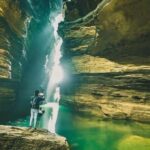
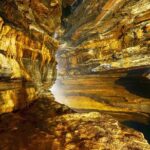
Gupteswar Gupha is the first stop, and it’s a strong one. You’ll head into the caves where you can explore natural rock formations and stalagmites. The time here is about 10 minutes, and the admission ticket for the caves is included.
What I like about this stop as a value play is simple: this is one of the few parts where the tour’s structure lines up with the cost. Since the cave admission is included, you don’t have to negotiate your budget at the gate. Instead, you can focus on the experience itself—walking into a dark, cool setting and paying attention to the cave formations you can see around you.
A practical tip: caves move at their own pace. Even if the scheduled time is short, give yourself a few minutes to orient—where the paths are, where you’ll pause for photos, and where you’re heading next. If you rush, you’ll miss the formations you came for.
Devi’s Fall: a quick view with possible extra costs
Devi’s Fall is next on the route. You’ll get a short stop (about 10 minutes) to see the falls of the Gandaki River area, where the water appears to go down under the cave system of Pokhara.
Here’s the main consideration: the admission ticket for this stop is not included. That means if you choose to go in and pay, add that to your day. If not, you can still treat it as a quick viewing/photo moment and keep the schedule tight.
Also, remember that waterfalls are one of those sights where timing matters. If the area is crowded or slippery, you’ll spend more of your 10 minutes figuring out the safest path for photos. If you’re the type who hates rushing around wet surfaces, plan to keep your expectations realistic here.
Bindhya Basini Temple: short visit, big viewpoint
Then you’ll reach Bindhya Basini Temple, one of the oldest and most sacred temples in Pokhara. The stop is about 10 minutes, and the admission ticket is included.
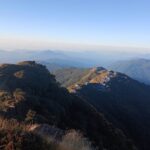
What makes this stop feel worthwhile is the combination of spirituality and location. The temple sits on top of a viewpoint, with a strong look over the old city. Even if you’re not visiting for religious reasons, that view can still make the stop land.
One balancing note: temple visits can mean different things depending on your interests. If you’re not drawn to Hindu temple architecture or rituals, you may feel the time is a bit tight for the payoff. But if you like history-by-place—how a community marks important sites—you’re likely to appreciate how the temple works as a landmark.
If you do plan to spend the whole time inside, keep an eye on the weather. Since it’s a viewpoint area, conditions can change quickly and affect comfort.
Pokhara Museum: Gorkha history in a short dose
After the temple, you’ll stop at the Pokhara Museum. This is a short stop at around 10 minutes, and the entrance fee is not included.
The museum is dedicated to the courage and history of the famous Gorkha warriors of Pokhara. If you enjoy museums that focus on a specific theme—rather than a huge, everything-in-one building approach—this kind of stop can be a nice way to break up the outdoors sightseeing.
The catch is time. With only about 10 minutes, you’ll need to choose what you’re going to look for. Don’t treat it like a full museum visit. Treat it like a quick orientation stop, enough to get the story started so the rest of your Pokhara day makes more sense.

World Peace Pagoda: Buddha-themed views over Pokhara and the Himalayas
Next comes the World Peace Pagoda, a Buddhist-style temple dedicated to world peace and the teachings of Buddha. Your time here is about 20 minutes, and entrance is not included.
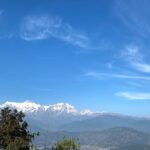
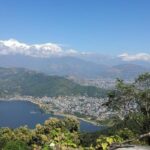
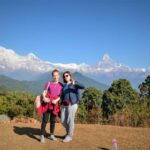
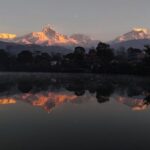
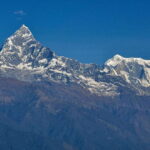
This stop tends to work because it offers a two-for-one feeling: the temple is a calm, spiritual setting, and the reward is the panorama—views of the Himalayas and the city of Pokhara.
If you’re sensitive to crowds, arrive ready for the fact that viewpoint areas can be busy. A 20-minute window is workable, but it’s not long enough to wait around for perfect lighting if the crowd stays dense. Use those minutes for a few steady look-backs: the immediate views over Pokhara first, then any wide-angle perspectives of the mountain direction if visibility allows.
Also, keep your camera charged. This is a place where you’ll likely want multiple angles, especially if you care about skyline-type compositions.
International Mountain Museum: when you want context for the ranges
After that you’ll visit the International Mountain Museum. The scheduled stop is about 30 minutes, and entrance is not included.
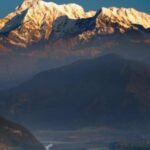
This museum is about the mountains and the legends of the Himalayas. It’s meant to help you understand the highest mountain ranges of the world. If you’ve been staring at mountain silhouettes during the day, this is the kind of stop that can turn guesswork into names and context.
The best way to use the 30 minutes is to pick one goal: either learn the big-range overview or focus on the legend/story elements. Trying to absorb everything at once will make you feel rushed. With a half-hour, you’ll get more satisfaction if you leave with one or two strong takeaways rather than ten half-remembered facts.
Seti Gandaki: the river-and-gorge moment that makes the drive worth it
Finally, you’ll reach Seti Gandaki (Seti River). This is a short stop at about 10 minutes. The admission ticket is included here.
The point of this stop is the river cutting through gorges and carved valleys over millions of years. You’ll see it from a hanging bridge and watch how the Gandaki flows through the city.
In my view, this is the “wow” payoff when the rest of your day is about switching between sites. The bridge viewpoint gives you a different Pokhara perspective—less city, more natural power. It’s also the sort of stop that can refresh your eyes after temples and indoor time.
Just be ready for what a bridge viewing means in practice: you’ll likely have to stand close, and you’ll want to keep your footing safe. Give yourself a minute to find a comfortable spot where you can actually see the river section you came for.
Price and value: $70.65 per person with a smart included-fee strategy
At $70.65 per person, the headline value is the private transport plus a few included admissions. The included-fee parts are important: you get Gupteswar Gupha and Bindhya Basini Temple admission covered, and Seti Gandaki also includes its ticket. Those are the stops that help justify a private half-day price tag.
Where costs can creep up is the rest of the gate admissions. Stops like Devi’s Fall, Pokhara Museum, World Peace Pagoda, and International Mountain Museum do not include entrance fees, so you may end up paying for “added” access if you decide to go inside everything.
Here’s how I’d think about it before booking:
- If you plan to enter the cave, the temple, and the Seti Gandaki ticketed area anyway, the package is more likely to feel fair.
- If you’re mostly interested in exterior views or quick picture stops, you might want to adjust expectations at the non-included sites.
One more value note: you’re paying for a private vehicle, not a full guide-led program. That’s why the price can stay in an accessible range for a private itinerary. If you want guided storytelling at every stop, you may feel the cost needs to rise—or you’ll need to do some self-guided reading.
Comfort, transport, and what “private tour” means here
This experience is private, meaning only your group participates. You’ll have private transportation the whole way, and pickup is offered from your hotel in Pokhara. That matters because Pokhara can be a stop-and-start city if you’re coordinating transport yourself.
From the practical side, the biggest benefit of private transport is time control. You’re not waiting around for shared rides, and you can move directly from one sight to the next. You also avoid the mental load of negotiating local taxi rides for every leg of the day.
One more detail that helps: mobile ticketing is included. That reduces the hassle of printed paperwork, especially if you’re bouncing between activities during your trip.
And yes, there’s a driver involved. One of the best ways to judge this kind of tour is whether the vehicle feels comfortable and the driver’s approach is easy. A comfortable car and smooth driving make the whole day feel less like a checklist and more like a relaxed sightseeing block.
Best for: who should book this Pokhara tour
This tour fits best if you:
- Want a half-day plan that hits major Pokhara sights without planning the route yourself
- Like a mix of caves, temples, viewpoints, and mountain-themed culture
- Prefer private transport over managing multiple rides
- Don’t mind short stops and quick “taste tests” at museums
It’s also a good fit if you’re traveling with someone who wants variety but not hours of walking. The itinerary is paced for car access and limited time on site.
Where it may feel less ideal is if you’re a museum devotee who expects to read everything slowly, or if you want deep explanations at every sacred or historical stop. Since the structure is transportation-led, you’ll want to bring your own curiosity or seek outside help for context.
Should you book this private Pokhara sightseeing tour?
I’d book this tour if you want an efficient Pokhara highlight loop with included entry at the cave, the temple, and Seti Gandaki, and you value the convenience of pickup and private driving. It’s a solid way to see more of Pokhara in one block without turning the day into logistics.
I’d think twice if your budget is tight and you hate the idea of paying extra entrance fees at multiple sites. Also consider skipping or simplifying the non-included places inside if you’re not feeling museum or temple time.
If you want caves plus viewpoints plus a mountain-themed museum stop, this arrangement makes a lot of sense.
FAQ
How long is the 5 hours private Pokhara sightseeing tour?
It runs about 5 to 6 hours.
Is pickup from my hotel included?
Yes. Pickup is offered in Pokhara.
What is included in the tour price?
The tour includes private transportation and all fees and taxes, with admissions included for specific listed stops.
Which entrance tickets are included?
Admission is included for Gupteswar Gupha and Bindhya Basini Temple, and also for Seti Gandaki.
Are entrance fees included for every stop?
No. Some stops listed for sightseeing do not include entrance tickets, so additional entrance fees may apply.
Is this tour private?
Yes. It’s a private tour/activity, and only your group participates.
Does it include a guide?
The tour is presented as private transportation, and it is typically priced more affordably than a guided program.
What stops are included in the route?
You’ll visit Gupteswar Gupha, Devi’s Fall, Bindhya Basini Temple, the Pokhara Museum, World Peace Pagoda, the International Mountain Museum, and Seti Gandaki.
Is food or drinks included?
No. Food and beverages are not included.
What’s the cancellation policy?
Free cancellation is available up to 24 hours in advance for a full refund.
Are service animals allowed, and can most people participate?
Service animals are allowed, and most travelers can participate.
Tour operated by Peak to Peak Tours and Treks Pvt Ltd.