REVIEW · KATHMANDU
Kathmandu Spiritual Sites: Bodhnath & Pashupatinath Tour
Book on Viator →Operated by Intrepid Urban Adventures - India · Bookable on Viator
Two holy sites, one intense evening. You’ll visit Boudhanath Stupa for prayer-wheel rotation, then head to Pashupatinath for the evening aarti and the real rhythm of daily worship along the Bagmati River. It’s built for people who have limited time but still want the kind of Kathmandu experience you can’t get from a quick bus-and-photo stop.
I especially like the small-group setup, capped at 12 people. Guides such as Rozit, Amit, Subash, Bipin, and Ramhavi come through in the reviews as patient and careful with the pace, which matters a lot when you’re stepping into crowded sacred spaces.
The main consideration is that Pashupatinath involves sensitive moments, including cremation ceremonies by the river, with clear respect rules like no photos in those areas. Add in the fact that you’ll walk around 2 km in total, and you’ll want to be ready for crowds, standing, and a bit of temple-side hustle.
In This Review
- Key Points You’ll Care About
- Kathmandu’s Spiritual Evening: Why This Tour Hits at the Right Time
- Getting There From Thamel: Public Transport Without the Headache
- Stop 1: Boudhanath Stupa and the Prayer-Wheel Circuit
- The main trade-off at Boudhanath
- The Shift Between Religions: From Wheels and Lamps to Shiva Stories
- Stop 2: Pashupatinath Temple, Saddhus, Palm Reading, and Bagmati Cremations
- Saddhus and what to watch for
- Palm reading is optional (and separate cost)
- Cremation ceremonies by the Bagmati River
- A quick reality check
- The Evening Aarti at Pashupatinath: Lights, Timing, and Group Discipline
- What I like about the tour design here
- How Much You’ll Actually See in 4 Hours (And Why It Feels Enough)
- Group size makes a difference
- Price and Value: What $60.56 Buys You Here
- What’s not included (so you don’t get surprised)
- Practical Tips That Make This Tour Easier and More Respectful
- Should You Book This Kathmandu Spiritual Sites Tour?
- FAQ
- What time does the Kathmandu Spiritual Sites tour start?
- How long is the tour?
- Which UNESCO sites are included?
- Are admission tickets included?
- Is the aarti at Pashupatinath included?
- Is palm reading included, and does it cost extra?
- Where does the tour start and end?
Key Points You’ll Care About
- Evening timing: Aarti at Pashupatinath hits at sunset energy, not midday rush.
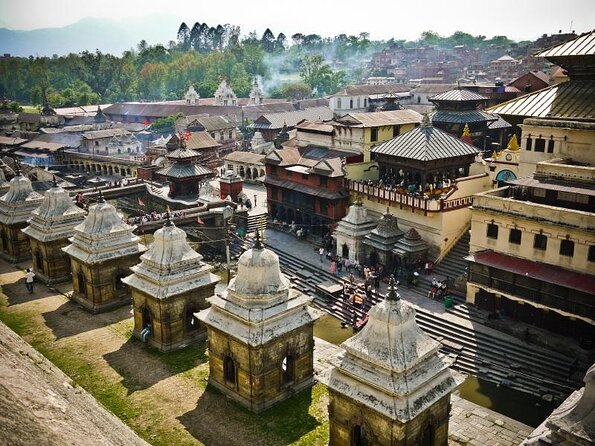
- Two UNESCO sites in one loop: Boudhanath’s Tibetan Buddhist world plus Pashupatinath’s Hindu Shiva tradition.
- Public transport for a local feel: You’re not only chauffeured around the city.
- A small group (max 12): Easier navigation through crowd bottlenecks near the temples.
- Real-life spirituality, not a staged show: Prayer wheels, butter-lamp offerings, saddhus, and ceremony viewing.
Kathmandu’s Spiritual Evening: Why This Tour Hits at the Right Time
This tour is scheduled for the late afternoon, starting at 3:00 pm from Hotel Marshyangdi in Thamel. That timing is smart because both sites are at their most atmospheric as daylight fades. You get to see daily worship, then watch how the mood shifts when the evening rituals start.
What makes it work is the pairing. Boudhanath (Bodhnath) Stupa gives you a Tibetan Buddhist spiritual center with a huge dome and prayer-wheel motion. Then you transition to Pashupatinath, one of Nepal’s most important Hindu temples, where the focus becomes Shiva worship and the cycle of life and death. In a short span (about 4 hours), you experience two different religious languages for the same idea: devotion, community, and meaning.
If you only have a day or two in Kathmandu, this is a practical way to see the big-name UNESCO sites without turning your afternoon into a checklist. It’s also easier than trying to figure out the flow on your own when the crowd patterns get intense near the river.
You can also read our reviews of more tours and experiences in Kathmandu.


Getting There From Thamel: Public Transport Without the Headache
You start in Thamel, the main visitor hub in Kathmandu, and the tour begins right at/near Hotel Marshyangdi (Chaksibari Marg). The plan then moves you between neighborhoods using public transport, which is the difference between seeing Kathmandu as a tourist shuttle route and seeing it as a living city.
Public transport also matters for timing. When you’re moving from Thamel toward Boudhanath, you’re balancing traffic, pedestrians, and local schedules. Having a guide who can keep your group together saves you from that constant “Where do we go next?” feeling.
One more small but helpful detail: the tour includes transport costs between the meeting point and Boudhanath, and again from Pashupatinath back to the endpoint (which returns to the meeting point). So you’re not constantly paying ad-hoc fares while your brain is busy with temple rules and crowd navigation.
Stop 1: Boudhanath Stupa and the Prayer-Wheel Circuit
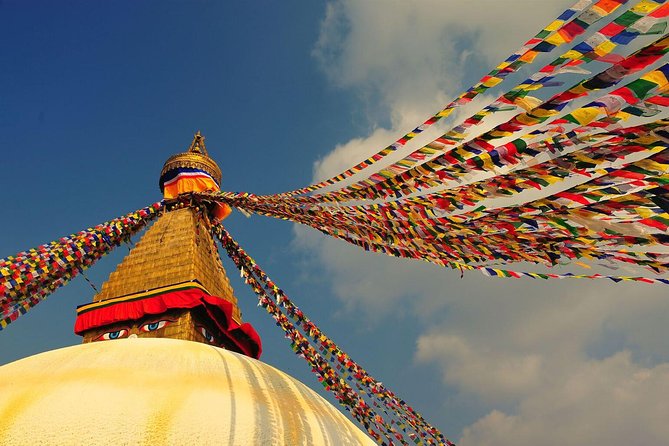
Your first major stop is Boudhanath Stupa, a UNESCO World Heritage Site and one of the largest stupas in the world. This is the Tibetan Buddhist center you’ve probably seen in photos, but it’s the movement and sound that make it click: prayer wheels, chanting, and people doing the same devotional loop in their own rhythm.
You’ll spend about 1 hour 25 minutes here, with the best “do it with locals” element being the prayer-wheel rotation. The goal isn’t just to look at the stupa—it’s to join the ritual behavior so the experience feels like part of the place, not an outsider’s observation.
You may also have the chance to offer a traditional butter lamp and say prayers. That’s optional, and it’s also one of those moments where your guide’s timing helps. In sacred spaces, you want to follow the flow so you’re not standing awkwardly or getting in people’s way.
The main trade-off at Boudhanath
This stop can be crowded depending on the day. You’ll be moving around the stupa perimeter with lots of other people. The good part: the rules are clear, and the ritual flow gives you structure. The “watch your step” part: you should expect to stand, walk slowly, and keep an eye on your footing around groups.
The Shift Between Religions: From Wheels and Lamps to Shiva Stories
After Boudhanath, you head toward Pashupatinath Temple, with a walk of around 15 minutes between areas. This isn’t a “ride and forget” transition—your brain changes gears as you move from a Buddhist stupa complex atmosphere to a Hindu temple zone.
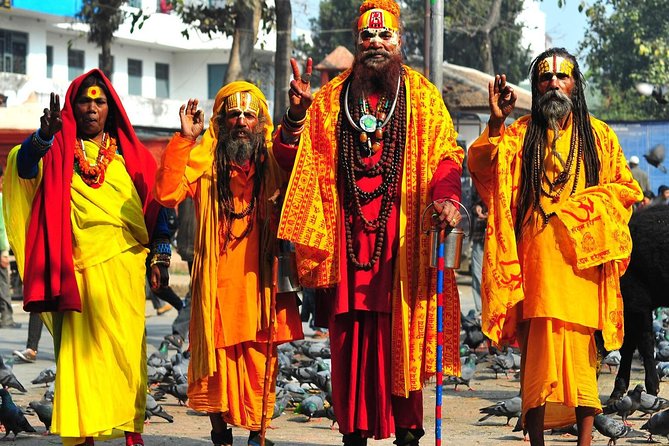
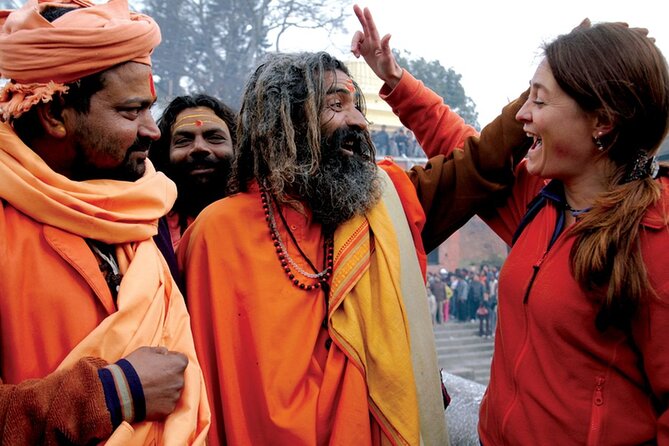
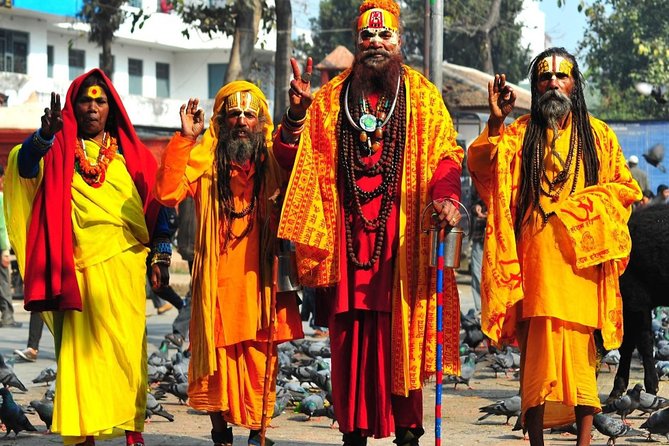
At Pashupatinath, you’re guided through Hindu belief details, including how Hinduism frames the cycle of birth and death. You’ll also get context on the sadhu tradition—who they are, what devotion looks like in daily life, and why their material choices (including sacrifices of possessions) matter within their worldview.
Even if you’ve visited other temples, this shift is worth your attention because it’s not only architectural. It’s emotional. The stupa stop feels like ongoing prayer in motion. Pashupatinath can feel like prayer with gravity, because it includes the river-edge ceremonies that connect faith to mortality.

Stop 2: Pashupatinath Temple, Saddhus, Palm Reading, and Bagmati Cremations
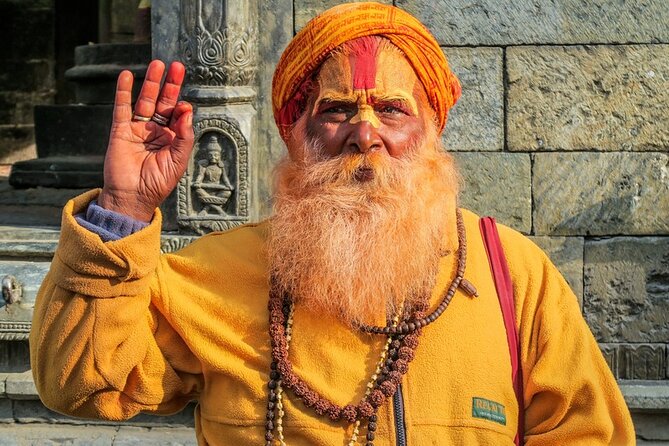
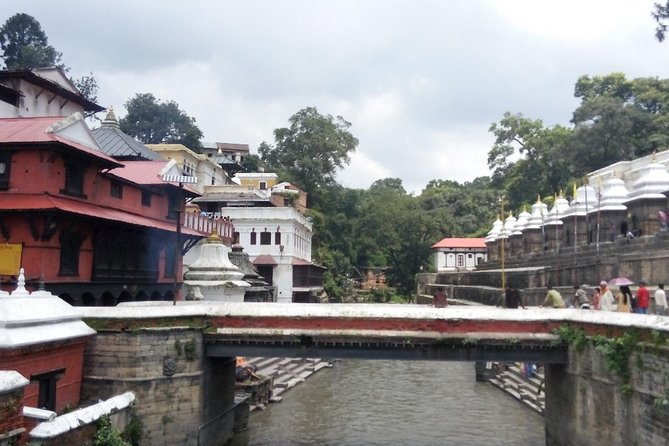
Pashupatinath is the second UNESCO site, and you’ll spend about 2 hours 20 minutes there. The temple is dedicated to Shiva, and this is where the tour becomes intensely real.
Saddhus and what to watch for
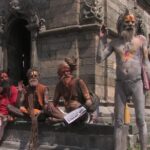
You’ll see sadhu monks and get an explanation of their beliefs. The guide focuses on the idea that devotion can look like renunciation—less about comfort, more about commitment. This isn’t a “random photo moment,” because the whole place has protocols and unspoken lines about how close you can be.
Palm reading is optional (and separate cost)
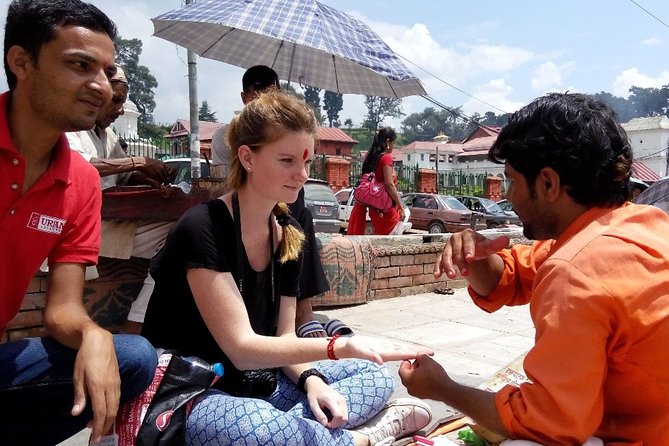
The tour includes a visit to a local palm reader, where you can get your future read. The palm reading itself is optional and not included in the price. The extra info you get for planning is that palm reading varies, roughly $7.5 to $9 per person.
If you do it, let the guide help with timing and negotiation. In places like this, the biggest win is not bargaining hard—it’s avoiding confusion and keeping your group movement smooth.
Cremation ceremonies by the Bagmati River
Outside the entrance area of Pashupatinath, you can witness cremation ceremonies occurring along the edge of the Bagmati River. This is the moment you should treat with extra respect. The tour specifically notes that you should refrain from taking photos or watching these rituals out of respect for mourning families.
I’m glad this is stated upfront. Many tours toss people into these scenes like it’s entertainment. Here, the ethical boundary is part of the experience. You’re there to understand, not to exploit.
A quick reality check
Because the site connects faith to death rituals, you may see less “tourist friendly” behavior than at other attractions. Some people find it deeply moving; others find it hard to process. If you’re sensitive to that kind of content, this is the one section where you’ll want to mentally prepare.
The Evening Aarti at Pashupatinath: Lights, Timing, and Group Discipline
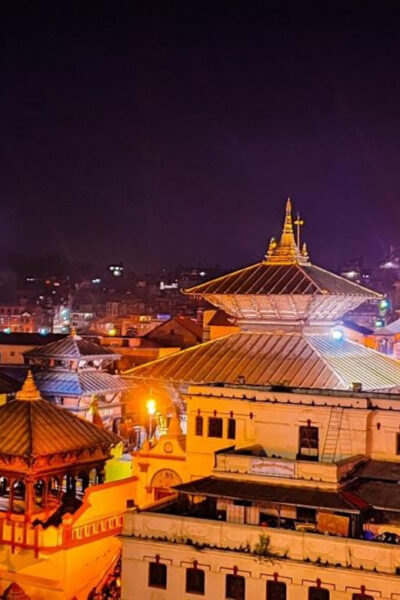
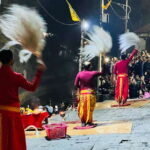
One of the top reasons people book this tour is the included evening aarti, an offering of lights to Lord Pashupatinath. You join the ritual as the sun goes down and crowds gather on the riverbanks on the eastern side of the temple.
This part is mesmerizing because it’s participatory without being chaotic. You’ll see the lights offered as a formal devotional act, and you’ll feel how collective worship works when everyone understands the choreography.
The crowd is the part you must manage. The tour guidance says to keep near your guide and your group so you don’t get lost in the density of people. That’s not just convenience—it’s safety. When you’re in a crush of locals and pilgrims, a guide becomes your anchor.
What I like about the tour design here
You’re not dumped at the end and told good luck. You’re guided through the flow and the meaning. That changes how the aarti lands, because you understand what you’re seeing rather than only filming it.
How Much You’ll Actually See in 4 Hours (And Why It Feels Enough)
This is a short tour by Kathmandu standards: about 4 hours total. But the timing is arranged so you’re not sprinting between sites without context.
A helpful way to think about it:
- Boudhanath gives you a long enough window (about 1 hour 25 minutes) to rotate prayer wheels and feel the rhythm.
- Pashupatinath gets the longer slot (about 2 hours 20 minutes) because there’s more to understand and more places where people gather.
- A small transfer/walk component bridges the two.
The walking distance totals around 2 km, which is manageable if you’re not expecting a “no-step” evening. You’ll also be standing at times—especially around the aarti—so wear shoes that can handle uneven surfaces and temple crowds.
Group size makes a difference
With a maximum of 12 people, you’re not constantly separated. It’s a big reason the guides in the reviews are praised for care and patience. In crowded sacred spaces, being in a large group can mean you spend more time herding than seeing.
Price and Value: What $60.56 Buys You Here
At $60.56 per person, the value comes from stacking multiple things into one guided evening. You’re paying for:
- a local English-speaking Nepali guide
- entry/admission to both UNESCO sites
- participation in the evening aarti
- transportation between the key points
- witnessing the cremation ceremony area (with respect rules)
- extra guidance like visits to a palm reader (optional cost not included) and advice on what else to do and eat
If you were doing Boudhanath and Pashupatinath alone, you’d still face guide fees (or language barriers), admission logistics, and transport decisions. Here, the guide structure reduces friction. You also get explanations that connect what you see—prayer wheels, saddhus, cycle of life and death, cremations—to the meaning behind the visuals.
What’s not included (so you don’t get surprised)
Lunch/dinner isn’t included, and neither are optional extras like palm reader fees or any potential offerings/interactions that come with extra charges. The tour does mention that if you choose offering butter lamps at Boudhanath, or if you take pictures or interact with sadhus, there are costs (for example, palm reading around $7.5–$9 per person, and sadhus interaction/pictures around $7.5). Your guide can help with negotiating.
Practical Tips That Make This Tour Easier and More Respectful
A few things will help you enjoy this tour without stress:
- Camera mindset: You’ll want photos at the stupa and temple areas, but near cremation ceremonies the guidance is to avoid photos out of respect. Decide ahead of time how you’ll balance filming with being present.
- Stay with your guide during the crowd: The aarti and riverbank areas get dense fast. This isn’t the place to wander for a better angle.
- Bring a comfortable layer: It’s late afternoon into early evening, and temples aren’t always climate-controlled.
- Shoes for uneven walking: You’ll walk around 2 km total, plus standing.
- Expect sensory intensity: Cremations and crowds are part of Pashupatinath. If you’re okay with that, you’ll come away understanding why this temple matters.
One more note that’s good context: the tour mentions significant earthquake damage at some visited sites from April/May 2015, and that the sights you visit have been renovated. That’s why you’ll likely see repaired structures rather than raw damage.
Should You Book This Kathmandu Spiritual Sites Tour?
Book it if you want a focused evening where you see two UNESCO spiritual icons—Boudhanath Stupa and Pashupatinath Temple—with real context and an aarti ritual included. It’s especially worth it when you’re short on time and you’d rather use a guide to handle the crowd choreography than guess your way through it.
Skip or reconsider if you know you’re very sensitive to the sight of death rituals, even with respectful viewing expectations. Also, if you hate walking/standing and you need a very low-footprint plan, this one may feel like a lot in a single half-day.
If you do book, pick the same mindset the best guides bring: follow instructions closely, stay with the group when it matters, and treat the cremation area with the respect it asks for. With that approach, this tour can become one of the most memorable evenings in Kathmandu—because it shows you faith in motion, not just stone architecture.
FAQ
What time does the Kathmandu Spiritual Sites tour start?
The tour starts at 3:00 pm.
How long is the tour?
It runs for about 4 hours (approx.).
Which UNESCO sites are included?
You’ll visit Boudhanath Stupa and Pashupatinath Temple.
Are admission tickets included?
Yes. Admission tickets are included for both stops (Boudhanath Stupa and Pashupatinath Temple).
Is the aarti at Pashupatinath included?
Yes. The tour includes joining the evening aarti at Pashupatinath Temple, an offering of lights.
Is palm reading included, and does it cost extra?
The tour includes a visit to a local palm reader, but the palm reading fees are not included and are an optional extra cost.
Where does the tour start and end?
It starts at Hotel Marshyangdi in Kathmandu and ends back at the same meeting point.