REVIEW · KATHMANDU
Gurkha Knife Making
Book on Viator →Operated by Queermandu | Gay Tours Nepal · Bookable on Viator
Forging a Gurkha knife feels unreal. In Kathmandu, you spend about four hours in a working forge, making your own Gurkha knife with a stamped personal mark. It’s run in a small group (max 4) with tea and cookies, so you get hands-on help instead of just watching.
What I like most is the chance to learn by doing, right alongside the smithing team. You also leave with a real keepsake: an Indian rosewood handle and the option to stamp your initials on the blade, backed by a 100-year guarantee.
One thing to plan for: this is a morning session. The schedule runs early (between 7:15 AM and 10:15 AM), and the group limit means you should reserve ahead if you want a specific slot.
In This Review
- Key things to know before you forge
- Gurkha Knife Making in Kathmandu: a hands-on morning workshop
- Where you’ll meet and how the 4-hour session flows
- Inside the forge: learning blade work you can actually feel
- Handle materials and the initials stamp: your knife becomes yours
- The Gurkha knife story: strength, resistance, and the tales you hear while you work
- What you take home: a usable souvenir with a 100-year guarantee
- Price and value: is $66 a fair deal for a 4-hour craft?
- Group size, pickup, and mobile tickets: the logistics that make it smoother
- Who should book this Gurkha knife workshop (and who should skip)
- Should you book Gurkha Knife Making in Kathmandu?
- FAQ
- Where is the meeting point for the Gurkha Knife Making workshop?
- How long does the experience last?
- What are the workshop hours?
- Is pickup available?
- Do I need a mobile ticket?
- What will I make during the session?
- How many people are in a group?
- Is free cancellation available?
Key things to know before you forge
- Garden of Dreams start point makes it easy to orient yourself in central Kathmandu
- About 4 hours of true hands-on work, not a quick demo
- Tea and cookies show up during the session, keeping the vibe relaxed
- Indian rosewood handle plus the chance to stamp your initials on the blade
- Maximum 4 travelers for a more personal workshop feel
- 100-year guarantee on the knife you take home
Gurkha Knife Making in Kathmandu: a hands-on morning workshop
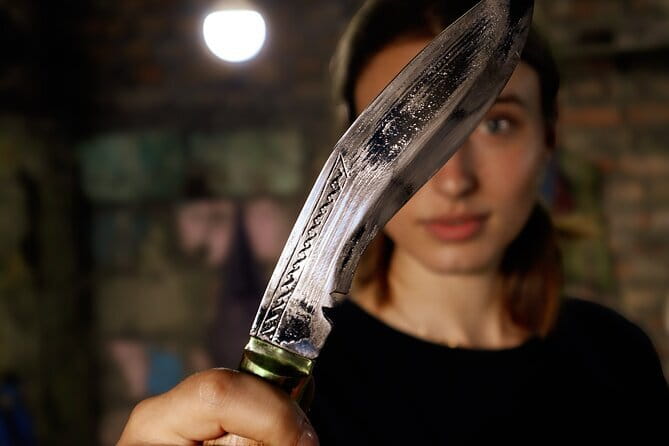
If you’re the type who loves seeing craft work up close, this is a solid choice in Kathmandu. You’re not just looking at a finished knife behind glass. You’re stepping into the forge space, learning as the metal takes shape, and ending with a knife you helped create.
This is also a meaning-heavy experience. The Gurkha knife is presented as a symbol tied to history, strength, and resistance. You’ll get stories during the session, not just instructions for your hands.
Because it’s small (up to four people), the pace tends to be practical. You’ll have time to ask questions and get guidance while you work, and that matters in a craft where tiny technique changes can show up in the final shape.
You can also read our reviews of more tours and experiences in Kathmandu.

Where you’ll meet and how the 4-hour session flows
The workshop starts at the Garden of Dreams area (Tridevi Sadak, Kathmandu 44600), and it ends back at the same meeting point. That “back to start” structure is great when you’re trying to stack a morning itinerary without stress.
Time-wise, the sessions run in the morning window: 7:15 AM to 10:15 AM, Monday through Sunday, for the listed operating dates. The duration is about four hours, so even if you’re starting near the early side, you’ll want your day planned around that block.
If you opt into pickup, you’ll be collected for the workshop. The experience also uses a mobile ticket, which keeps things simple when you’re navigating by phone on the street.
What does the session feel like? Think: guided craft time plus a bit of cultural storytelling. You’ll get tea and cookies during the work, which helps break up the physical focus. The goal isn’t to rush you through. The goal is to let you participate while the makers explain what’s happening.
Inside the forge: learning blade work you can actually feel
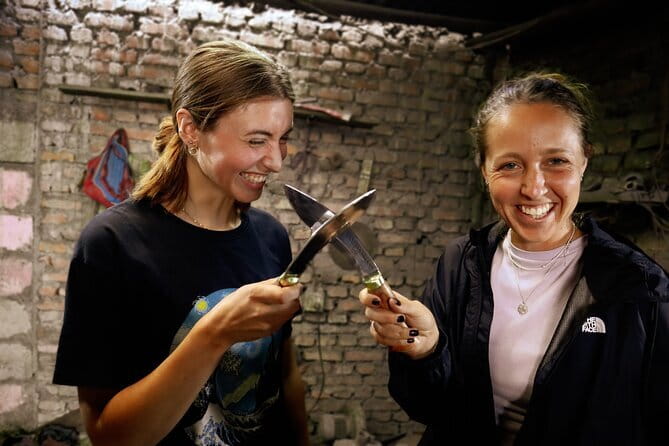
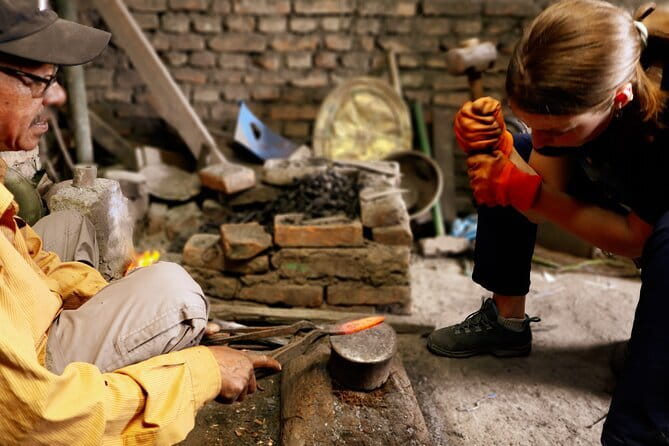
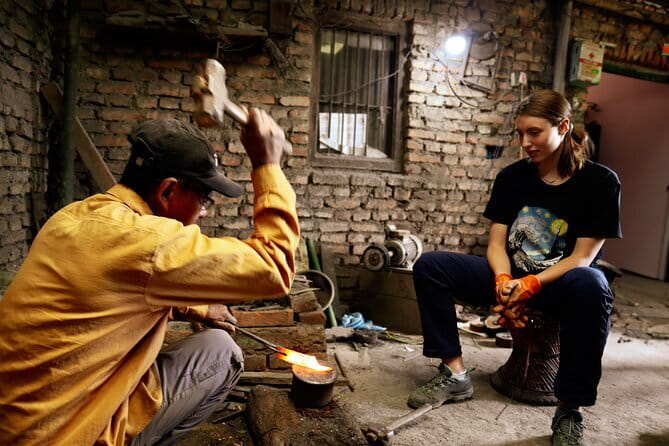
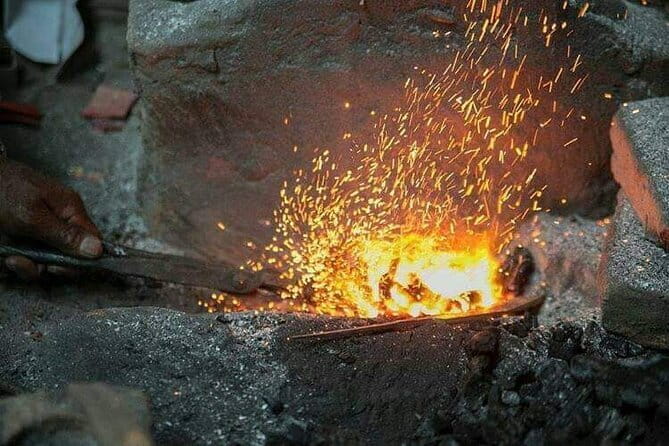
You’ll spend the bulk of your time doing metalwork alongside the blacksmith team in their small forge setting. This is one of the best parts of the experience: you get close to the process, and you can see how the work is paced and controlled.
The experience is designed as a hands-on activity where you create your own authentic Gurkha knife. In practical terms, that means your session is built around active participation—working, shaping, and adding finishing touches rather than only observing.
It also helps that the instructors are friendly and used to teaching. Past participants have highlighted how patient and fun the process feels, even when you’re totally new to metalwork. That’s important because knife making can sound intimidating, but the workshop format is set up to keep you supported.
Handle materials and the initials stamp: your knife becomes yours
The workshop gives you a key detail that turns the knife from a souvenir into something personal: the handle is made with quality Indian rosewood. That isn’t just a random material choice. Rosewood-style handles are valued for their look and feel, and it’s the kind of practical detail that helps your knife look finished rather than generic.
Then there’s the part people remember: you can add a personal stamp. You’ll be able to stamp your initials on the blade, which makes the piece feel like it belongs to you. It’s also a moment where the activity stops being “lesson mode” and starts being “crafting your own object.”
A small tip: decide your initials before you go. If you’re picky about spelling or order, handle it early so you don’t have to think under workshop time pressure.
The Gurkha knife story: strength, resistance, and the tales you hear while you work
The experience doesn’t treat the knife as just a product. You’ll hear the origin story and the kinds of legends people link to the legendary Gurkha warriors.
That matters because it changes how you experience the making. Instead of thinking only about heat and metal, you’re also connecting the work to what the knife represents—history and resistance, as the workshop frames it. You’ll also hear fascinating tales that surround the Gurkhas, which gives the craft a larger context.
In other words, you’re getting two layers at once:
- hands-on skill and process
- cultural background that makes the finished knife feel more grounded

What you take home: a usable souvenir with a 100-year guarantee
You end with your own Gurkha knife—made during the session—and a 100-year guarantee is included with the knife. That guarantee point is worth your attention when you’re thinking about value, because it signals that the maker expects the piece to last.
Also, you’re not leaving with a “session certificate” or a cheap token. You’re leaving with an actual crafted object that you helped shape, and the workshop explicitly supports you in finishing it with a handle material and your stamped initials.
A few practical reality checks:
- This is a workshop piece, so plan to keep it safe during your rest of your Kathmandu days.
- If you’re traveling light, think about how you’ll pack it after pickup.
If you want a memory that you can hold, this is the kind of souvenir that sticks.
Price and value: is $66 a fair deal for a 4-hour craft?
At $66 per person, you’re paying for more than “an activity ticket.” You’re paying for guided participation inside a working forge, plus the materials that go into your knife (including the rosewood handle) and the guarantee behind the finished product.
This kind of price can feel surprisingly reasonable once you factor in:
- the small group size (max 4)
- active work time (about four hours)
- the fact that you make something tangible and personal (including stamping initials)
- the finished product comes with a long guarantee
The biggest value driver here is the format: you don’t get pushed through. You get time and help while you’re creating the knife.
Group size, pickup, and mobile tickets: the logistics that make it smoother
With a maximum of four travelers, the workshop setup is intimate. That usually means you get more attention from the smith and guide, and you spend less time waiting.
Pickup is offered, which can be helpful in Kathmandu, especially if you’re starting your day with jet lag or you’re just trying to reduce walking around before your morning coffee.
The mobile ticket detail is also practical. You won’t need to hunt for printed paperwork. You’ll just show your ticket on your phone at the meeting point.
If you’re booking: the activity is commonly reserved about 9 days in advance on average. That’s a clue that slots can fill, likely because of the small group size and the early morning timing.
Who should book this Gurkha knife workshop (and who should skip)
This workshop is a strong match if you:
- want a hands-on craft experience instead of a short sightseeing stop
- enjoy making something physical that lasts longer than a photo
- like cultural storytelling tied to what you’re doing
- prefer small groups with real guidance
It’s also a good pick if you’re traveling with a friend and want something calmer and more skill-focused than a big tour.
You might want to skip (or choose a different activity) if:
- an early morning schedule (7:15 AM to 10:15 AM window) doesn’t work for your itinerary
- you’re not interested in keeping and packing a crafted object afterward
- you’d rather watch than participate (this one is built for doing)
Given the format and the guarantee, I think it’s a very practical “Kathmandu morning” plan.
Should you book Gurkha Knife Making in Kathmandu?
Yes, book it if you want a real craft moment with cultural context, and you’re okay committing to an early start. The small group size, the hands-on workshop format, the Indian rosewood handle, and the initial stamping are the core reasons this feels like more than just a souvenir purchase. Add the 100-year guarantee, and you get a finished object that’s meant to be kept, not forgotten.
If you’re on the fence, decide based on two things: your willingness to wake up early, and whether you’ll enjoy making an item you can actually take home. If that sounds like your kind of travel day, this is one of the most direct ways to get close to Kathmandu’s maker culture.
FAQ
Where is the meeting point for the Gurkha Knife Making workshop?
The meeting point is the Garden of Dreams, Tridevi Sadak, Kathmandu 44600, Nepal.
How long does the experience last?
The experience runs for about 4 hours.
What are the workshop hours?
Sessions run Monday through Sunday between 7:15 AM and 10:15 AM, for the listed operating dates.
Is pickup available?
Yes, pickup is offered.
Do I need a mobile ticket?
Yes, the experience uses a mobile ticket.
What will I make during the session?
You’ll make your own authentic Gurkha knife, including working with Indian rosewood for the handle and stamping your initials on the blade.
How many people are in a group?
The workshop has a maximum of 4 travelers.
Is free cancellation available?
Yes. You can cancel up to 24 hours in advance for a full refund.