REVIEW · KATHMANDU
1 day with our women empowerment and children development project
Book on Viator →Operated by Human welfare committee · Bookable on Viator
A day with real people beats the usual sightseeing grind. This program in Kathmandu pairs Nepali cooking with hands-on bead jewelry, then shifts to kids right when school lets out. It is a long, lived-in block of time where you get to do things, not just watch them.
Two things I really like: you learn skills from local women (including classic dal bhat or momo), and you carry home a piece of the day you made yourself. One consideration: it runs around 9 hours and includes a walk between the meeting spot and the main center, so it is best if you are comfortable with a full afternoon rather than a quick, scripted stop.
In This Review
- Key points worth your attention
- Dal bhat, momo, and beadwork: what this day really feels like
- Where it starts: Paknajol meeting spot and what to plan for
- 11:00 to 1:00 Nepali cooking: Dal Bhat or momo, taught step by step
- Lunch from 1:00 to 2:00: sharing the meal, not just eating it
- 2:00 to 4:00 jewelry workshop: make something real with colorful beads
- The 30-minute walk at 4:00: moving to the main center
- 5:00 to 7:00 with the children: games, walking, dancing, singing, painting
- Dinner with children from 7:00 to 8:00: the day’s quieter finish
- Who leads and why conversation helps: Tenzing and the project’s real context
- Price and value: what $120.13 buys for a 9-hour day
- Small practical tips so you enjoy the whole day
- Should you book it? Best fit (and who should reconsider)
- Book or skip: my honest take
- FAQ
- How long is the program?
- What happens during the cooking portion?
- What do I do in the jewelry workshop?
- Where do we meet, and where do we end?
- Is it a private tour?
- Are the children involved during the afternoon?
- What is the cancellation policy?
Key points worth your attention
- Hands-on Nepali cooking with women teaching you dal bhat or momo
- Bead jewelry-making using colorful beads, with your creation as a keepsake
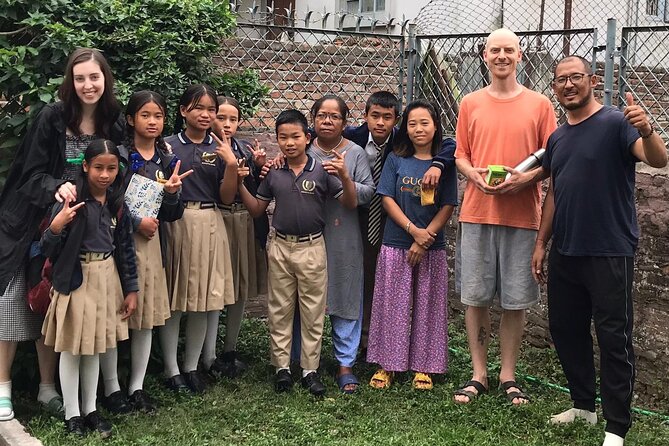
- Kids’ schoolday timing: you meet children after class for games, sports, walking, dancing, and singing
- Time with the organization’s leadership through conversations led by Tenzing
- A shared dinner with children to close the day in a more personal way
Dal bhat, momo, and beadwork: what this day really feels like
This is not a stand-and-photos tour. It is a day structured like a community rhythm: food first, making something next, then energy from the kids after school. You spend time inside the flow of a women empowerment and children development project, where your role is simple: show up, participate, and be kind with your attention.
What makes it special is the sequence. You start with hands-on work with the women, then you switch gears to the children at a very specific time of day. That timing matters because it is when the day’s boundaries drop. You can see the change as the kids arrive, and the vibe becomes less formal and more playful.
One more detail I like: the program is led through real relationships. In past days, the coordinator named Tenzing has been part of the experience, including time for conversation. That kind of contact helps you understand what you are supporting, instead of treating the day like a checklist.
You can also read our reviews of more tours and experiences in Kathmandu

Where it starts: Paknajol meeting spot and what to plan for
The day begins at We handicraft, Paknajol, Kathmandu 44600, and it is designed around an afternoon schedule. Practically, that means you should plan your morning in Kathmandu so you do not feel rushed.
The timeline is roughly:
- 11:00 am to 1:00 pm: Nepali cooking class
- 1:00 pm to 2:00 pm: lunch
- 2:00 pm to 4:00 pm: jewelry workshop
- 4:00 pm to 4:30 pm: walk together to the main center
- 5:00 pm to 7:00 pm: activities with children
- 7:00 pm to 8:00 pm: dinner with children
- 8:00 pm: farewell and end
Based on reported timing from a similar day, you might see minor variation in when kids arrive (around 3:00 to 4:00 pm). So I recommend you build in a little flexibility and treat the schedule as a guide, not a stopwatch contest.
Also, this is a private tour/activity, meaning only your group participates. That often makes the day feel more relaxed and personal, especially during the cooking and beadwork parts where attention matters.
11:00 to 1:00 Nepali cooking: Dal Bhat or momo, taught step by step

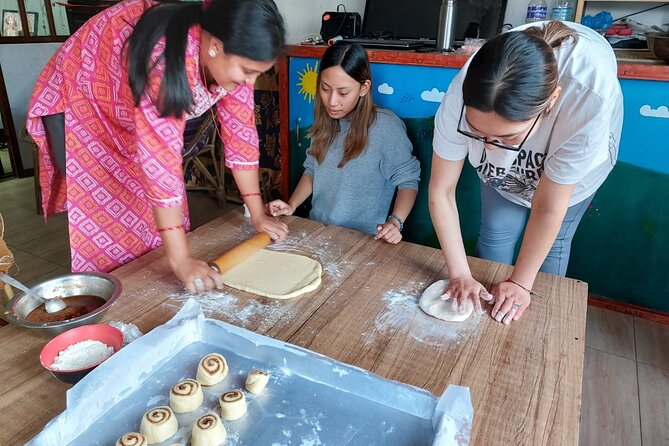
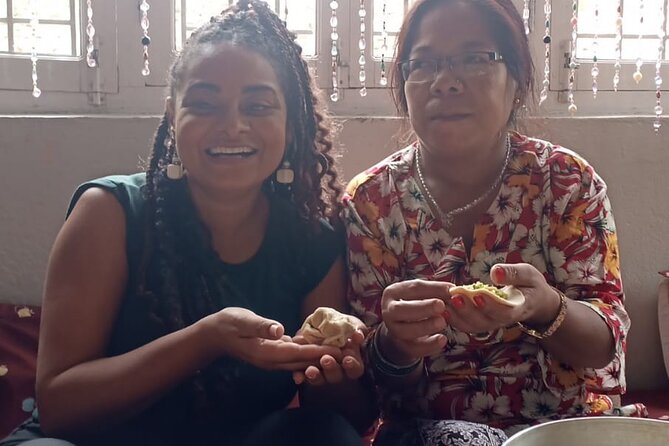
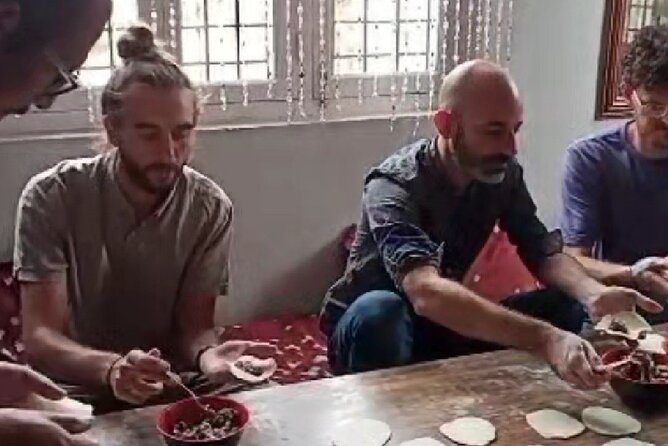
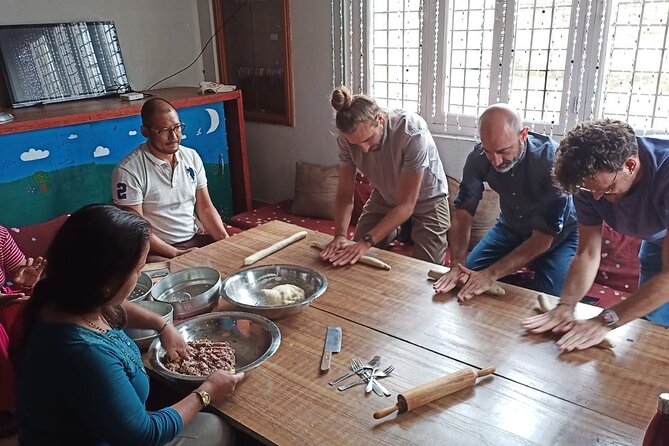
This is the heart of the program’s first half. From 11:00 am to 1:00 pm, women from the project teach you a traditional Nepali dish: dal bhat or momo. You do not just taste. You learn how it comes together.
Why this matters: cooking class formats can be hit-or-miss when they are just performance. Here, the point is learning a daily-food skill. Dal bhat is a staple meal in Nepal, while momo is a beloved dumpling style. Either way, you get a more grounded view of Nepal than you get from ordering the same dish somewhere later.
What you should expect:
- You’ll work with the instructors while they explain what to do next
- You’ll handle ingredients and techniques rather than watching from the corner
- You’ll get a meal that’s part of the same cultural context the project supports
A practical thought: since this portion runs until 1:00 pm, plan to keep your hands-and-clothes situation comfortable. Wear something you can stand in during a cooking session and bring a little patience for how long food can take when everyone is doing it together.
Lunch from 1:00 to 2:00: sharing the meal, not just eating it
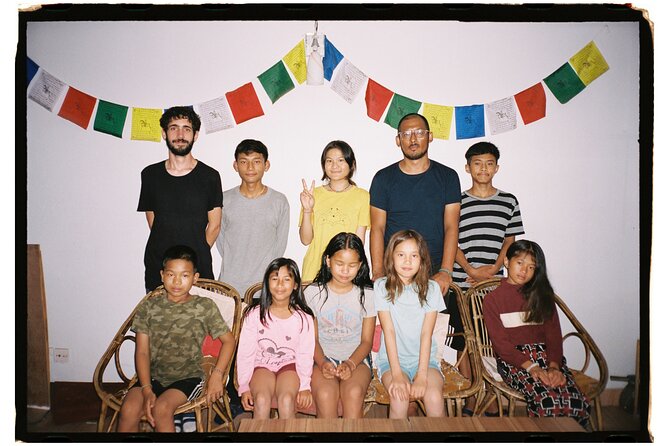
After cooking, you share lunch together from 1:00 pm to 2:00 pm. The structure is simple, but it is meaningful. Cooking builds attention. Lunch turns that attention into a shared moment.
Also, because the day later includes dinner with the children, this lunch functions like a bridge. You go from learning food basics with the women to later meeting kids in a setting where meals are part of community life.
If you are thinking about value, this is one reason the price can make sense. You are not paying only for activity time. You are paying for access to a day that includes food at key moments—lunch and then dinner later—while you participate in the project’s social rhythm.
2:00 to 4:00 jewelry workshop: make something real with colorful beads
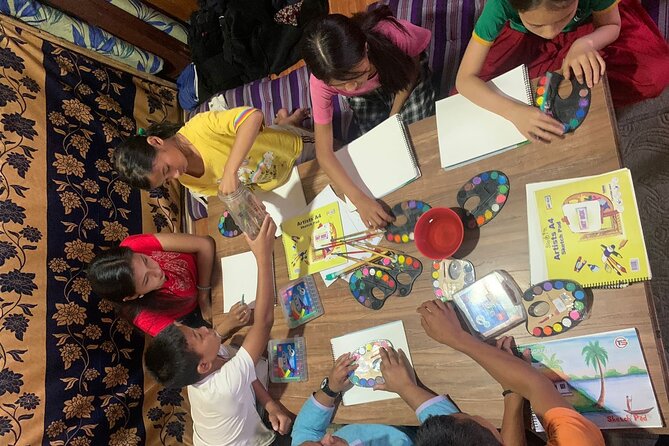
From 2:00 pm to 4:00 pm, the women guide you through jewelry-making using colorful beads. You make your own jewelry, either for yourself or as a souvenir.
This is one of the most “take-it-home” parts of the day. Cooking is about knowledge. Jewelry is about a physical object that carries your time and effort. It also slows you down in a good way. Beadwork asks for focus, and you end up learning through repetition and small corrections from the person teaching you.
What makes this portion worth your attention:
- You learn a craft style that feels local and personal
- You create a keepsake rather than collecting photos
- You spend time with the women in a calm, hands-on setting
If you get nervous about crafts, you do not need to. The goal is participation. The value comes from making something together, not from producing a perfect finished piece.





The 30-minute walk at 4:00: moving to the main center
At 4:00 pm to 4:30 pm, you walk together to the Human Welfare Committee main center at Manjushree Galli, Kathmandu 44600. That walk might feel like a short pause between worlds: you’re leaving the cooking and beadwork space and heading toward the children activities.
Walking time is also practical. It helps you transition from seated workshops to the more active afternoon ahead.
One more note: in at least one reported day, the program included a stop at a Buddhist temple and time spent talking with Tenzing. That detail is not spelled out in every schedule block, but it gives you a hint of the broader context you may see during the day. If your day includes a temple visit, treat it as part of learning, not a quick photo opportunity.
5:00 to 7:00 with the children: games, walking, dancing, singing, painting
From 5:00 pm to 7:00 pm, the children return from school, and you connect with them through games and movement. The day can include activities like games, sports, walking, dancing, singing, and painting.
This part is often where the emotional tone of the day becomes most obvious. It is lively. It is spontaneous. It is not a classroom. You are there to join their energy and show you are present.
What I think helps most here:
- Join in with the simplest version of the activity rather than overthinking it
- Keep your attention on the children in front of you
- Be patient if communication is mostly nonverbal and playful
You might come in expecting a structured program. You are likely to find it is more flexible once the kids arrive. That flexibility is the point. It makes the connection feel human.
If you are worried about not knowing what to do, focus on participation. Kids can adapt instantly when adults are willing to try.
Dinner with children from 7:00 to 8:00: the day’s quieter finish
Dinner runs from 7:00 pm to 8:00 pm with the children. This closing hour changes the day’s feel. Earlier, the women’s workshops give you skills. The afternoon with kids gives you energy. Dinner is where it all comes down into shared time.
Dinner is also a signal that you are not only there for the “fun parts.” You are present through the full arc of the evening. In many volunteer-style experiences, the hardest thing is to show up past the peak hour. Here, the schedule includes that slower finish.
If you are conscious about respectful behavior, dinner is a good moment to be extra gentle and observant. Keep it simple, keep your tone warm, and let the group guide you.
Who leads and why conversation helps: Tenzing and the project’s real context
One name that comes up in reported experiences is Tenzing, who has been part of the day and available for conversation. In one account, the conversation ran for hours, and the person described learning about everyday life through those discussions.
This matters for you because it turns your support into understanding. When you talk with leadership, you start getting answers to questions your brain naturally has:
- What does the project try to do?
- How does daily life work inside the center?
- What challenges come with empowering women and supporting children?
Even if your day is busier than a long conversation day, the presence of someone like Tenzing signals that this program is run by people with a plan—not just a rotating cast of visitors.
Price and value: what $120.13 buys for a 9-hour day
At $120.13 per person, this is not the cheapest thing you can do in Kathmandu. But value is more than sticker price. You’re paying for a private group experience with a full 8 to 10 hours block, plus activities that require instructor time: cooking instruction, jewelry-making guidance, children’s activities, and shared meals.
Also, you are not only consuming. You are participating in two skills-based workshops. That usually costs more than tastings or guided walks because it involves teaching materials and hands-on coaching.
The mobile ticket feature is just convenience. The real value is the day’s structure:
- Women-led cooking
- Women-led beadwork
- Children’s school-after-hours connection
- Shared dinner
- A farewell close
In other words, you’re buying time with the community, not a quick encounter. That is why some people call it worth every penny.
If your travel style is low-effort and short stops, you might feel the time cost. If you like meaningful days over rushed checklists, the price starts to look fair.
Small practical tips so you enjoy the whole day
You’ll enjoy this day more if you prepare for a full stretch of activity.
A few simple ideas:
- Wear comfortable clothes and shoes for workshops and the walk
- Bring a light layer if Kathmandu evenings feel cool to you
- If you’re carrying a phone or camera, use it thoughtfully during interactions with children and follow the group lead
- Keep your energy steady. You’ll go from hands-on cooking to craft work to active games, then dinner
Also, since the program is near public transportation, you are not trapped in one neighborhood. Still, plan arrival time with buffer because the start is typically around 11:00 am.
Should you book it? Best fit (and who should reconsider)
This experience is a strong match if you:
- Want a day that is more about people and participation than monuments
- Like hands-on activities like cooking and crafting
- Are comfortable with a longer time commitment
- Prefer private group access
It may not be the best choice if you:
- Want a short, low-engagement activity
- Do not like long days that shift from calm workshops to energetic kids’ games
- Are uncomfortable walking 30 minutes as part of the program
If your goal is to see Kathmandu through everyday community life, this is one of the more direct ways to do it.
Book or skip: my honest take
I’d book this if you want a real Kathmandu day, not just a route. The strongest parts are the women-led cooking and bead jewelry, followed by that after-school window when the children’s energy shows up fully. The schedule is long, but it stays varied, and you leave with both a memory and something you made.
I would skip it only if you are time-limited or want something less hands-on. This is participation-heavy by design.
If you do book, come with patience and a friendly attitude. Your best “gift” is steady attention.
FAQ
How long is the program?
The experience runs about 8 to 10 hours.
What happens during the cooking portion?
You’ll join a Nepali cooking class from about 11:00 am to 1:00 pm, learning to cook a traditional dish such as dal bhat or momo with the women leading the project.
What do I do in the jewelry workshop?
From about 2:00 pm to 4:00 pm, you’ll make jewelry using colorful beads with the women. You can keep what you make for yourself or take it as a souvenir.
Where do we meet, and where do we end?
You start at We handicraft, Paknajol, Kathmandu 44600 and the main center is Human Welfare Committee, Manjushree Galli, Kathmandu 44600. The day ends at the Human Welfare Committee.
Is it a private tour?
Yes. It is listed as a private tour/activity, and only your group will participate.
Are the children involved during the afternoon?
Yes. Around 4:00 pm to 5:00 pm the children return from school, and from roughly 5:00 pm to 7:00 pm you’ll do activities with them. Dinner with the children happens around 7:00 pm to 8:00 pm.
What is the cancellation policy?
You can cancel for a full refund if you cancel at least 24 hours before the experience starts. If you cancel less than 24 hours before, the amount paid is not refunded.