REVIEW · KATHMANDU
20 Days Annapurna Circuit Trek
Book on Viator →Operated by The Great Adventure Treks & Expedition - Private Day Tours · Bookable on Viator
One big climb, many worlds. The Annapurna Circuit is where you can watch Nepal change in front of you, from warmer valleys and villages up to thin-air drama at Thorong La Pass and back down again. I like the way this route pairs huge mountain views with real everyday life, including Kathmandu’s Hindu and Buddhist landmarks before the hiking starts.
You’ll also appreciate how the trip is set up so you’re not constantly figuring out logistics. A licensed trekking guide, a porter (with a 25 kg weight limit), and included permits (ACAP and TIMS) mean more of your energy goes to breathing and taking photos. The only real drawback to plan for is altitude and effort: this trek is for people with moderate fitness and a willingness to be uncomfortable some days.
In This Review
- Key Points Worth Knowing Before You Commit
- Annapurna Circuit Trek: How Kathmandu Sets the Tone for the Mountains
- From Kathmandu to the Trailhead: Buses, Jeep Rides, and Why It Helps
- Dharapani Through Chame to Pisang: When Vegetation Starts to Flip
- Manang Day: Acclimatization That Actually Makes the Trek Work
- Yak Kharka, Ledar, and the Thorong High Camp Lead-Up
- Thorong La Pass and the Descent to Muktinath: The Trek’s Main Event
- Marpha to Tatopani: River Valleys, “Lonely” Teahouses, and Flora Swaps
- Ghorepani and Poon Hill: Easy-Looking Trails With Big Rewards
- Pokhara: Lakes, Waterfalls, and the Feeling of Coming Back Down
- Price and What Makes It Feel Like Value (Not Just a Number)
- Who Should Book This Trek, and Who Should Slow Down
- Book It or Skip It: My Decision Guide for You
- FAQ
- How long is the Annapurna Circuit trek on this trip?
- What time does the experience start?
- What’s included in the price?
- What is not included?
- Are temple or monument entry fees required in Kathmandu?
- Is this a private tour?
- What fitness level do I need?
- How does porter support work?
- Can I cancel and get a full refund?
Key Points Worth Knowing Before You Commit
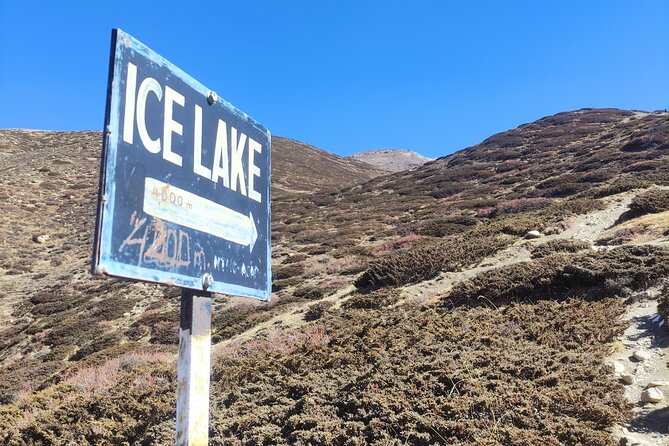
- Thorong La Pass timing matters: start early so you can reach the top before cold wind shows up.
- Manang acclimatization day: you get a full day in Manang to adjust before the higher sections.
- Meals and permits are included: breakfast, lunch, dinner counts are built in, plus ACAP and TIMS.
- Your guide is government licensed: the trek is led by an experienced professional guide, not a random helper.
- You’re moving a lot even before the trail: there are long travel legs from Kathmandu onward.
- Temple fees are separate: some major sights in Kathmandu require separate entry charges.
Annapurna Circuit Trek: How Kathmandu Sets the Tone for the Mountains
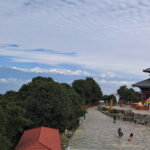
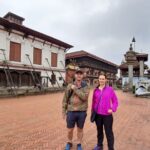
Your trek experience starts in Kathmandu, and that first taste of Nepal matters. Day 1 is an easy landing: you arrive at Tribhuvan Airport, meet the Great Adventure Treks representative, and get transferred to your hotel. Day 2 then gives you a cultural warm-up with three big stops: Pashupatinath Temple, Boudhanath Stupa, and Kathmandu Durbar Square.
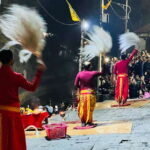
This isn’t just sightseeing filler. It’s a quick way to understand the spiritual backdrop of the route you’ll hike toward later—especially when you reach Muktinath, a sacred stop tied to the region’s faith traditions. In practical terms, it also helps you settle in before the trek begins, since you’re not jet-lagging on Day 1 and hoping for the best.
The only heads-up: the Kathmandu temple/square entry fees are not included (you’ll see specific amounts in the FAQ). If you want zero surprises, budget for those on Day 2.
You can also read our reviews of more hiking tours in Kathmandu
From Kathmandu to the Trailhead: Buses, Jeep Rides, and Why It Helps
You travel from Kathmandu toward the trek starting area in two main jumps. First you go by regular bus to Besisahar, then you continue by sharing jeep to Syange. This matters because it saves you from trying to cover too much distance on your own right before a multiday hike.
Day 3 includes a long day on the road, plus a daytime arrival into Syange (at 823m). You’ll then sleep there before the trek proper begins. Think of it as a controlled way to transition: you’re not hiking while your body is still adjusting from the airport and the first long drive.
If you’re the type who hates sitting for hours, this is the part that can feel slow. Still, it’s one of the more efficient ways to get you positioned for an Annapurna Circuit that actually delivers.
Dharapani Through Chame to Pisang: When Vegetation Starts to Flip
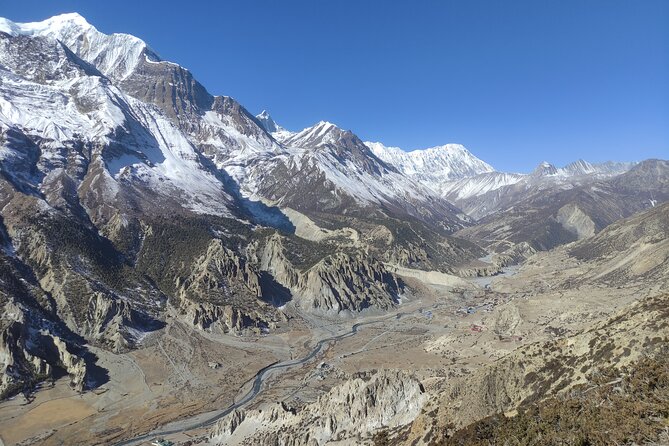
Once trekking starts, the first days are about rhythm. Day 4 begins from Besisahar toward Dharapani, and you’ll notice how quickly the trail can get serious early—there’s a steep section for about half an hour before it eases into lush farm terraces. This day is a good benchmark for you: you’ll quickly learn what your pace feels like with a full day ahead.
Day 5 brings Chame and a noticeable shift. The air cools, and the route goes through forests before reaching Bagarchhap (the route descriptions point you through forested walking toward the next village zone). Day 6 continues to Pisang (3200m), and you’ll trek along the northern bank side of the river for stretches.
Why this section is valuable: you’re not just climbing—you’re watching the environment change. The Annapurna Circuit is famous for the way it moves between different climate zones, and these first stages are where you first feel that switch in a tangible way.
Practical note: those earlier days can feel manageable, but they teach your legs and lungs to work together. Don’t blow out your pace trying to “prove” something on Day 4 or Day 5. Save that energy for higher days.
Manang Day: Acclimatization That Actually Makes the Trek Work
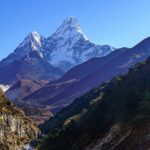
Day 7 takes you into Manang, and from there the trek description emphasizes constant views of high snowy peaks—this is a morale booster because the scenery starts rewarding you more often. Then Day 8 is the big deal: you spend time acclimatizing in Manang, including exploring the village (described as having around 500 flat-roofed houses).
That acclimatization day is not optional in spirit. It’s built in so you can reduce the risk of getting hammered by altitude later. You’re also getting real village time, not just a transit stop. It’s a chance to eat, rest, and adjust your routine before pushing toward the higher camps and eventually Thorong La Pass (5,416m).
If you’re tempted to rush every day because you want to reach the pass fast, resist it here. This is where the itinerary is trying to set you up for success.
Yak Kharka, Ledar, and the Thorong High Camp Lead-Up
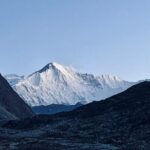
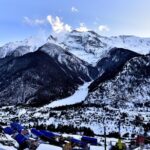
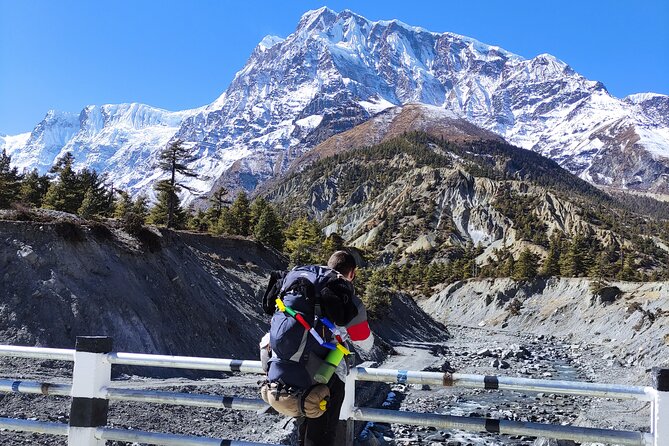
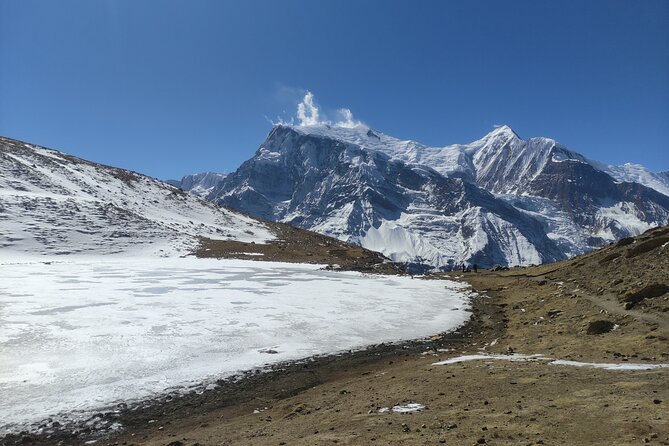
From Manang, Day 9 heads to Yak Kharka. The trek gets more challenging in the way typical high-altitude routes do: a slow climb with views of peaks like Annapurna II, Gangapurna, Tilicho, and close-up Chuli peaks. Then the trail pushes into more barren, wind-exposed areas. That transition can be mentally tough because it feels less sheltered, even when the walking isn’t technically extreme every hour.
Day 10 climbs toward Thorong High Camp viewpoint, reaching the last settlement of Ledar along the way. The description calls out grand views of multiple big peaks, which is a big reason people love this section. It’s also where you’ll start to feel the altitude more consistently, especially if you’re moving slower than your normal hiking pace.
What to watch: this is where the weather can change quickly, and your comfort choices matter (layers that work, gloves if needed, and a steady pace you can maintain). If you’re feeling unusually wiped out, don’t try to “catch up” by rushing. High-altitude hiking punishes ego.
Thorong La Pass and the Descent to Muktinath: The Trek’s Main Event
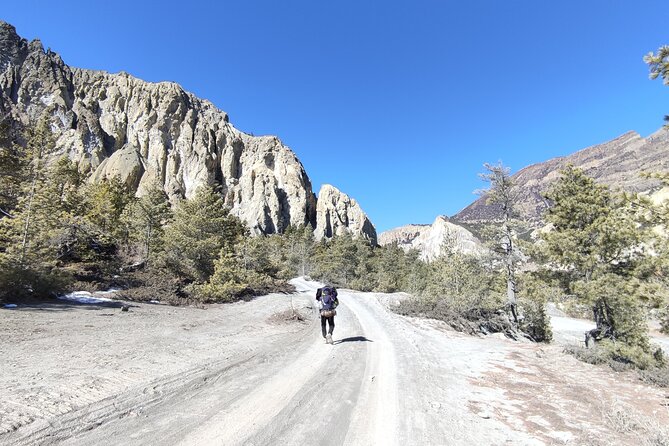
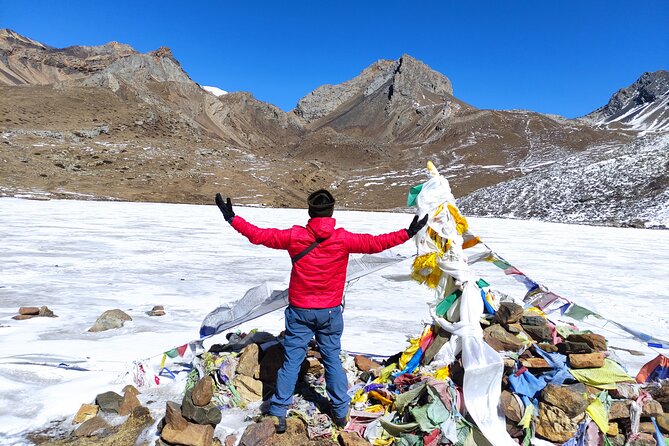
Day 11 is your pass day, and the itinerary is explicit: you start early after breakfast so you can reach the top on time before the cold wind starts. The climb is described as strenuous at the beginning, with a steep start before things stabilize into sustained effort.
Reaching the pass at 5,416 meters is the moment most people remember from the entire Annapurna Circuit. It’s also the kind of day where you’ll be grateful for the pacing earlier in the trek, including that Manang acclimatization day. Your body needs a sequence that makes sense.
After the pass, you descend to Muktinath (3,800m). The description says this is the longest day in terms of trekking, and it’s easy to see why: you’re dealing with big altitude range in one day. Once you reach the lower area, there are a couple of teahouses for refreshment, which helps you recover both physically and mentally.
If you want one practical mindset for this day: treat it as two separate hikes glued together—up to the pass, then down to restore your breathing. Either half can feel long. Both are worth it.
Marpha to Tatopani: River Valleys, “Lonely” Teahouses, and Flora Swaps
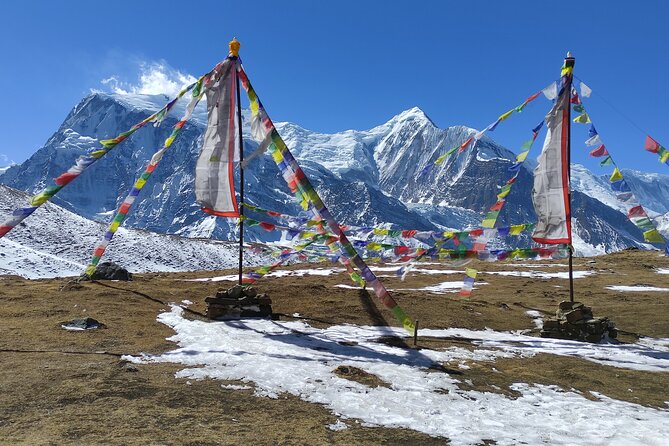
Day 12 takes you from Muktinath down to Marpha via a descent of about 1,200m to the Kaligandaki river valley floor. There’s also a stop at Ekale Bhatti, described as a lonely teahouse settlement with just a few places to pause. When the trail gets quiet like that, it’s one of the moments you feel how far you are from everyday noise.
Day 13 continues along the Kali Gandaki river toward Lete and then onward to Tukuche village. The description calls out views beneath Tukuche peak and Dhaulagiri, which is the kind of “frame the peaks” scenery that makes these river routes special.
Day 14 is another environmental turn: the trail passes from dry, arid zones into pine and conifer forests, and it runs between Dhaulagiri and Annapurna. That vegetation change isn’t just scenery—it signals that the trekking experience is moving between climate bands, which is basically the Annapurna Circuit’s claim to fame.
This middle section is a strong value stretch of the trek because it’s not only about getting lower; it’s about getting variety. If you love when a hike keeps surprising you, this is where you’ll feel it.
Ghorepani and Poon Hill: Easy-Looking Trails With Big Rewards
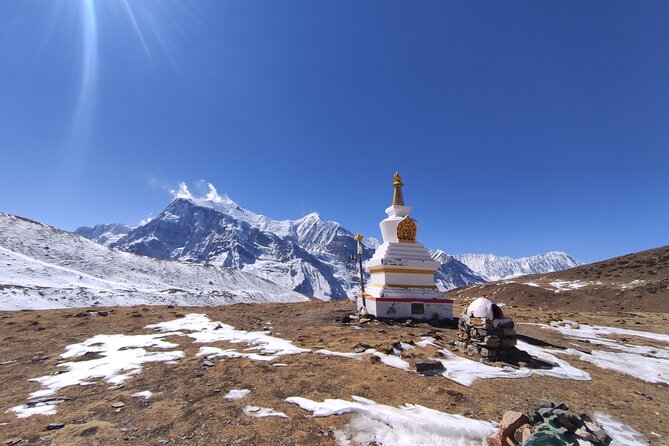
Day 15 brings you to Ghorepani (2,860m). You’ll trek for about 6–7 hours and cross a suspension bridge over the Kali Gandaki river. Suspension bridges have their own kind of charm: you feel like you’re walking across a moving line of energy. Just don’t stare down the whole time. Your calves are already working.
Day 16 includes Tikhedhunga, and if weather permits, you can do a one-hour hike to Poon Hill (3,195m) for sunrise. The described reward is a panorama spanning Dhaulagiri, Annapurna, and the Manaslu range. Even when sunrise plans don’t go perfectly, this is still a good day because you get a classic foothills viewpoint payoff before you head into Pokhara.
If you’re planning gear for this part: this is where a warm layer matters again. Early mornings at altitude can be surprisingly chilly.
Pokhara: Lakes, Waterfalls, and the Feeling of Coming Back Down
Day 17 moves you from the trekking trail into Pokhara, after a pleasant route through rural farm villages and views of nearby cascading waterfalls before arriving in the lakeside area. Day 18 is leisure time in Pokhara, with options like Phewa Lake, Begnas Lake, and Rupa Lake. This is your decompression day—the part of the trip that helps the trek fully land in your memory.
Day 19 returns you to Kathmandu by bus, described as about 8 hours, with scenic hills plus views along the Trisuli and Marsyangdi River route. Day 20 is the final handoff: airport transfer back to Tribhuvan, with the representative dropping you off around 3 hours before your scheduled flight.
If you’ve never had a “last day” after a big trek before, this itinerary handles it well. You’re not trying to squeeze one more heroic walk. You’re letting Nepal re-enter your senses at a slower speed.
Price and What Makes It Feel Like Value (Not Just a Number)
The price is listed at $1,200 per person for the 20-day trip. On paper, that’s a lot. In practice, it can feel reasonable because a full Annapurna Circuit isn’t just hiking days—it’s permits, guides, transport legs, and meals.
Here’s what’s included:
- Airport pickup and drop
- Kathmandu sightseeing by car
- Kathmandu to Besisahar by regular bus, plus Besisahar to Syange by sharing jeep
- A professional trekking guide with government license, plus a porter (2 guests per porter, 25 kg max)
- ACAP permit and TIMS card
- Meals included for most days (breakfasts, lunches, dinners are counted in the package)
What is not included is equally important:
- Visa and your international flight ticket
- Drinks
- Personal expenses and tips
- Rescue and evacuation costs
- Any special accommodation
- Temple entry fees in Kathmandu (and the exact fees are listed)
So the value question is simple: if you want a guided, permit-complete trek with food handled and transport organized, this price can make sense. If you plan to self-guide, skip permits, or carry all your gear yourself, you’d have a very different cost equation (and very different risk).
Who Should Book This Trek, and Who Should Slow Down
This itinerary is described as suitable for travelers with moderate physical fitness. That’s a helpful signal, because Annapurna Circuit days aren’t uniform. You’ll have some longer trekking days and at least one big altitude statement at Thorong La Pass.
This trek also makes sense if you want:
- A route with real cultural stops (Kathmandu temples, then Muktinath)
- A structured plan with acclimatization built in
- A private setup, so your group stays together and you’re not juggling other pace styles
You might want to think twice (or speak with a doctor) if you’re dealing with medical limitations related to altitude, breathing, or exertion. Even with a well-run itinerary, the elevations listed here are not decoration.
Book It or Skip It: My Decision Guide for You
I’d book this Annapurna Circuit if you want a well-structured trek that covers the big highlights—Kathmandu culture, Manang acclimatization, Thorong La Pass, Muktinath, then Pokhara recovery—with permits and key logistics handled.
I’d pause before booking if you dislike long travel days, hate budgeting for separate temple entry fees, or aren’t prepared for the physical demands that come with a high pass at 5,416m. Also, keep in mind your pack strategy: with a porter limited to 25 kg, you still need to pack like a grown-up.
If that sounds like you, this is the kind of trip that can feel like a full Nepal reset.
FAQ
How long is the Annapurna Circuit trek on this trip?
The duration is listed as 20 days (approx.), starting with pickup in Kathmandu and ending with airport transfer at the end.
What time does the experience start?
The meeting/start time is listed as 8:15 am.
What’s included in the price?
The package includes airport pickup and drop, Kathmandu sightseeing by car, transport from Kathmandu to Besisahar by regular bus and Besisahar to Syange by sharing jeep, a licensed professional trekking guide and a porter (2 guests per porter, 25 kg max), ACAP permit, TIMS card, and meals (breakfast, lunch, and dinner are included in package counts).
What is not included?
Not included are visa and international flight ticket, drinks, personal expenses, tips, rescue and evacuation cost, special accommodation, and Kathmandu temple entry fees such as Pashupatinath Temple, Boudhanath Stupa, and Kathmandu Durbar Square.
Are temple or monument entry fees required in Kathmandu?
Yes. The listed entry fees are: Pashupatinath Temple NPR 1000 for foreign nationals (free for Indian nationals), Boudhanath Stupa NPR 400 for foreign nationals (NPR 100 for SAARC/BIMSTEC nationals), and Kathmandu Durbar Square NPR 1000 for foreign nationals (NPR 500 for SAARC/BIMSTEC nationals).
Is this a private tour?
Yes. It is described as private, meaning only your group participates.
What fitness level do I need?
The trip states that travelers should have a moderate physical fitness level.
How does porter support work?
A porter is included with a 25 kg maximum load, and the ratio is listed as 2 guests per porter.
Can I cancel and get a full refund?
Yes. You can cancel up to 3 days in advance for a full refund, and cancellations less than 3 full days before the experience start time are not refunded.