REVIEW · KATHMANDU
Wildlife Adventure in Chitwan Nepal
Book on Viator →Operated by Nepal Mountain Club Pvt Ltd · Bookable on Viator
Chitwan rewards good planning. This wildlife adventure is built around pre-arranged safari activities and shared transfers, so you spend less time guessing and more time watching the jungle wake up. Choose 1, 2, or 3 nights and you get a mix of jeep drives, canoe time, village culture, and birding in Nepal’s UNESCO Chitwan National Park.
I like that the trip is structured to reduce stress: you meet at 6:30am in Kathmandu’s Thamel area or Pokhara’s Lakeside area, then head to Chitwan by shared bus. I also like that the package is unusually complete for the price, with licensed government safari guiding, park and conservation fees, and meals during the safari days.
One consideration: if communication breaks down, the handoff at Chitwan can become a problem. In one documented case tied to this tour style, nobody met the traveler on arrival after a long bus ride, which left them feeling stranded—so I’d double-check your pickup details before travel day.
In This Review
- Key things to know before you go
- Getting to Chitwan the easy way: shared bus timing from Kathmandu and Pokhara
- The safari rhythm: what jeep drives and canoe rides add to your chances
- Jeep safari days: grassland, forest edges, and patient scanning
- Canoe rides: quieter wildlife, birding, and crocodile spotting
- Jungle walks: short legs, big payoff
- Choosing your itinerary: 1 night, 2 nights, or 3 nights in Chitwan
- 1-night, 2-days: a concentrated hit of safari + Tharu culture
- 2-night, 3-days: more river time and more chances to find wildlife
- 3-night, 4-days: best pacing for birds, culture, and the long list of species
- Tharu culture in Chitwan: stick dance, participation, and why it feels real
- Wildlife expectations you can actually plan around: rhino, deer, tiger, and birds
- Where the money goes: value for $139 and what you get for it
- A practical safety and logistics note: make sure you get met
- Who should book this Chitwan wildlife adventure (and who might pass)
- Should you book Nepal Mountain Club’s Chitwan package?
- FAQ
- FAQ
- What time does the tour start in Kathmandu or Pokhara?
- How long is the bus ride from Kathmandu or Pokhara to Chitwan?
- What’s included in the package price?
- What activities are included for each itinerary length?
- Is the tour private?
- Is there free cancellation?
Key things to know before you go
- Shared bus transfers from Kathmandu or Pokhara keep costs down while still getting you to Chitwan smoothly
- Licensed safari guiding is included, so animal-spotting and safety are handled rather than improvised
- Jeep safari + canoe options let you cover both grassland/forest tracks and river wildlife
- Tharu culture is built in, including stick dance and interactive cultural programming
- You can pick your pace with 1-night, 2-night, or 3-night versions of the itinerary
- Wildlife chances are real but never guaranteed, so plan for birding and close sightings, not only tigers
Getting to Chitwan the easy way: shared bus timing from Kathmandu and Pokhara
Chitwan National Park is remote enough that transport can make or break your experience. This tour solves that by using shared bus transfers plus pickup-and-drop in Chitwan. You meet in the morning at your hotel reception—Thamel in Kathmandu or Lakeside in Pokhara—and then get moved to the bus station.
The bus ride is about 4–5 hours depending on where you start. You’ll arrive in Chitwan, then get picked up and transferred to your hotel. That’s a big deal because wildlife parks run on tight schedules. If you miss the morning window, the day can feel slow and you may start hunting for sightings in the late afternoon when animals are less active.
On the way back, it’s roughly 5–6 hours by shared bus to Kathmandu or Pokhara. So yes, you’re doing real travel days, but they’re contained and structured. For many people, that trade-off is worth it for a package that otherwise would require multiple bookings (transport, park fees, guiding, and activities).
If you’re the type who hates last-minute scrambling, you’ll probably like this format. If you prefer total freedom and don’t mind coordinating yourself, you might find it less flexible.
You can also read our reviews of more tours and experiences in Kathmandu.

The safari rhythm: what jeep drives and canoe rides add to your chances
Chitwan wildlife viewing works best when you’re willing to do more than one type of activity. This package makes that easy by combining jeep safaris and river canoe time, plus short jungle walks in some itineraries.
Jeep safari days: grassland, forest edges, and patient scanning
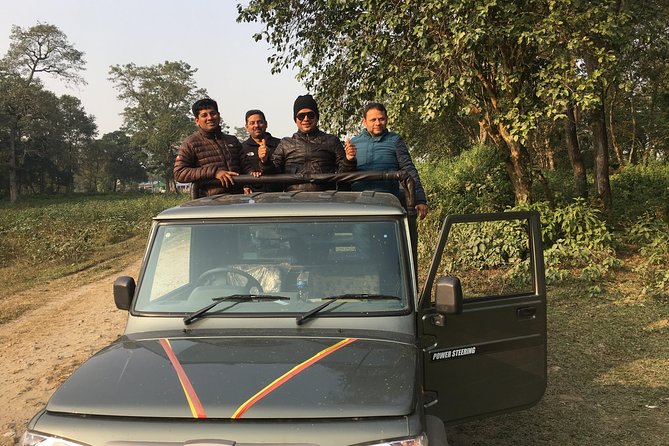
Jeep safaris are the backbone. You’re traveling through open grassland & forest areas, often with chances to see large mammals at close but safe distance. The best part of a guided jeep safari is not just the vehicle—it’s the reading of the landscape: where animals feed, where they cross, and what track signs mean that you can’t easily spot on your own.
Depending on your chosen length, your jeep safari could include a broad set of targets. The 3-night option explicitly lists possibilities like four kinds of deer, rhino, wild boar, monkeys, leopards, sloth bears, and Royal Bengal Tiger if you’re lucky. Even if tiger is a long shot, the value is that your guide is looking for multiple species, not only one headline animal.
Practical tip: bring a light layer you can tolerate in the morning and a small sun cover. Jeep safaris can mean long periods of waiting and then sudden motion when animals show up.
Canoe rides: quieter wildlife, birding, and crocodile spotting
Canoe time is different in the best way. It’s slower, quieter, and it puts you on the river route where birds and reptile life are active. In the longer itinerary, you get a canoe ride along the Rapti River with an emphasis on bird watching and the chance to see rare crocodiles—specifically Marsh Mugger and Gharial, described as fish-eating.
Even when you don’t see crocodiles, you often get something useful: bird behavior, reflections, and the feeling of how the park connects land and water. This is also one of your better chances for learning what animals are doing right now, not just what’s possible in theory.
Jungle walks: short legs, big payoff
Some versions include a jungle walk. In the 2-night package, it’s paired with the canoe ride and village/culture elements. In the 3-night option, it’s described as a short walk where you might also see animal bathing playfully on the way back.
This is where moderate fitness matters. The tour notes a moderate physical fitness level for participants, so wear shoes you’re comfortable walking in, not flimsy sandals.
Choosing your itinerary: 1 night, 2 nights, or 3 nights in Chitwan
Pick based on how much you want to trade for time. Chitwan is not a place where more time always means more guaranteed sightings, but it usually means more chances, better pacing, and extra cultural context.
1-night, 2-days: a concentrated hit of safari + Tharu culture
This shorter plan is built for momentum. You’ll do:
- Village tour
- Sunset and museum tour
- Cultural programs, including a Tharu stick dance
- Jeep safari
What makes this work is that it gives you both the wildlife side and the human side without wasting hours. The sunset + museum stop helps you understand what you’re seeing in the park, especially when you’re new to the area.
Possible drawback: one jeep safari day means limited flexibility. If the morning wildlife activity is slow, you can feel it more in the short itinerary.
2-night, 3-days: more river time and more chances to find wildlife
This version adds:
- Tharu village visit
- 30-minute canoe ride
- River-related experience plus jungle walk
- Jeep safari focusing on rhino and other animals closely but safely
- Culture program + bird watching
The canoe ride and jungle walk combination is valuable. It increases variety in habitat coverage, so your odds improve, and you’re not only scanning grassland from a jeep.
This is often the sweet spot for many people because it keeps travel days similar, but gives you an extra active block in the park.
3-night, 4-days: best pacing for birds, culture, and the long list of species
If you want the full arc, this itinerary is the most developed. You’ll include:
- Village tour to a nearby ethnic Tharu village with first-hand interaction
- National Park Visitor’s Centre learning about the park’s history and wildlife
- Sunset from the Rapti River bank
- Tharu cultural dance presentation, with participation, or a slideshow option
- Canoe ride along the Rapti River with bird watching and crocodile chances (Marsh Mugger and Gharial mentioned)
- Little jungle walk and the chance to see animal bathing behavior
- Jeep safari with a long list of possible species including tiger if you’re lucky
- Bird watching with mention of extravagant courtship rituals
- Visit to an Animal Breeding Centre
- Visitor’s Centre again
- Final culture program (dance or slideshow)
Why this matters: you get repeated chances to see animals in different settings and at different times. You also get more context through the visitor centre and animal breeding centre visit, which can help you understand conservation rather than treating the trip as only a photo hunt.
If you’re tight on vacation days, the jump from 2 to 3 nights is a bigger commitment. But if wildlife and culture both matter to you, this longer option is easier to justify.
Tharu culture in Chitwan: stick dance, participation, and why it feels real
This package doesn’t treat culture as an afterthought. It’s scheduled around your safari rhythm, so you’re not only leaving the park to do a quick show.
In the 1-night option, you get a cultural program that includes the Tharu stick dance. In the 3-night option, you can do a Tharu village interaction first-hand, plus a cultural dance presentation where you also participate.
In addition, the longer itinerary includes birding with mention of courtship rituals, plus a cultural slideshow option. Even if you’re not a big dance person, this helps you connect the people of the region to the land you’re visiting.
Practical thought: culture events can happen whether the wildlife is active or not. So when animal sightings are slow, the cultural side keeps your day from feeling empty.
One note: the schedule mentions both dance presentations and slideshow alternatives in different parts. That flexibility is helpful, but it also means the exact format may vary by day and program flow.
Wildlife expectations you can actually plan around: rhino, deer, tiger, and birds
Let’s keep it honest: Chitwan is famous for big mammals, but wildlife viewing is never guaranteed. That said, this itinerary is built to maximize meaningful chances.
The program explicitly highlights:
- Rhino
- Deer
- Tiger (described as if you’re lucky)
- Plus a longer list depending on your trip length, including leopards and sloth bears in the longer plan
- Many bird opportunities, including courtship ritual viewing in the 3-night option
The most useful way to think about this: you’re not choosing a tour that only claims one animal. You’re choosing a day structure that increases sightings across categories—mammals from jeeps, river life from canoe rides, and birds during quieter stretches.
That also changes your mindset. If you go expecting only tiger, you might end up disappointed. If you go open-minded—watching for movement, bird calls, tracks, and the exact moment something crosses your path—you’ll usually come away feeling satisfied.
Where the money goes: value for $139 and what you get for it
At $139 per person, the tour is positioned as a package. The value isn’t just the headline price. It’s what’s folded in:
- Hotel pickup and drop
- Accommodations during the safari period
- Breakfast, lunch, and dinner during Chitwan days (as per itinerary)
- Highly experienced government licensed safari guide
- National park and conservation area fees
- Sharing bus transfers from Kathmandu/Chitwan/Pokhara
- Bottled water and coffee/tea
- Jungle activity guide and required staff with vehicle
- Guide insurance and salary, plus tourist service charge
What you don’t get is mostly drinks and alcohol, which you can buy, plus extra drinks in general.
How to judge value: if you tried to piece this together yourself—transport, park fees, guiding, meals, and vehicle time—your costs would likely balloon fast. The inclusion of park fees and licensed guiding is especially important in wildlife destinations where access depends on rules.
That’s why this package can be a good deal if you want convenience without paying a premium for private logistics. It can also be a fair deal if you’re traveling solo or as a couple and you don’t want to negotiate transport and guides on the ground.
A practical safety and logistics note: make sure you get met
Most of the trip depends on handoffs: hotel reception to bus, bus arrival to Chitwan pickup, and then the return drive. Those are the moments where issues can happen if contact info isn’t clear.
One documented problem connected with this tour style was poor communication and a missing pickup at arrival in Chitwan, which left a traveler feeling stranded after a long bus ride.
I can’t fix that for you, but you can prevent the headache:
- Confirm your pickup name and exact arrival point before you board
- Have your accommodation details in writing
- Keep your phone charged, especially since you’ll start early
- If you’re traveling with a group, make sure everyone has the same confirmation info
If the handoff is smooth, you’ll feel how much easier this makes a remote park trip.
Who should book this Chitwan wildlife adventure (and who might pass)
This tour fits best if you:
- Want guided wildlife viewing with jeep safari and canoe rides
- Prefer a structured itinerary and included meals/fees
- Like Tharu culture and want more than a one-hour stop
- Are okay with moderate walking for village visits and short jungle walks
- Don’t want to coordinate park access and guiding yourself
You might pass if you:
- Need a fully independent schedule with zero shared transport
- Get stressed by early starts and bus travel days
- Have very specific wildlife goals where waiting for sightings would feel frustrating
Should you book Nepal Mountain Club’s Chitwan package?
I’d book if you want the practical win: shared transfers, licensed guiding, park access, and a real mix of wildlife viewing plus Tharu culture. The different night options let you match your time to your attention span, and the inclusion of meals and fees makes it easier to trust the total cost.
I’d also book with one mindset: treat arrival-day communication as non-negotiable. If pickups and contact details are confirmed, this kind of packaged Chitwan trip can be exactly the way to see more without burning energy on logistics.
If you want, tell me which option you’re considering (1 night, 2 nights, or 3 nights) and whether you’re starting from Kathmandu or Pokhara. I can help you pick the best fit based on your priorities: wildlife focus, birding, or Tharu culture.
FAQ
FAQ
What time does the tour start in Kathmandu or Pokhara?
The meeting time is 6:30am at your hotel reception in the Thamel area of Kathmandu or the Lakeside area of Pokhara.
How long is the bus ride from Kathmandu or Pokhara to Chitwan?
The shared bus journey is about 4–5 hours. The return drive to Kathmandu or Pokhara is about 5–6 hours.
What’s included in the package price?
The tour includes hotel pickup/drop, accommodations, safari activities, meals (breakfast, lunch, dinner during Chitwan days as per itinerary), bottled water, coffee and/or tea, a government licensed safari guide, park and conservation fees, and sharing bus transfers.
What activities are included for each itinerary length?
In the 1-night option you get a village tour, sunset and museum tour, Tharu cultural program with stick dance, and a jeep safari. The 2-night option adds a Tharu village visit, a 30-minute canoe ride, river/jungle walking, bird watching, and another jeep safari. The 3-night option adds more visitor centre time, animal breeding centre visit, longer canoe and jeep safari elements, and additional bird watching and cultural presentation.
Is the tour private?
This is listed as a private tour/activity, meaning only your group will participate, but the transfer by bus is shared.
Is there free cancellation?
Yes. You can cancel for a full refund if you cancel at least 24 hours before the experience start time.