REVIEW · RISHIKESH
Benog Tibba Day Hike – Mussoorie
Book on Viator →Operated by Easy Prime Holidays · Bookable on Viator
Mussoorie looks different from Benog Tibba. This guided day hike takes you through tree-filled paths toward sweeping valleys, letting you see Mussoorie and snowcapped Himalayan peaks in about four hours. I especially like the small-group guide setup for steady coaching and smart stops, and I also like how the trail mixes dense forest with sudden open view breaks instead of one long, samey walk.
One drawback to plan around: the route length can vary a lot, with the longest option reaching 15 km point-to-point (cab required), so it’s worth choosing the distance that matches your legs.
In This Review
- Key highlights worth knowing
- Benog Tibba Forest Hike: Why Mussoorie Feels Closer to the Clouds
- Meeting in Mussoorie and Timing Your Walk for a Calm Start
- The Trail Experience: Tree Cover, Jungle Atmosphere, and View Breaks
- Hitting Benog Tibba’s High Point and the Jwala Devi Temple Area
- Wildlife Spotting: What You Might See Around the Sanctuary
- Snacks, Water, and the Real Value of This $33.56 Price
- What to Expect on the Ground: Pace, Difficulty, and Comfort
- Who This Hike Suits Best (and Who Might Want a Different Plan)
- Should You Book the Benog Tibba Day Hike?
- FAQ
- Where does the Benog Tibba day hike start and end?
- How long is the hike?
- What trail lengths are available?
- Do I need a cab during the hike?
- Is hotel transfer included?
- What’s included in the ticket price?
- Do foreign tourists need to pay extra fees?
- How big is the group?
- Is wildlife spotting guaranteed?
- What if the weather is bad?
- What is the cancellation deadline for a full refund?
Key highlights worth knowing
- Small group size (max 15) keeps the hike more personal with your guide.
- 4 to 4.5 hours is a realistic half-day commitment in Mussoorie.
- Forest + open views means you get shade most of the way, plus panoramic moments at the top.
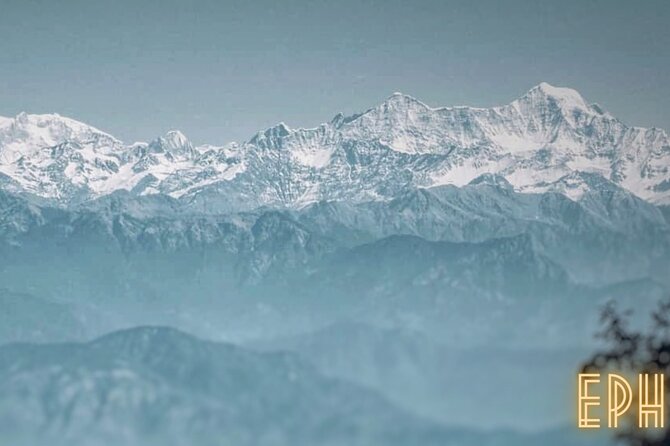
- Benog Tibba high point views cover valleys below, Mussoorie town, and major snow peaks.
- Wildlife might show up (barking deer, pheasants, eagles, primates), but sightings are never guaranteed.
Benog Tibba Forest Hike: Why Mussoorie Feels Closer to the Clouds
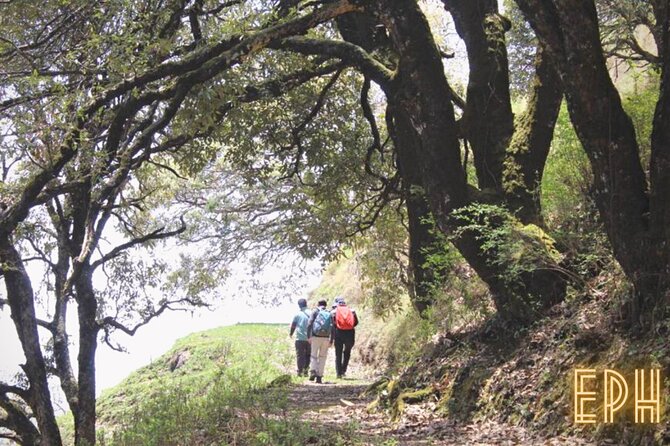
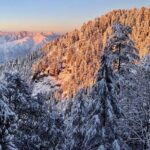
This hike is all about changing your angle on Mussoorie. From the forested slopes near Benog Tibba, you don’t just get a pretty walk—you get a viewpoint that makes the whole region feel laid out, valleys and ridgelines showing up like a model. The forest route matters, too. The walk isn’t just “get to the top.” You’re moving through thick tree cover with open sightlines that pop up along the way, so the scenery doesn’t save itself only for the end.
What makes it especially appealing is the mix of nature and place. You’re in the Benog Sanctuary area, so your guide can talk about the habitat as you go. And on the way up, you’ll reach the Jwala Devi Temple area, which gives the trek a cultural stop—not just a scenic pull-off.
You can also read our reviews of more hiking tours in Rishikesh
Meeting in Mussoorie and Timing Your Walk for a Calm Start
The hike starts in Mussoorie, Uttarakhand, and you finish back at the meeting point. That loop is helpful: you don’t have to worry about sorting another pickup or transport after you’re tired.
Your time slot runs roughly 4 to 4.5 hours, and the operation window is 8:30 AM to 5:00 PM. If you’re staying in town, this is a convenient slot to pair with a morning coffee or a slower afternoon. Also, the activity runs Monday through Sunday.
You’ll go with a professional guide and a group capped at 15 people. In practice, that size is big enough for a lively group but small enough for your guide to keep eyes on footing and pacing. If you tend to wander off for photos, this kind of group can keep you from losing the rhythm.
The Trail Experience: Tree Cover, Jungle Atmosphere, and View Breaks
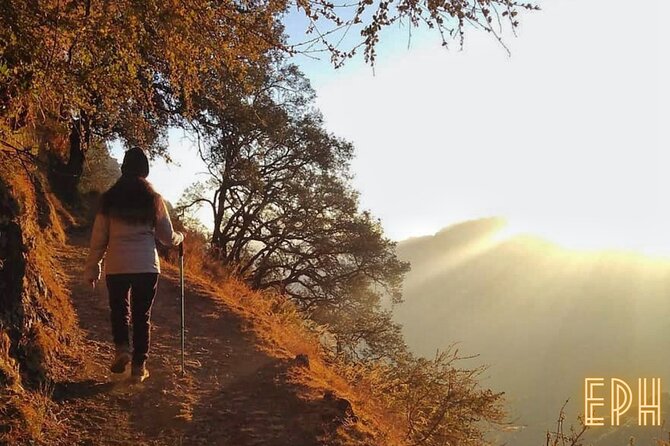
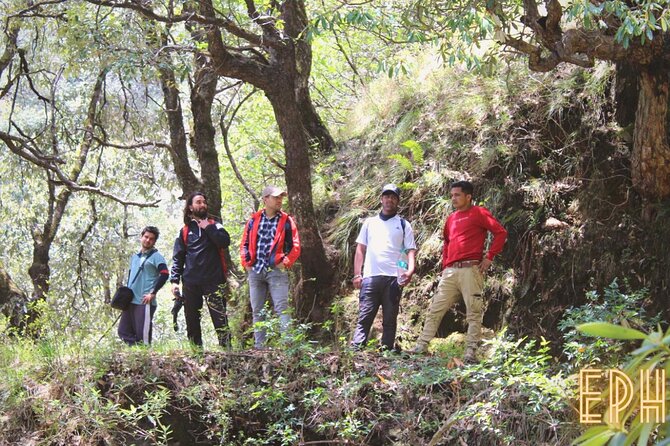
The heart of the hike is the way it moves between shade and sight. Expect abundant tree cover for a lot of the route, which makes the trail feel cooler and more protected than you might guess from Mussoorie’s hill-town setting. You’ll also get “glimpses” rather than one continuous panorama, with open views appearing as the terrain allows.
The vibe is often described as a jungle-like ambiance, which makes sense here. You’re walking through a living mix of forest paths where birdsong and movement in the canopy are part of the background. If you enjoy nature without needing a biology lecture, this is a nice way to experience it: watch, listen, and let your guide point out what’s happening around you.
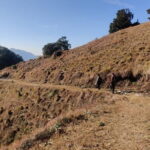
Trail lengths vary by route and group planning. The shortest option is about 9 km roundtrip. The longest option is up to 15 km point-to-point, and for that longer version you’ll need a cab. That’s the key detail to check before you commit—15 km on hillside terrain is a different day than a 9 km loop.
Hitting Benog Tibba’s High Point and the Jwala Devi Temple Area
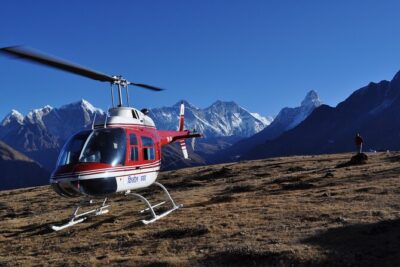
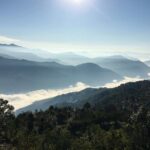
The climb is built around a payoff: the highest point on the route. This is where you get the real “step back and stare” moment. From there, views stretch across the valleys below, with Mussoorie township clearly visible in the mix. You can also see major snow-capped Himalayan peaks when weather and visibility cooperate.
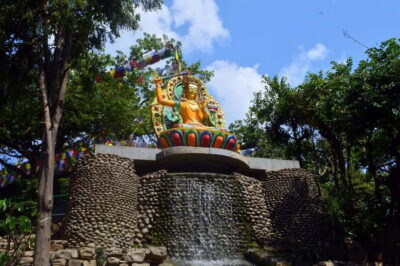
Along the way, you’ll also reach the Jwala Devi Temple area. For me, a temple stop on a hike works best when it breaks the walk into sections. It gives you a natural pause, a chance to reset your breathing, and a moment to take in the surroundings from a calmer spot before continuing upward or onward.
One practical thought: the temple and viewpoint areas can be the busiest part of the route. Even with a small group, pause early for photos. If you wait too long, you’ll spend your break behind other people standing still for the same shot.
Wildlife Spotting: What You Might See Around the Sanctuary
Wildlife is part of the reason people come to Benog Sanctuary. Your chances improve when you slow down and pay attention, but you still need to treat sightings as a bonus, not a promise. Even though wildlife spotting cannot be guaranteed, the area is known for animals and birds such as:
- barking deer
- red foxes
- pheasants
- eagles and vultures
- primates (langoors)
- jungle martins
Your guide can help with the “where to look” part. Instead of scanning like a hawk for ten minutes and getting nothing, you’ll learn which pockets of habitat tend to show activity. And when you do see something, it’s usually quick—so the best strategy is to keep walking smoothly, then stop when your guide signals.
If you’re traveling with kids or someone who gets tense about wildlife, this is still a good outing because the hike is the main event. You’re not going out on a risky wildlife hunt—you’re hiking and enjoying nature, and wildlife sightings just add an extra layer.

Snacks, Water, and the Real Value of This $33.56 Price
At about $33.56 per person, the headline price looks friendly for a guided half-day in a scenic region. The bigger story is what’s included, and what’s not.
Included items:
- bottled water
- extra/surplus water
- snacks like fruits, wafers, chocolates (depending on the setup)
- entry tickets for domestic tourists included
Not included:
- private transportation
- foreign tourist entry ticket coverage is only partly included
- Benog Tibba admission fee of ₹400 per person (noted as payable directly)
This matters because “cheap” only works if the logistics don’t surprise you. Here, the main surprise risk is transport. If you’re going for the longer 15 km point-to-point option, a cab is required. Transfers from a hotel are available, but that’s an additional fee. So the best value comes when you can handle getting to the meeting point without needing private rides for everything.
If you’re a domestic tourist, the inclusion of domestic entry tickets helps balance the final cost. If you’re a foreign tourist, you should budget for the INR 400 per person item mentioned for foreign entry, plus the Benog Tibba fee. In other words: check whether you’re paying those costs at the start, before you arrive hungry.
What to Expect on the Ground: Pace, Difficulty, and Comfort
Most travelers can participate, and the hike is described as peaceful and moderately challenging. That’s consistent with the route range. A 9 km roundtrip is a solid day hike; a 15 km point-to-point option is more of a commitment, especially if you’re not used to hillside walking.
Since the hike is weather-dependent, it’s smart to think about visibility and footing. Clear weather usually means better views toward snow peaks. Poor weather can trigger cancellation, and then you’ll be offered a different date or a full refund.
Comfort-wise, plan for:
- uneven terrain typical of hill trails
- breaks that come from the guide’s timing (not your random phone-check rhythm)
- a need for water even if the forest is shaded
Bring what you need to stay steady on your feet. The trail’s forest cover helps with sun, but hillside paths still demand attention.
Who This Hike Suits Best (and Who Might Want a Different Plan)
I think this hike is ideal if you want a guided nature outing that still feels like an adventure. It’s a good fit for:
- people who enjoy birdwatching and wildlife-at-a-distance
- travelers who want real views without spending a full day
- anyone who likes the idea of a hike plus a temple stop
- small groups that want personal attention from a guide
It might be less ideal if:
- you don’t want to commit to a longer distance (especially the 15 km point-to-point option)
- you’re depending entirely on transportation that isn’t included (since private transport and some cab needs aren’t covered)
If you’re on a tight schedule, the 4 to 4.5 hour timing is a strong point. If you want a gentle stroll, choose the shorter route rather than assuming all options are equal.
Should You Book the Benog Tibba Day Hike?
Yes, if you’re craving a practical day hike with big Himalayan payoff views and a forest route that stays interesting the whole way. The value is strongest when you can join easily from Mussoorie without adding extra private rides, and when you match your choice to your fitness level (especially if you’re eyeing the 15 km point-to-point option).
I’d book it if you like the idea of learning something along the way—because the guide experience matters here, and the hike includes both nature interpretation and the Jwala Devi Temple stop. If wildlife sightings happen, you’ll enjoy them as a bonus; if they don’t, you still get the forest walk plus one of the area’s best panoramic perspectives.
FAQ
Where does the Benog Tibba day hike start and end?
The hike starts in Mussoorie, Uttarakhand, India and ends back at the same meeting point.
How long is the hike?
It runs about 4 hours, with a time slot of approximately 4 to 4.5 hours.
What trail lengths are available?
Trail lengths can vary. The shortest route is about 9 km roundtrip, and the longest option is up to 15 km point-to-point.
Do I need a cab during the hike?
A cab is required for the longest trail option (15 km point-to-point). Private transportation is not included.
Is hotel transfer included?
Hotel transfers are available for an additional fee.
What’s included in the ticket price?
You’ll get bottled water (extra/surplus water) and snacks (fruits/wafers/chocolates). Entry tickets are included for domestic tourists.
Do foreign tourists need to pay extra fees?
Foreign tourist entry tickets are only partly included. There is also an admission fee for Benog Tibba of ₹400 per person to be paid directly, and for foreign nationals an INR 400 fee is noted separately to be paid directly.
How big is the group?
The group maximum is 15 travelers.
Is wildlife spotting guaranteed?
No. Wildlife spotting cannot be guaranteed, but sightings like barking deer, red foxes, pheasants, eagles, and primates are possible.
What if the weather is bad?
This experience requires good weather. If it’s canceled due to poor weather, you’ll be offered a different date or a full refund.
What is the cancellation deadline for a full refund?
You can cancel up to 24 hours in advance for a full refund. If you cancel less than 24 hours before the start time, the amount paid is not refunded.