REVIEW · KATHMANDU
The Boudhanath Yoga Experience in Nepal
Book on Viator →Operated by Himalayan Advisor Pvt. Ltd. · Bookable on Viator
Yoga near one of the world’s biggest stupas.
This hands-on Boudhanath Yoga experience ties movement, breath, and Buddhist teaching to daily life in Kathmandu, right in Boudha, home to a large exiled Tibetan community. I love the round-trip hotel pickup, because it removes the city-stress math that always comes with early starts. I also like that you get real structure in the class, not just vague stretching, with postures and breathing taught in a step-by-step way.
One thing to keep in mind: this is a very popular, busy area, so the neighborhood can feel noisy outside the practice space. The good news is the workshop is designed so the teaching stays calm, and the meditation focus holds even in an active part of town.
In This Review
- Key Takeaways Before You Go
- Why Yoga by Boudhanath Feels Different Than a Usual Class
- The 9:00 AM Flow: Pickup, Stupa Time, and a 2.5-Hour Practice
- Inside the Practice: Asanas, Mudras, and Pranayama You Can Feel
- Asanas: correct posturing, not just stretching
- Mudras: hand gestures to guide energy flow
- Pranayama: breathing techniques for calm and purification
- What I’d bring mentally
- The Mind Training Piece: Dharana and Dhyana in a Buddhist-Inspired Framework
- Boudhanath Stupa: What You Get From the Setting (and Why It Works)
- Price and Value: Is $110 Worth It?
- What to Wear, Bring, and Expect From the Class
- Who This Workshop Is Best For (and Who Might Pass)
- Should You Book the Boudhanath Yoga Experience?
- FAQ
- How long does the Boudhanath Yoga Experience last?
- What time does the tour start?
- Is hotel pickup and drop-off included?
- Do I get to visit Boudhanath Stupa?
- What yoga topics are covered in the workshop?
- What about food and drinks?
Key Takeaways Before You Go
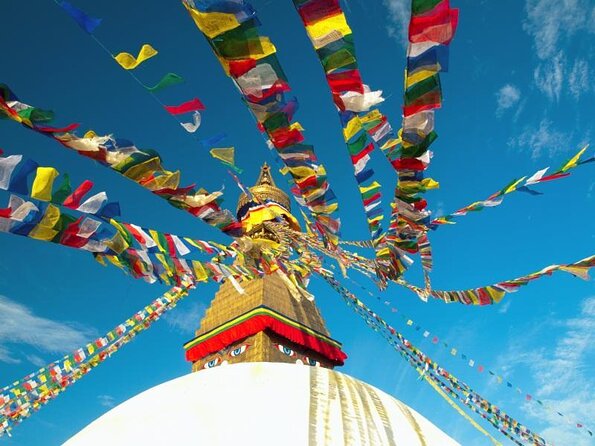
- Boudhanath Stupa view built into the day: You get time at the stupa and practice with it in sight.
- Hotel pickup and private transfers: Your driver handles the route by private vehicle.
- Pranayama, mudras, and more than stretching: The class covers breath, hand gestures, and mind-training techniques.
- Small group size: Maximum 14 people means more personal pacing.
- Instructor-led step-by-step teaching: One review highlighted that movements are explained move by move and questions are welcome.
Why Yoga by Boudhanath Feels Different Than a Usual Class
Kathmandu is loud in the way big cities are loud—horns, footsteps, chatter. But Boudha has a different rhythm. The air around Boudhanath Stupa carries devotional energy, and you feel it fast when you’re near the world’s largest Buddhist stupa.
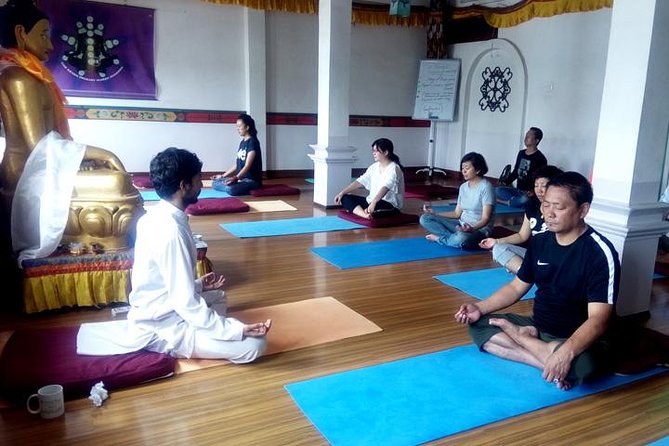
What makes this workshop appealing is the way it connects yoga to Buddhist practice. You’re not just doing poses for flexibility. You’re learning a full toolkit—asanas (postures), mudras (hand gestures), and pranayama (breathing)—then tying that work to mind control and meditation techniques taught as part of a Buddhism-inspired path.
I also appreciate that the setting is practical. The yoga center is across from the stupa, so you’re not spending your half-day commuting to a view. You’re there. You can hear the world, but you can also keep your attention where it belongs—on your body and breath.
The “peaceful environment” theme in a review matches what the program is aiming for. Even when the area is busy, the teaching focuses on keeping you steady inside the session. That matters, because a yoga class in chaos can turn into just endurance. Here, the goal is clarity.
You can also read our reviews of more tours and experiences in Kathmandu.
The 9:00 AM Flow: Pickup, Stupa Time, and a 2.5-Hour Practice
This experience starts at 9:00 am, and the total time is about 4 hours. Think of it as a tidy half-day: you’ll get transport, stupa entry time, and a longer yoga session, without turning the day into a full logistical project.
Here’s how the rhythm typically feels:
First, you’ll be picked up from your hotel and taken by private vehicle. That’s a real value add in Kathmandu, where navigating traffic and busy streets can be exhausting—especially at the start of the day. You don’t have to coordinate a tuk-tuk or figure out where to stand. You just show up, get in the car, and go.
Next comes Boudhanath Stupa time. The program description says you have a great chance to visit the stupa and also to watch it while doing yoga. Plus, entry fee is included, so you aren’t hunting for tickets mid-morning.
Then it’s into the yoga workshop itself for about 2.30 hours of class. This block is long enough to feel like you actually learn something new, not just do a warm-up and call it yoga tourism. If you’ve ever left a class feeling like you mostly held a stretch and counted the minutes, this format is meant to avoid that.
Finally, you’re back for hotel drop-off.
Why this order works: you see the sacred context first, then the yoga practices feel less random. You’re not doing breathing exercises as a stand-alone fitness activity. You’re doing them in the setting that gives them meaning in this tradition.
Inside the Practice: Asanas, Mudras, and Pranayama You Can Feel
The workshop is hands-on. The teaching includes several layers, and that’s where the value sits.
Asanas: correct posturing, not just stretching
Asanas here are described as proper posturing of the body. In plain terms, you’re not just told to assume shapes. You learn how to stand, sit, and move with intention—so your body stops guessing and starts doing the job.
That matters because posture is the foundation for breath and concentration. If your body is sloppy, your breathing goes shallow and your mind follows.
Mudras: hand gestures to guide energy flow
The class also covers mudras, explained as proper hand gestures to increase the flow of energy. Even if you don’t buy the energy language 100%, mudras are still useful as a focus tool: they give your mind something concrete to follow.
And because this workshop teaches them as part of a full system, it’s not random hand-waving. You’ll be guided on how and when to use them during practice.

Pranayama: breathing techniques for calm and purification
Pranayama is where people often hope to learn something real. Here, it’s framed as breathing techniques that help you relax and purify your body and energy.
In practice, expect breathwork to be a core part of the session. The best part of a structured pranayama lesson is that you don’t have to guess what you’re doing. The approach in the reviews points to a teacher who explains moves step by step, and that kind of clarity is gold when breath control is new to you.
What I’d bring mentally
If you’re used to western gym-style yoga, come in ready to slow down. The point isn’t only to work your muscles. It’s to use the body as a steering wheel for breath and attention.
That also means you may leave feeling more steady than “sore.”
The Mind Training Piece: Dharana and Dhyana in a Buddhist-Inspired Framework
Most yoga classes talk about relaxation. This workshop talks about training the mind.
You’ll learn dharana, described as the proper technique for controlling the mind for positive energy. You’ll also learn dhyana, described as proper meditation technique to liberate the mind.
Now, I’ll be honest about expectations: you won’t suddenly become a meditation monk in one afternoon. But you can gain something more practical than that—skills you can repeat when you’re back in your regular life.
Here’s why these elements are valuable:
- Dharana gives your attention a target. Without a target, meditation turns into a daily game of catching your thoughts.
- Dhyana then builds on that by focusing on meditation practice. Even if you only reach a few minutes of calm focus, it teaches you what “working on the mind” can feel like.
The program also mentions a broader philosophy: the teaching encompasses the Eight-Fold Path as taught by Lord Buddha while cultivating the Seven Disciplines. That’s a lot of framing for a half-day experience, but it explains why the class moves beyond just physical technique.
A review praised the teacher’s energy radiating and the feeling of being welcomed. That human side matters here. When your mind wanders, encouragement and clear instruction help you return to practice instead of getting frustrated.
And that review also said the yoga was explained move by move. That sounds basic, but it’s the difference between a class you survive and a class you actually learn from.
Boudhanath Stupa: What You Get From the Setting (and Why It Works)
Boudhanath Stupa is famous for a reason. It’s described as the world’s largest Buddhist stupa, and it sits right in Boudha, where a thriving exiled Tibetan community keeps religious life alive.
You’ll get a chance to visit the stupa, and it’s included in your plan with the entry fee. Plus, you’re set up to watch the stupa while doing yoga at the center nearby.
So what’s the benefit for you?
- Context makes practice feel meaningful.
Breathwork can feel abstract. In this setting, it feels connected to a living religious culture.
- The location does the teaching for you.
Even if you don’t speak the local language or fully understand every ritual, the visual environment supports quiet focus.
- It breaks up your Kathmandu day.
This is not only a yoga class. It’s also a short sacred visit, so you get both body work and cultural atmosphere without spending hours on sightseeing.
Possible drawback: because Boudha is busy, your photos and your attention might compete with street activity. The key is to take the class as the anchor. Once you’re practicing, the workshop is designed to keep that busy energy from pulling you away.
Price and Value: Is $110 Worth It?
At $110 per person, this is not a budget add-on. But it can be good value if you’re comparing it to the real cost of doing everything yourself.
Here’s what you’re paying for, in practical terms:
- Private hotel pickup and drop-off
- Private vehicle transport
- A trained yoga instructor
- 2.30 hours of yoga class
- Boudhanath Stupa entry fee
- A small group cap (up to 14 travelers)
If you tried to do this solo, you’d still spend money on transport and access. What’s harder to recreate yourself is the structured guidance through asanas, mudras, pranayama, plus the mind-training concepts (dharana and dhyana). That instruction is the heart of the value.
Also, the booking pattern suggests it’s popular. On average it’s booked 113 days in advance, which is a polite way of saying don’t leave it to the last minute if your schedule is tight.
One more value check: food and drinks are not included, so plan to eat before or after. That small extra step can keep you from feeling rushed or hungry during the session.
What to Wear, Bring, and Expect From the Class
The workshop advises loose-fitting clothing. Take that seriously. Breathwork and hand-gesture practice do not feel good when you’re wearing tight stuff or restrictive fabric.
The program also notes that the location is near public transportation, which can be helpful for contingency plans. And it says most travelers can participate, which suggests the class is not limited to advanced yogis.
What you should bring mentally is patience. This is hands-on and step-by-step, but it still asks you to pay attention to your body, your breath, and your mind. If you’re the type who wants instant results, this might feel slower than a typical fitness class. If you’re the type who enjoys learning, it’s a good match.
Finally, keep in mind the group size limit of 14 travelers. Smaller groups are usually where you get better pacing and more chance to ask questions—exactly what the reviews point to.
Who This Workshop Is Best For (and Who Might Pass)
This experience fits best if you want yoga with meaning and structure.
You’ll likely enjoy it if you:
- Want a calmer, focused activity in a sacred area of Kathmandu
- Like instruction that explains technique clearly
- Are interested in the Buddhist-inspired link to yoga—breath, gestures, and meditation concepts
- Want a half-day plan that bundles transport and stupa time
You might skip it if you:
- Only want a super active workout and you’re not interested in breath and meditation elements
- Dislike busy neighborhoods even when the class itself is designed to be peaceful
- Are hoping for a long sightseeing day with multiple monuments (this is more focused than that)
Should You Book the Boudhanath Yoga Experience?
I’d book it if you want a meaningful Kathmandu morning with hotel pickup, a real guided 2.30-hour yoga workshop, and Boudhanath Stupa access built into the experience. The price makes sense when you factor in transport, instruction, and entry. And the reviews back up the most important detail: the teacher’s guidance is clear and welcoming, and the class stays calm even though the area around you is active.
Skip it if you’re mainly after a sweat session or you’re uncomfortable practicing in a place where a sacred site brings crowds and daily movement. That trade-off is real.
If you’re on the fence, here’s an easy decision rule: if you came to Kathmandu for both cultural atmosphere and a mindful reset, this is a strong use of a half-day.
FAQ
How long does the Boudhanath Yoga Experience last?
It runs for about 4 hours total, including transport. The yoga class itself is about 2.30 hours.
What time does the tour start?
The start time is 9:00 am.
Is hotel pickup and drop-off included?
Yes. The experience includes hotel pickup and drop-off, plus transport by private vehicle.
Do I get to visit Boudhanath Stupa?
Yes. You have a great chance to visit Boudhanath Stupa, and you’ll also practice yoga while watching the stupa. Entry fee is included.
What yoga topics are covered in the workshop?
The class includes asanas (proper posturing), mudras (hand gestures), pranayama (breathing techniques), dharana (mind control for positive energy), and dhyana (meditation technique).
What about food and drinks?
Food and drinks are not included, so plan to eat before or after the activity.