REVIEW · DHARAMSALA
Guided Tibetan Culture Walk at Norbulingka,Gyuto and Nunnery
Book on Viator →Operated by Himachal Bylocals · Bookable on Viator
A short walk, big cultural payback. This Tibetan culture walk in Dharamsala connects you to three real institutions tied to Tibetan Buddhism, starting at Norbulingka and continuing on to Dolmaling Nunnery and the Gyuto Karmapa Temple area. I especially love how the route makes Tibetan exile and monastery life feel close up, not like a museum stop. And I like that you get a guide who helps you figure out what you’re seeing as you go.
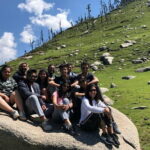
You’ll also appreciate the human side of the day. With Himachal Bylocals leading a small group (up to 15), the tour format is built for conversation and practical questions, not just photo stops. I find this style is the difference between watching traditions and actually understanding how people practice them.
One consideration: the walk is time on your feet, and the Norbulingka Institute foreigner entrance fee (₹200) is extra. Plus, the experience needs good weather, so plan for a possible reschedule if conditions are bad.
In This Review
- Key points to know
- Norbulingka Institute: Where Dharamsala’s Tibetan story starts
- Dolmaling Nunnery: A calmer, non-sectarian pause on the route
- Gyuto Karmapa Temple: Tantric meditation and ritual arts in focus
- What the 3-hour guided walk feels like in real life
- Price and value: What you pay, what you get, what it costs extra
- Getting started at the meeting point in Dharamsala area
- Who should book this walk, and who might not love it
- Should you book this Tibetan Culture Walk at Norbulingka, Dolmaling, and Gyuto?
- FAQ
- How long is the guided Tibetan culture walk?
- Where does the tour start?
- What stops are included on the route?
- What is the price per person?
- What’s included in the tour price?
- Is food included?
- Are entrance fees included?
- How big is the group?
- What should I wear?
- Is this tour affected by weather?
Key points to know
- Small group (max 15) keeps things personal and easier to ask questions.
- Three distinct stops: Norbulingka Institute, Dolmaling Nunnery, then Gyuto Karmapa Temple.
- Guided walking route means you don’t have to puzzle out where to go next.
- Tantric tradition on the schedule, not just generic Buddhist sightseeing.
- What’s included is smart: bottled water and all activities, with the main extra cost being Norbulingka’s foreigner fee.
Norbulingka Institute: Where Dharamsala’s Tibetan story starts
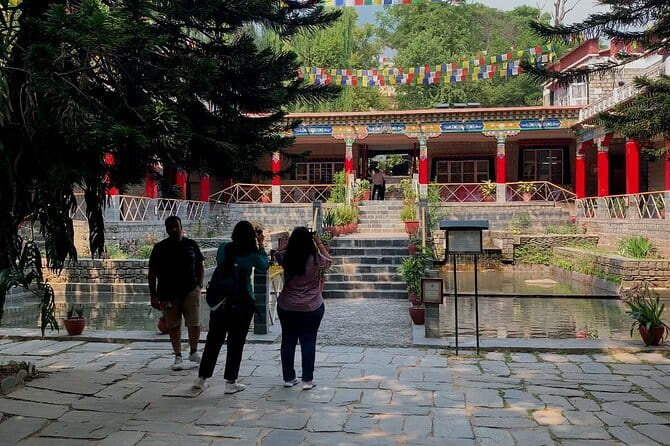
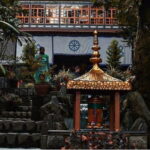
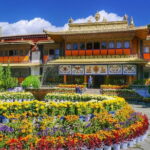
If you’ve only heard of Dharamsala in passing, Norbulingka is where the town’s meaning clicks. Dharamsala is home to the Dalai Lama, and the Tibetan spiritual and political life connected to the government in exile is part of the local rhythm. The Norbulingka Institute stop is your first chance to anchor the day in that context before you start moving temple-to-temple.
This first stop is also where you get oriented. Even if you’re not the type to read every sign, a good guide can translate what matters: the role these institutions play, how visitors should behave, and what details to notice as you walk through the area. You’ll spend about 30 minutes here. That’s short enough to keep energy for the rest of the walk, but long enough to get your bearings.
A practical note: the Norbulingka Institute foreigner entrance fee is ₹200 per person. It’s not included, so expect that as the only clear ticket-style cost on the route. If you’re budgeting, add it in up front so you’re not surprised later.
Why I like starting here: it gives you a framework. By the time you reach the nunnery and the monastery, you’re not just seeing buildings. You’re following a thread of lived practice.
You can also read our reviews of more walking tours in Dharamsala

Dolmaling Nunnery: A calmer, non-sectarian pause on the route
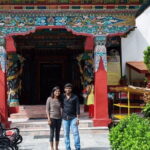
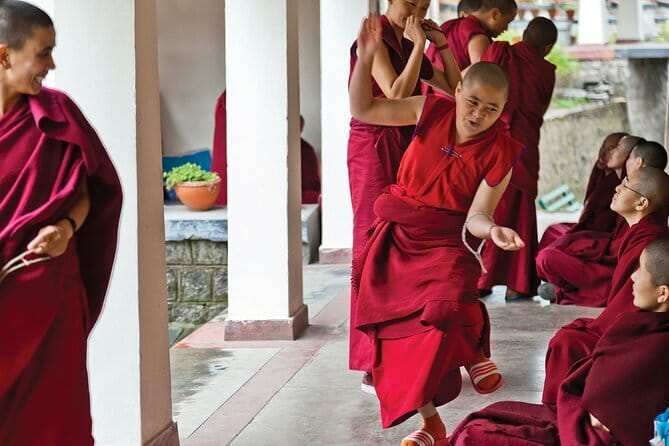
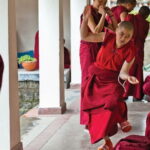
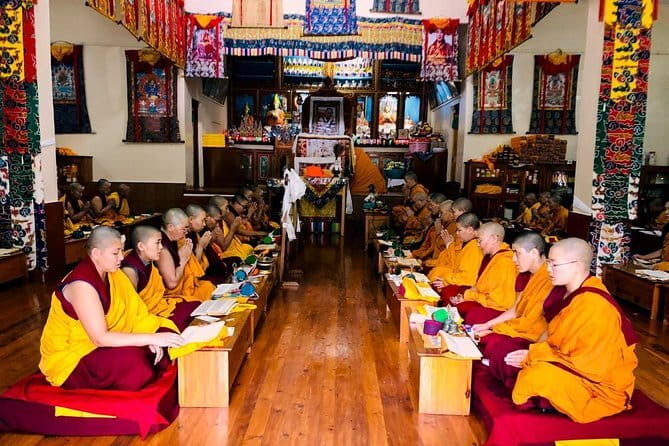
After Norbulingka, the walk heads toward Dolmaling Nunnery (Dolma Ling Nunnery). This is described as a non-sectarian nunnery in the Kangra valley near Dharamsala. In plain terms: it’s a place where you can see how women’s monastic life operates in this region, and you get a different angle than the more commonly photographed male monastic sites.
You’ll spend around 30 minutes at this stop. The time matters. Nunnery spaces often call for a slower, respectful pace. In a group tour, the biggest advantage is that your guide sets expectations early, so you know what’s appropriate to watch and how to act without turning the experience into a scene.
One of the nicest things about this stop is how it changes the tone of the day. Gyuto’s traditions can sound intense if you only understand them from books, and Norbulingka gives you the larger exile story. Dolmaling sits in the middle as a quieter reality check. It’s more about practice and presence than spectacle.
What to watch for, without overthinking it: look at how the space is arranged, what kinds of routines seem to matter, and how the atmosphere feels compared to where you started. If you’re the type who likes to learn by seeing, this stop is a great match.
Gyuto Karmapa Temple: Tantric meditation and ritual arts in focus
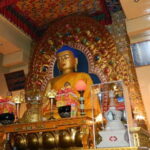
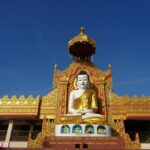
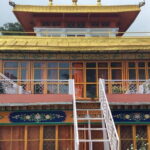
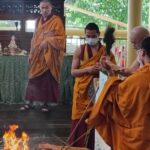
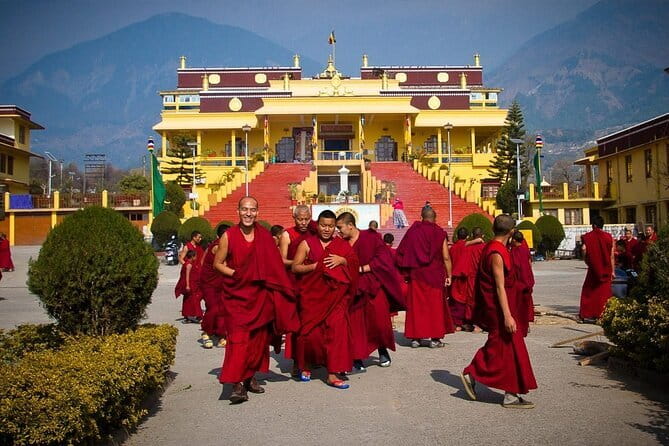
The final major stop is Gyuto Karmapa Temple / Gyuto Monastery area, tied to the Gyuto Tantric Monastery traditions. The tour notes that Gyuto was founded in Tibet in 1474 and is known for study of Tantric meditation, Tantric ritual arts, and Buddhist philosophy.
This is the kind of stop that can feel more “conceptual” than the other two, so the guide’s explanations matter. A good guide turns the categories into something you can hold in your head: what “tantric meditation” means in everyday terms, why ritual arts are part of study (not separate from it), and how philosophy is used rather than just discussed.
You’ll typically have about 40 minutes here. That’s enough time to understand the basics and still keep the tone reflective, not rushed. If you’re hoping for a lot of lecturing, you might find it more experiential: you look, listen, and ask questions where the guide can connect the dots.
Small drawback: if you’re expecting only architectural sightseeing, this stop will ask you to engage mentally. But if you want your Dharmasala day to have meaning, it’s a strong finale. It also helps that you’ve already got context from Norbulingka and a calmer beat from Dolmaling before you hit the more specialized tantric focus.
What the 3-hour guided walk feels like in real life
This is a 3-hour tour (approx.), built around walking and structured time at each stop. The schedule includes short blocks—30 minutes, 30 minutes, then 40 minutes—so you’re not stuck for long periods waiting around.
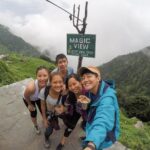
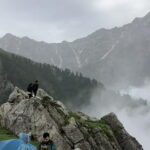
You should also know that the tour may include a bit more movement than you’d expect from the simple line “walking tour.” One review mentions a short drive to a viewpoint and then a climb or clamber to higher ground. So yes, come ready to walk, and if stairs and uneven surfaces are not your thing, bring a realistic mindset.
Another thing that makes a big difference: the group size is limited to 15 travelers. That’s small enough that you can keep up, hear the guide, and ask your own questions without raising your hand like it’s school.
Transfers take real time too. The tour notes that transfer duration is approximate and depends on the time of day and traffic. Dharamsala roads can shift quickly, so build in some flexibility. If you’re stacking this with another activity, give yourself breathing room.
The tour also includes bottled water, which sounds basic, but in hill-town weather it matters. You’ll want it during a walking-focused morning or afternoon.
Price and value: What you pay, what you get, what it costs extra
At $31 per person, this tour is priced like a guided, small-group walking experience with religious-cultural access and interpretation. You’re not paying mainly for transport. You’re paying for the guide and the structure that connects three specific sites.
Here’s what’s included:
- All activities and the walking tour
- Local guide
- Bottled water
What’s not included:
- Food and drinks
- Hotel pick-up and drop-off
- Entrance fee for foreigners at Norbulingka Institute: ₹200 per person
That last item is the only ticket-style extra clearly stated. So from a value perspective, the price works best if you’re comfortable using public reality (you meet at the start point) and you’re fine buying your own snack or drink elsewhere.
Dress code is listed as smart casual. Translation: wear something you can walk in and something respectful. Think comfortable shoes over fashion. If your outfit makes you baby your steps, it’s going to slow you down and kill the vibe.
You can also read our reviews of more guided tours in Dharamsala
Getting started at the meeting point in Dharamsala area
You’ll start at Norbulingka Institute, Temple Rd, Sidhpur, Mohli Lahrandi, Himachal Pradesh 176057, India. The activity ends back at the meeting point.
That meeting-point detail is important because the tour doesn’t include hotel pick-up and drop-off. If you’re staying in Dharamsala, you’ll want to plan how you’ll get to the meeting location early enough to check in and settle your shoes.
Also, confirmation is received at booking, and service animals are allowed. If you use one, you should be fine, but it’s always worth keeping communication simple so the guide can plan around your needs.
Who should book this walk, and who might not love it
This tour is a great match if you want:
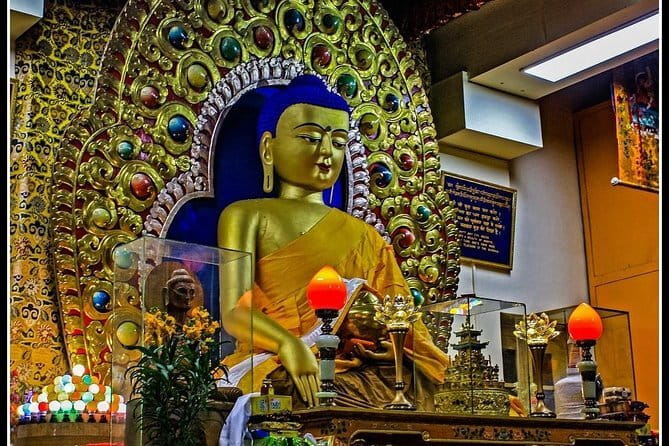
- a guided introduction to Tibetan Buddhist life in Dharamsala
- a small-group day where you can ask questions
- a route with different kinds of stops (exile context, nunnery life, tantric study focus)
- a practical, time-efficient outing that still feels meaningful
It’s especially good for first-timers to the region because the guide helps you avoid the common problem: wandering around without knowing what you’re looking at.
Who might hesitate:
- If you hate walking on uneven ground or don’t enjoy climbing, you might find it a stretch. The route is not described as gentle-only, and one review mentions a viewpoint climb/clamber.
- If you’re only interested in paying for a strictly “ticketed museum” style day, you might want something else. This is about interpretation and respectful viewing more than open-ended wandering.
Should you book this Tibetan Culture Walk at Norbulingka, Dolmaling, and Gyuto?
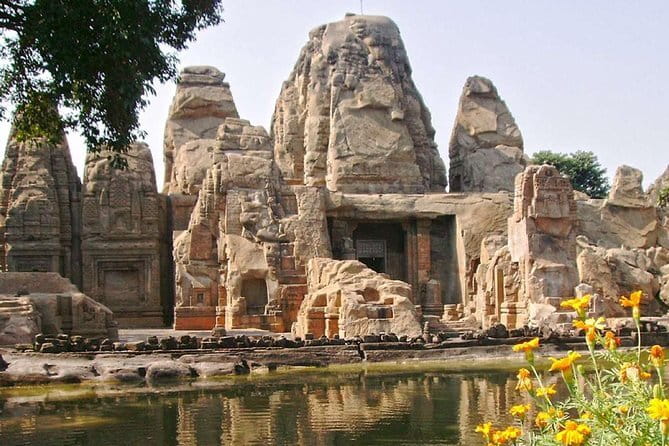
I’d book it if you’re in Dharamsala and you want your day to connect dots instead of just collecting photos. The structure is clear, the group is small, and the stops cover the full arc: where Dharamsala’s Tibetan story begins, a calmer nunnery stop, then the more specialized Gyuto tantric tradition.
Skip it or reassess if walking and modest climbs are deal-breakers for you, or if you’re trying to keep your day ultra-flexible in the face of mountain weather. Good weather is required, and plans can shift if conditions are poor.
Bottom line: for a short, well-guided cultural walk with real institutions and a guide who can explain what you’re seeing, this is strong value.
FAQ
How long is the guided Tibetan culture walk?
It runs for about 3 hours (approx.).
Where does the tour start?
The meeting point is Norbulingka Institute, Temple Rd, Sidhpur, Mohli Lahrandi, Himachal Pradesh 176057, India.
What stops are included on the route?
You visit Norbulingka Institute, Dolmaling Nunnery, and the Gyuto Karmapa Temple / Gyuto Monastery area.
What is the price per person?
The price is $31.00 per person.
What’s included in the tour price?
It includes bottled water, all activities, a local guide, and the walking tour.
Is food included?
No. Food and drinks are not included.
Are entrance fees included?
Norbulingka Institute’s entrance fee for foreigners is not included. It’s listed as ₹200 per person.
How big is the group?
There is a maximum of 15 travelers.
What should I wear?
Dress code is smart casual.
Is this tour affected by weather?
Yes. It requires good weather, and if canceled due to poor weather you’ll be offered a different date or a full refund.