REVIEW · DARJEELING
Colonial Heritage Walking Tour in Darjeeling
Book on Viator →Operated by Darjeeling Walks · Bookable on Viator
Colonial Darjeeling, on foot. This colonial heritage walking tour packs a surprising mix of British-era landmarks, churches and temples, plus old photographs and hill-town stops you can actually use. I especially like the professional guide angle—expect a guided narrative that ties places together instead of just a checklist—and I also like the included breaks at Keventer’s and Glenary’s so you’re not walking on empty.
The tradeoff: the route moves through lots of points in a short window (2 to 3 hours), so wear decent shoes and plan for a quick pace. And since the tour requires good weather, you’ll want a flexible mindset if skies turn.
In This Review
- Key Highlights You’ll Actually Feel
- Why This Colonial Heritage Walk Works in Darjeeling
- Start at the Clock Tower: Town Hall, Timekeeping, and British Urban Design
- Planters Club and Gymkhana Club: Where Colonial Life Was Social, Not Only Political
- The Head Post Office (1921) and a UNESCO-Listed Detail
- Keventer’s and Glenary’s: Included Snacks with Real Hill-Station Atmosphere
- St. Andrews Church: Colonial Faith and a Specific Link to Darjeeling’s Legend
- Glenary’s to the Museum Route: Das Studio, Shops, and the Proof of Change
- Raj Bhavan on the Mall: Winter Capital History in One Walk
- Hayden Hall and Chittaranjan Das Memorial: Independence and Education
- Himalayan Tibet Museum and the Bigger View of the Hills
- Dhirdham Temple and the Kathmandu-Style Connection
- Darjeeling Himalayan Railway and the Old Market Energy
- Turnbull High School: A Colonial School You’ll Be Glad You Saw
- Price and Value: What You’re Getting for $27.97
- Should You Book the Colonial Heritage Walking Tour?
- FAQ
- How long is the Colonial Heritage Walking Tour in Darjeeling?
- What does the tour cost?
- What locations does the tour include?
- Is any food included?
- Do I need to buy separate tickets?
- Where does the tour start and end?
- How large are the groups?
- Is there a mobile ticket?
- Is the tour weather dependent?
- Can I cancel for free?
- Are service animals allowed?
Key Highlights You’ll Actually Feel
- Clock Tower, Planters Club, and Gymkhana Club: British institutions that explain how power and leisure worked in Darjeeling.
- Keventer’s and Glenary’s are included: time for snacks and classic hill-station hangouts, not just photo stops.
- Das Studio photos (since 1927): see Darjeeling through different eras, not just present-day streets.
- Spiritual stops on the same walk: churches and a Kathmandu-style temple help you read the city beyond colonial buildings.
- Tibet Museum + independence memorials: the colonial story expands into regional history and India’s political legacy.
- Small-group feel (max 50): big enough for energy, small enough to keep things moving.
Why This Colonial Heritage Walk Works in Darjeeling
This tour is designed like a compact story tour. You move through central Darjeeling, hitting the “named places” people talk about, but with enough context from the guide that they stop feeling random. At roughly 2 to 3 hours and a maximum of 50 travelers, it’s long enough to cover a lot of ground, yet short enough that you’re not stranded all day.
For value, I like that all fees and taxes are included, and the itinerary marks multiple stops as admission-free. Even better, two of the stops include time with food breaks: Keventer’s and Glenary’s. So you get history plus a realistic pause—important in Darjeeling, where weather and altitude can make you feel tired faster than you expect.
Also, it uses a mobile ticket, and the day’s operating window is listed as 7:00 AM to 7:00 PM (Mon–Sun). That gives you some flexibility, especially if you want to line up your walk with clearer weather.
You can also read our reviews of more walking tours in Darjeeling

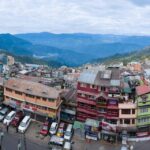
Start at the Clock Tower: Town Hall, Timekeeping, and British Urban Design
You begin at Limbugaon and head toward the Darjeeling Clock Tower (built in the 1850s). The clock tower isn’t just a pretty landmark—it’s tied to the Darjeeling Town Hall, and that’s the key lesson of this early stop: colonial-era architecture often acted like civic infrastructure, with timekeeping as part of everyday control and coordination.
You’ll have about 30 minutes here, including the brief admission-tick note. Even if you don’t go inside for long, the tower’s placement is a useful way to get your bearings quickly. Darjeeling can feel like one hill road after another, so an anchor like this helps your brain map the rest of the route.
Planters Club and Gymkhana Club: Where Colonial Life Was Social, Not Only Political
Next up is the Darjeeling Planters Club, started in 1868 for British planters and their families. If you’re expecting something stiff and museum-like, this is more interesting than that. Clubs like this were where business, gossip, decisions, and society mixed together—so you start to understand colonial presence as a lived routine, not just a set of dates.
Then the tour later returns you to another classic institution: the Darjeeling Gymkhana Club (established in 1909). This one is described with specific facilities—badminton courts, card rooms, and a library. That detail matters because it tells you what leisure looked like for the colonial class and how the city’s identity was shaped around it.
Practical tip: for both club stops, keep expectations simple. You’re usually there for a short orientation and photos, not a long private look. Still, the payoff is the perspective: you’ll recognize these places later while walking around town.
The Head Post Office (1921) and a UNESCO-Listed Detail
The Darjeeling Head Post Office is a standout stop because it’s tied to May 1921 construction and described as one of the oldest post offices of the region—and specifically labeled as a UNESCO World Heritage Site. Even if you’ve seen post offices everywhere, this one becomes a story object: communication networks were a major part of how empires connected remote places.
You’ll only spend around 15 minutes here, so don’t treat it as a deep architectural study. Instead, treat it like a visual reminder that the colonial presence wasn’t only about buildings of power—it was also about logistics, mail routes, and administration.
Keventer’s and Glenary’s: Included Snacks with Real Hill-Station Atmosphere
Two stops are marked with admission included and function like built-in comfort breaks.
First: Keventer’s. The description frames it as nostalgic, tied to Mr. Edward Keventer’s dairy farm of Ghoom. You’re told you’ll get time for hearty breakfast and mouth-watering snacks, plus it’s paired with an iconic viewpoint. In practice, this is where your tour stops feeling like homework and starts feeling like Darjeeling.
Second: Glenary’s—Bakery, Restaurant & Pub. This place is described as once founded by an Austrian, and the tour gives you time to enjoy the tea room/bakery vibe. It also calls out one of the best sunsets in town, with an open cafeteria and bar area that works well as a casual hangout.
If you’re traveling with a coffee-only mindset, plan to broaden it. Darjeeling’s best moments often come from doing local things slowly, and these two stops are built to help you do that.

St. Andrews Church: Colonial Faith and a Specific Link to Darjeeling’s Legend
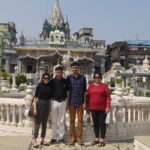
For the “spiritual” side of the city, you visit St. Andrews Church. It was originally built in 1843 and described as an Anglican church along the Mall Road. The tour also connects it to Lt. Gen A Lyod, believed to be the discoverer of Darjeeling.
You’ll spend about 15 minutes, which is just enough to read the architecture and absorb the legend. Don’t rush past it thinking it’s only religious stonework. In Darjeeling, places like this help explain who arrived, what they believed, and how religion sat alongside administration and clubs.
Glenary’s to the Museum Route: Das Studio, Shops, and the Proof of Change
After the main institutional stretch, the route shifts toward materials that show Darjeeling changing over time.
- Das Studio: described as one of the oldest photography studios in Darjeeling, started in 1927. You’ll get time to see panoramic photographs from different periods. This is one of the most personal stops because photos are a time machine you can interpret yourself. You’re not just told what the city was like—you see evidence.
- Habeeb Mullick & Sons Estd 1890: positioned as a good place to experience handcrafted curios before reaching the Mall.
- Oxford Book and Stationery Co.: a hill-style cottage architecture bookstore with an enormous collection of souvenirs.
These stops are short (often 10 minutes), so go in with a simple plan: walk, look, choose one or two items if you actually want them. This is where a lot of people overbuy because the shops are charming. Stay grounded and buy only what you’ll enjoy later, not just because it’s photogenic.
Raj Bhavan on the Mall: Winter Capital History in One Walk
You’ll spend time at Darjeeling Mall, where the tour points to Darjeeling’s identity as the Winter Capital from earlier heydays. The itinerary highlights Government House, also known as Raj Bhavan, and gives a timeline: initially built by the British in 1840, then ownership shifting to the Maharaja of Coochbehar later in 1877.
This part matters because it shows how colonial power was not a one-way street. Places and buildings could change hands, and Darjeeling’s status wasn’t just a British dream. It was a regional role too.
Hayden Hall and Chittaranjan Das Memorial: Independence and Education
The tour also steps beyond clubs and churches into people and institutions.
- Chittaranjan Das Memorial (Step Aside): linked to a legendary figure of India’s independence movement, with emphasis on revolutionary legacy in Darjeeling. You’ll have about 20 minutes, which is enough to connect the name with the broader political timeline.
- Hayden Hall: described as a must visit to explore the history of the Hayden Hall Institute and its enterprising women. Expect a short stop (15 minutes) but it’s the kind of place that helps balance the colonial-only narrative.
If colonial-era Darjeeling feels like it’s mostly about British social life, these stops act as counterweight. They give you the sense that the region was also part of wider Indian change, not just the story of one empire.
Himalayan Tibet Museum and the Bigger View of the Hills
One of the more distinctive stops is the Himalayan Tibet Museum. You’re told it houses accounts related to thousands of years of Tibetan indigenous history and the centuries-old relationship between Tibet and India. You’ll spend around 30 minutes here, which is a decent chunk for a walking tour slot.
This is also where Darjeeling’s broader geography matters. The hills aren’t isolated. They were—and are—connected by people, refuge, and political shifts. One of the historical themes you may hear alongside the sites is British tea development alongside comparisons to Simla, plus the wider anxieties around expansion and China, and how Tibetan communities arrived as refuge. Even if you only catch pieces, it changes how you interpret the colonial buildings you’ve already seen.
Dhirdham Temple and the Kathmandu-Style Connection
Near the railway station area, the tour includes Dhirdham Temple, described as built in the style of Kathmandu’s Pashupatinath temple. You’ll have a short 10 minutes.
This stop is useful for practical reasons: it prevents you from viewing Darjeeling’s spiritual life through only one lens. You get a clearer sense that the city’s religious architecture pulls from different traditions, and that those influences still shape what feels important on the street.
Darjeeling Himalayan Railway and the Old Market Energy
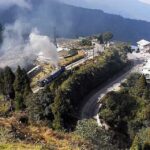
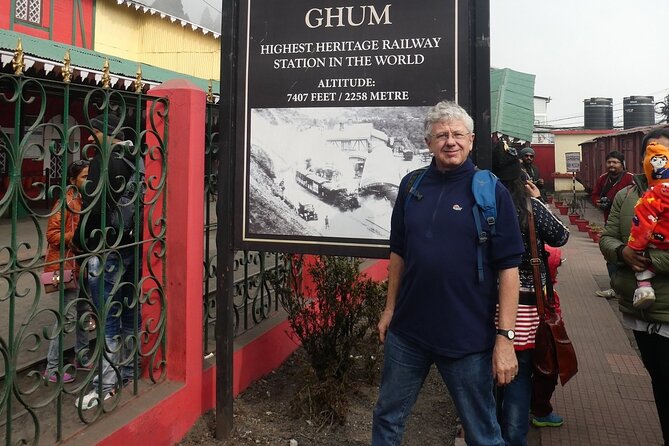
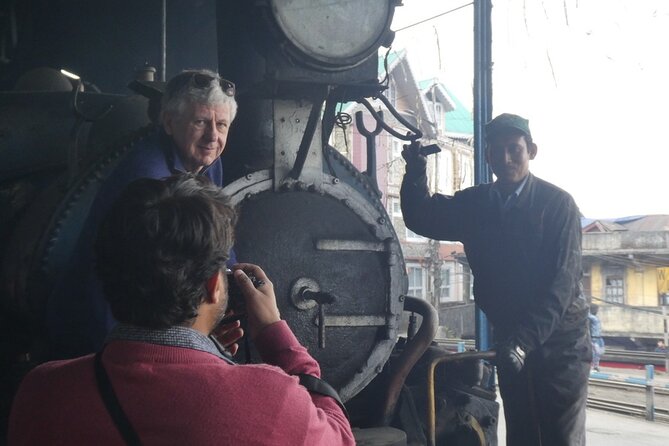
The itinerary includes Darjeeling with time for the legendary Darjeeling Himalayan Railway, described as starting its journey in the 1870s. You’re given about 15 minutes and an admission ticket included note. Even if you keep it brief, the railway is a core part of what makes Darjeeling more than a hill town viewpoint. It’s transportation, identity, and a reason outsiders could arrive in a more permanent way.
Then comes Old Market, described as the heart of the Old British Market, Old Rly Station, and the Old British Ropeway. It’s about 15 minutes, with admission included. The practical value here is simple: you see where the commercial pulse happened around the railway and old infrastructure. You’ll also likely pick up a feel for local pace after all the historical stops.
Turnbull High School: A Colonial School You’ll Be Glad You Saw
One of the less-obvious stops is Turnbull High School, just after crossing St. Columbas Church. The tour calls it one of the lesser known colonial schools in Darjeeling, following Nepali High School and Bishop’s House.
You get about 20 minutes, with admission included. This is the kind of place history walks often skip, which is exactly why it’s worth including. Schools tell you what colonizers prioritized (and what systems were imported), but they also help you understand how education became part of social structure long after the buildings were handed down.
Price and Value: What You’re Getting for $27.97
At $27.97 per person, this tour is priced as a solid, mid-range walking experience with a lot of built-in structure. What makes the value feel real is that:
- You’re paying for a professional guided narrative, not just wandering between stops.
- The itinerary marks many sights as free admission, and several stops include admission tickets during the scheduled time.
- Two food-and-coffee style stops come with admission included—Keventer’s and Glenary’s—so you don’t have to hunt for your own break mid-route.
Where the cost won’t feel as good is if you hate walking, want long stays inside buildings, or only care about one type of attraction (like purely museums or purely churches). But if you like mixing architecture, institutions, photo evidence, and a couple of well-timed breaks, the price starts to make sense fast.
Should You Book the Colonial Heritage Walking Tour?
Book it if you want a 2 to 3 hour way to orient yourself in Darjeeling and understand how colonial-era clubs, civic buildings, and religious landmarks connect. This tour also works well if you like historical explanations with practical stops—especially the included snacks moments at Keventer’s and Glenary’s.
Skip it (or at least think hard) if you want a slow, low-effort day. The route is packed, and the tour depends on good weather. Also, if you already have a very tight schedule and only want a single top highlight, you might prefer a shorter, more focused walk.
If you’re aiming for Darjeeling that feels both authentic and informative, this one is a strong bet—because it teaches you to read the city, not just see it.
FAQ
How long is the Colonial Heritage Walking Tour in Darjeeling?
It’s listed as 2 to 3 hours (approx.).
What does the tour cost?
The price is $27.97 per person.
What locations does the tour include?
The itinerary includes Darjeeling Clock Tower, Darjeeling Planters Club, the Darjeeling Head Post Office, Keventer’s, Glenary’s, St. Andrews Church, Darjeeling Gymkhana Club, Darjeeling Mall (Raj Bhavan/Government House), Das Studio, Habeeb Mullick & Sons, Oxford Book and Stationery Co., Darjeeling (Darjeeling Himalayan Railway), Turnbull High School, Old Market, Chittaranjan Das Memorial, Himalayan Tibet Museum, Hayden Hall, and Dhirdham Temple.
Is any food included?
Yes. Keventer’s and Glenary’s—Bakery, Restaurant & Pub are marked as admission ticket included stops, and the descriptions mention breakfast/snacks for Keventer’s.
Do I need to buy separate tickets?
The itinerary marks many stops as admission free, and several stops as admission ticket included. You’ll still be responsible for anything you choose to buy on your own.
Where does the tour start and end?
It starts at Limbugaon, Darjeeling, West Bengal 734101, India and ends at St. Andrews Church (Chauk Bazaar, Darjeeling).
How large are the groups?
The tour has a maximum of 50 travelers.
Is there a mobile ticket?
Yes, the tour includes a mobile ticket.
Is the tour weather dependent?
Yes. It requires good weather. If it’s canceled due to poor weather, you’ll be offered a different date or a full refund.
Can I cancel for free?
The policy allows free cancellation up to 24 hours in advance for a full refund.
Are service animals allowed?
Yes, service animals are allowed.