REVIEW · DHARAMSALA
Guided Walk, India’s Own Mini Tibet at Mcleodganj
Book on GetYourGuide →Operated by Himachalbylocals · Bookable on GetYourGuide
McLeod Ganj feels like Tibet, minus the passport. This 3-hour guided walking tour starts at the Main Square and strings together key places tied to Tibetan Buddhism in Himachal Pradesh. I like how the route turns famous names like Tsuglagkhang into something you can actually picture while you walk.
What I also like is the mix of sacred and practical stops. You move from temple spaces into the Library of Tibetan Works and Archives, the Tibet Museum, and the Men-Tsee-Khang Tibetan Medical and Astro Institute. One consideration: you are on your feet for the whole 3 hours, so comfortable shoes matter, and it’s not suitable for people over 95.
In This Review
- Key points to know before you go
- Why McLeod Ganj feels like India’s own Mini Tibet
- Price and group size: what you’re really paying for
- Main Square start: how a 3-hour walk keeps you oriented
- Thekchen Choumlling complex and the Kalachakra Temple
- Tsuglagkhang: Dalai Lama’s temple complex and residential life
- Library of Tibetan Works and Archives: culture that survives on paper
- Tibet Museum near Tsuglagkhang: stories in objects
- Nechung Monastery and the State Oracle tradition
- Men-Tsee-Khang: Tibetan medical and astro institute
- Practical tips for making the most of the walk
- Should you book this McLeod Ganj guided walk?
- FAQ
- Where does the tour meet?
- How long is the guided walk?
- Is the guide English-speaking?
- What should I bring?
- Are alcohol or drugs allowed?
- How many people are in a booking?
- What is the cancellation policy?
Key points to know before you go
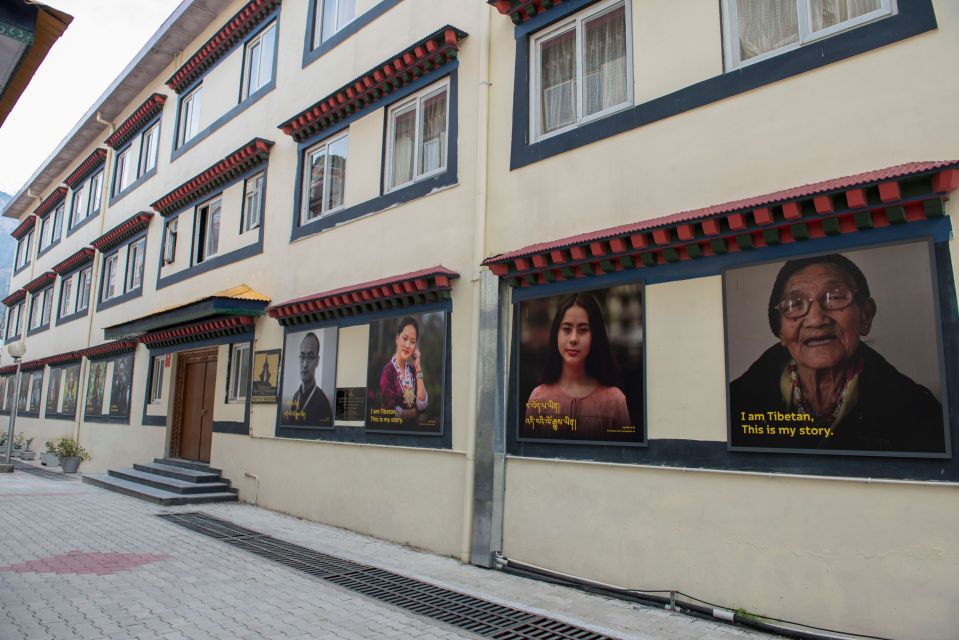
- Small-group feel: up to 15 people per booking, so your guide can answer questions.
- English-speaking local host: live guidance in English.
- A “religion + culture + politics” walking route through major Tibetan sites in McLeod Ganj.
- You’ll see institutions with real roles, like the Tibetan library, museum, and Men-Tsee-Khang.
- Water bottle included, so you can keep the pace without hunting for a shop.
Why McLeod Ganj feels like India’s own Mini Tibet
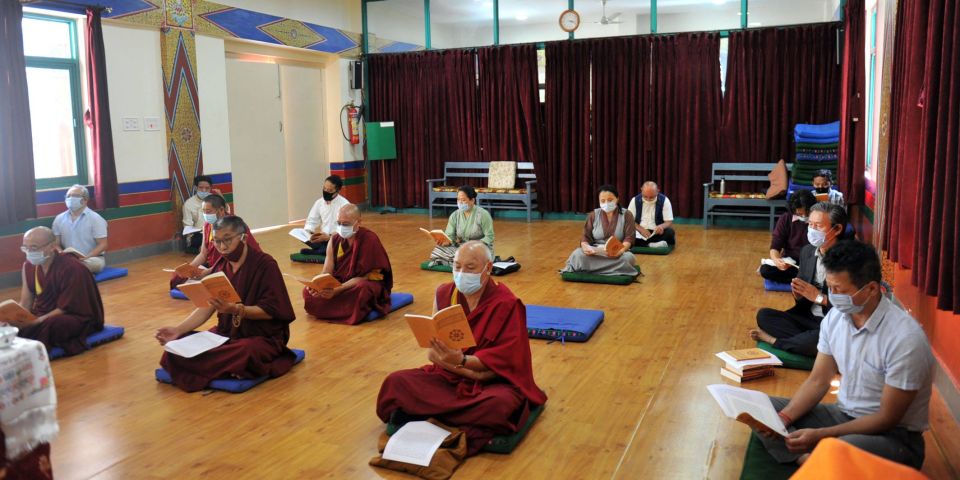
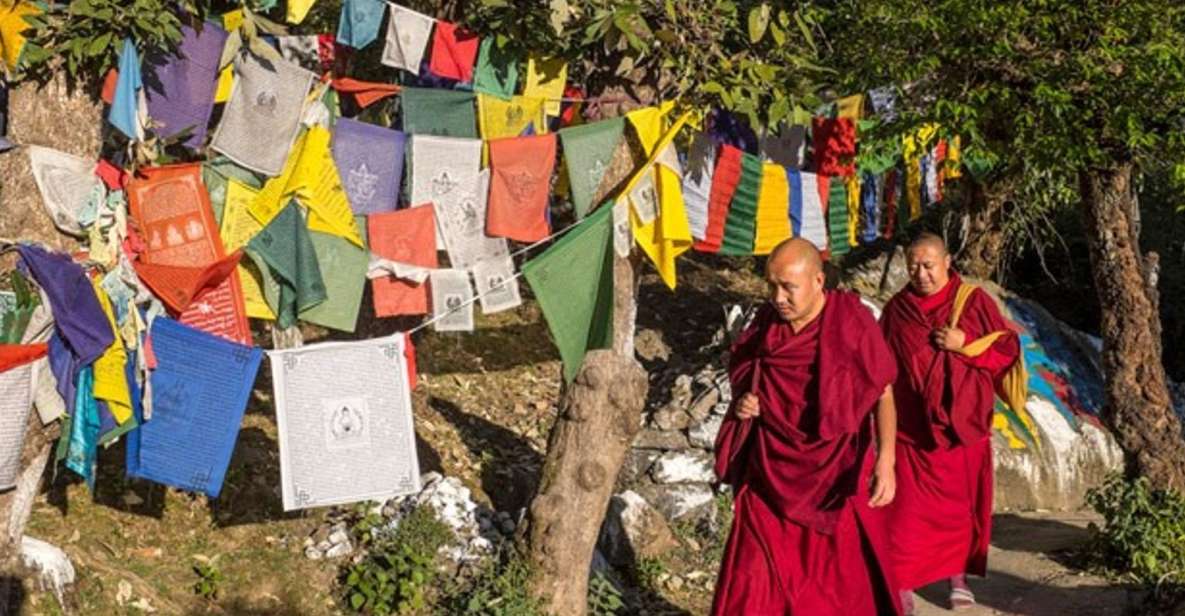
McLeod Ganj sits in Himachal Pradesh, and it has a reputation for feeling close to Tibet in spirit. That vibe is not just about old stone buildings and prayer flags. It’s about how people organize life around faith, learning, healing, and community leadership.
On this guided walk, the big idea is that Tibetan culture isn’t one thing. It’s places that function: temples that host pilgrims, monasteries tied to historical traditions, libraries that preserve works, and institutes that carry on medical and astro knowledge. When you see those side by side, you understand why this area became such a major hub for Tibetan religious and cultural life in exile.
If you’re the type who likes to connect dots—religion to institutions, and institutions to everyday meaning—this format fits. Instead of touring one building for an hour, you get a linked route that helps you keep the story straight as you move.
You can also read our reviews of more walking tours in Dharamsala
Price and group size: what you’re really paying for
At about $38 for a small group (the listing notes it’s up to 1 in a booking context), you’re not paying for transportation or a long day trip. You’re paying for a focused, guided walking experience that lasts 3 hours, with an English-speaking local guide and a water bottle.
Here’s the value angle: in religious and cultural areas, the difference between seeing and understanding often comes down to narration. A good local guide helps you notice details you’d otherwise miss—like how different complexes relate to each other, or why certain institutions matter to Tibetan life.
Also, with a maximum of 15 travellers, you’re less likely to get swept along like a crowd. That matters when you have questions about what you’re seeing, whether it’s a temple complex layout or the role of specific monasteries and institutes.
Main Square start: how a 3-hour walk keeps you oriented
The tour meets at the Main Square in McLeod Ganj. That’s smart. You start in the area where most people naturally find their bearings, so you’re not doing a complicated meetup routine before you even begin learning.
From there, the route is structured like a chain. You walk from one major site to the next, with your guide explaining what you’re looking at and how each place fits into a broader Tibetan cultural picture. The overall timeframe is about 3 hours, with walking between stops planned into that schedule.
If you like to photograph, this is a good setup. Instead of rushing to one location and losing time, you get short stretches for looking and listening, then you’re off to the next key stop. Just keep in mind it’s a walking tour. Bring comfortable clothes and shoes you can trust on uneven ground.
Thekchen Choumlling complex and the Kalachakra Temple
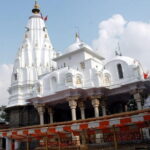
One stop on your walk is the Thekchen Choumlling temple complex, which houses the Kalachakra temple. This is the kind of place where a guide earns their keep, because complexes can look like one large blur when you’re on your own.
What makes it worth your time is the way the complex functions as more than a single temple. The information provided for this tour highlights that the Thekchen Choumlling complex also connects to Namgyal monastery, the private chambers of His Holiness the Dalai Lama, and the famous Tsuglakhang temple. Even if you don’t spend equal time at each internal space during the walk, your guide can help you understand the relationship between these parts.
How to enjoy it:
- Look at the complex as a system, not a single building.
- Pay attention to what’s described as part of the Dalai Lama’s private presence versus public temple spaces.
- If you’re curious about why the Kalachakra is specifically included, ask your guide to connect it to the broader religious context you’re learning.
A drawback? Some temple complexes can feel rule-heavy or quieter in certain areas. Expect moments where you’ll slow down and move respectfully, rather than chat or linger like you would in a museum.
Tsuglagkhang: Dalai Lama’s temple complex and residential life
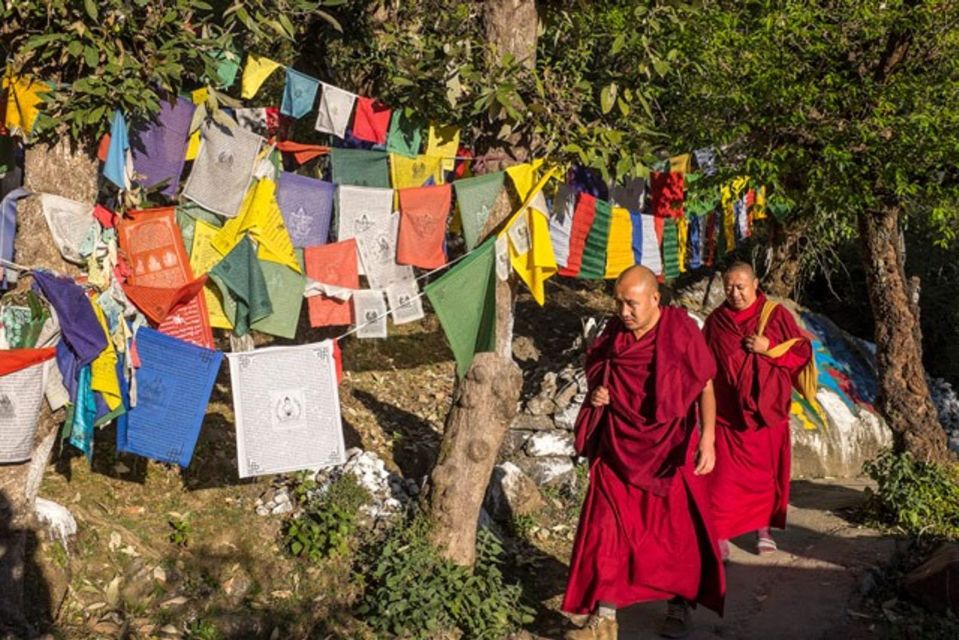
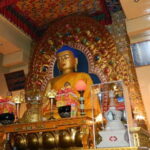
Next up is Tsuglagkhang, also known as the Dalai Lama’s Temple complex. This is one of the core places in McLeod Ganj for anyone trying to understand modern Tibetan religious life in exile.
The key detail here is that Tsuglagkhang isn’t just a temple. It’s described as having a structure that’s both a temple and a residential complex for His Holiness and his followers. It’s also highlighted as being a world renowned religious center that draws Buddhist pilgrims throughout the year.
When you’re standing in a complex like this, it helps to remember you’re seeing lived-in religion, not only architecture. The temple complex is part of the community rhythm—visitors come, prayers happen, and the space supports both public devotion and private religious life.
How I’d frame it for you:
- If you want atmosphere, this is the stop.
- If you want meaning, your guide’s explanations will matter here, because residential-temple setups change how you read the space.
- If you’re into details, ask what visitors should look for first.
Give yourself a few minutes to slow down. This is the kind of place where rushing turns into missing.
You can also read our reviews of more guided tours in Dharamsala
Library of Tibetan Works and Archives: culture that survives on paper
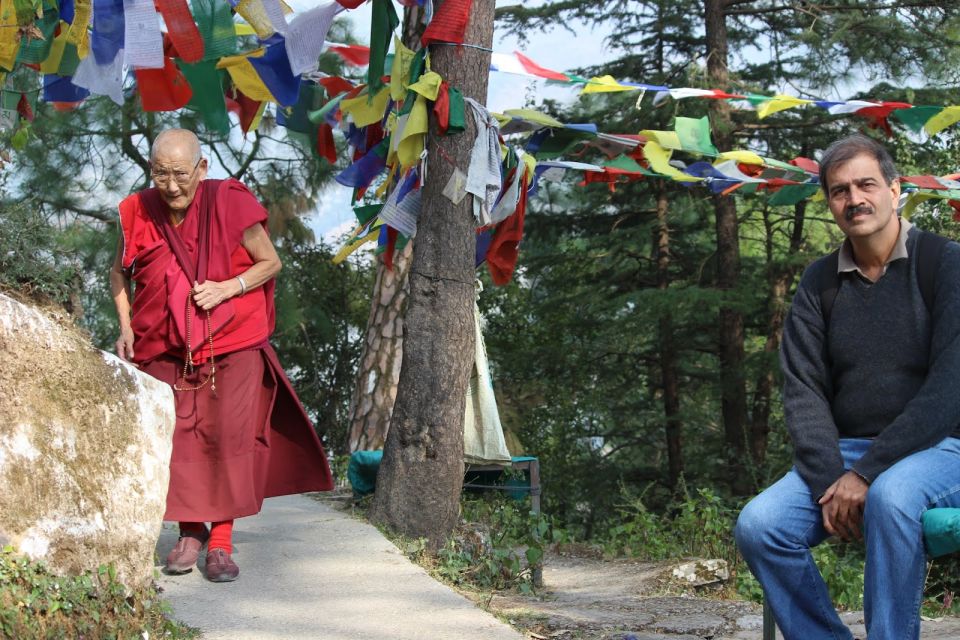
After temples, you step into a different kind of landmark: the Library of Tibetan Works and Archives (LTWA). This is a Tibetan library in Dharamshala, founded by Tenzin Gyatso, the 14th Dalai Lama, on 11 June 1970.
Why this stop works on a walking tour is simple: it adds a learning layer. If you’ve been thinking about Buddhism as chants and rituals, the library shows another side—preservation of texts, scholarship, and the infrastructure that keeps teachings and cultural knowledge accessible.
What I like about including LTWA in a guided walk is that it prevents a common tourist trap: only focusing on religious buildings and forgetting how culture gets maintained over decades and generations. A library is a quiet power center. It doesn’t ask for silence from visitors; it asks for attention.
Practical tip: don’t treat this like a typical quick photo stop. You’ll get more out of it if you listen for what your guide points out about why LTWA is considered one of the most important Tibetan works institutions in the world.
Tibet Museum near Tsuglagkhang: stories in objects
The walk also includes the Tibet Museum, located near the main temple of the 14th Dalai Lama, Tsuglagkhang. It’s described as the official museum of the Central Tibetan Administration’s Department of Information and International Relations.
This is where the tour starts connecting religion to communication and history. A museum like this is designed to explain a people and a situation through curated displays (even if your guide doesn’t use that exact phrase, the purpose is the same). It’s not only about what’s beautiful—it’s about what’s documented and why.
What to expect from this stop:
- A chance to slow down and absorb context.
- A bridge between what you just saw in temples and what Tibetan institutions do in public life.
- A chance to understand how information is managed and shared by official bodies.
If you’re short on patience for indoor stops, you might feel this is slower than the temple points. But if you want the walk to make sense beyond atmosphere, this museum stop is what helps you connect the dots.
Nechung Monastery and the State Oracle tradition
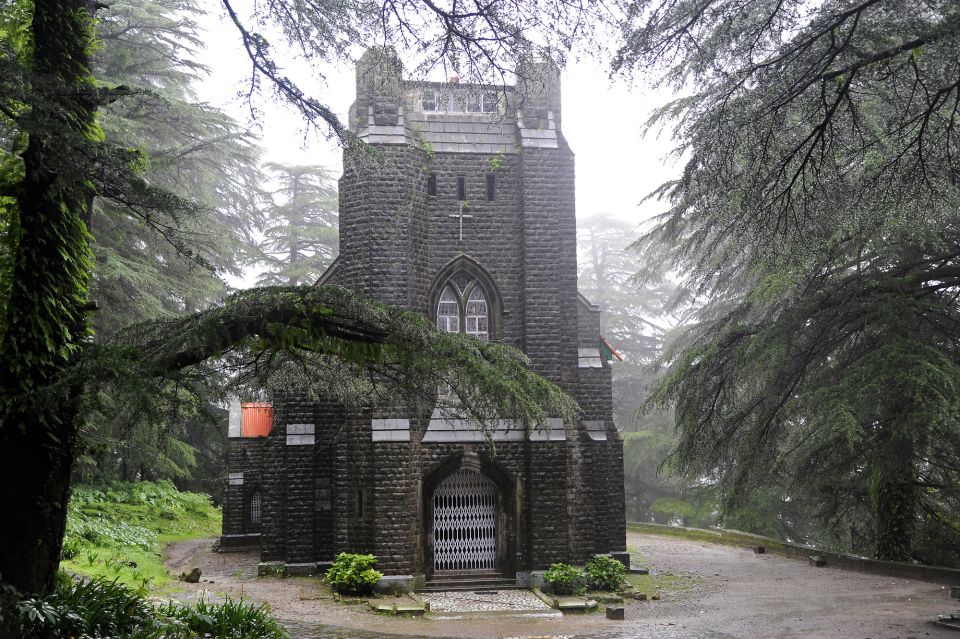
One of the more distinctive stops is Nechung Monastery, described as the seat of the State Oracle and protector-deity of His Holiness the Dalai Lama and Tibet.
This is not vague spiritual storytelling. The tour information includes specific details about how the tradition works: the physical medium is called Nechung Kuten, and in a trance-like state the protector-deity takes possession of his body to give advice and predictions to the Dalai Lama and Tibetan leaders in exile.
Nechung’s role is also described historically: it has acted as spiritual guide to the Tibetan Government since the 18th century. So when you hear about or see references to Nechung, you’re not just learning a legend. You’re learning about a tradition that influenced governance and spiritual leadership for a long time.
How to handle this stop as a visitor:
- Keep an open mind, but ask direct questions about what your guide means.
- Listen for the distinction between the monastery as a place and the oracle tradition as a process.
- If you’re the type who likes history plus religion, this will land well.
A consideration: spiritual traditions can be intense for some people, especially when described with terms like protector-deity and trance-like states. You don’t need to agree—just be ready to treat it as a living concept within Tibetan culture.
Men-Tsee-Khang: Tibetan medical and astro institute
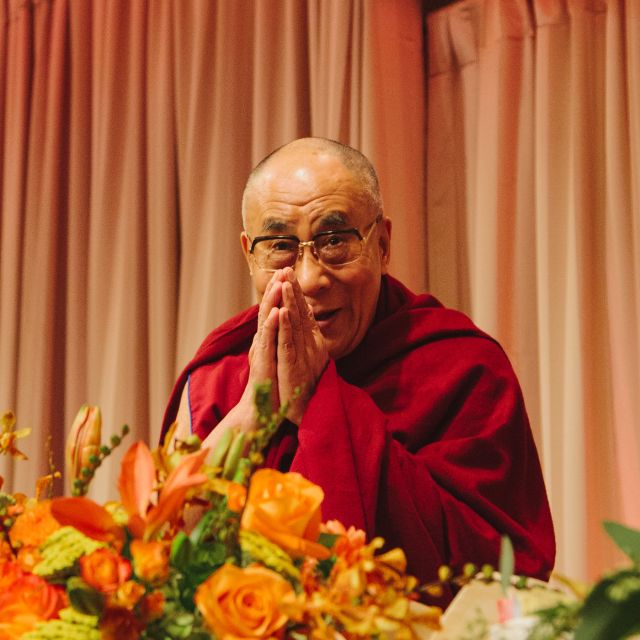
The final named institutional stop is Men-Tsee-Khang, also known as the Tibetan Medical and Astro Institute. This is described as a charitable institution based in Dharamshala.
The tour info gives you useful background:
- Founded by the 13th Dalai Lama in Lhasa in 1916
- Re-established in India by the 14th Dalai Lama in 1961 after the Chinese occupation of Tibet
This is a great counterbalance to the temple-heavy parts of the walk. It shifts your perspective from devotion to care and applied knowledge. Even if you don’t personally follow Tibetan medical astrology, learning that this institute exists—and that it’s charitable—adds depth to what Tibetan culture looks like on the ground in India.
Why this stop matters for value: it helps you see continuity. The same community that preserves texts and maintains religious sites also builds systems for healing and guidance.
What to do here:
- Listen for how your guide ties the institute back to the broader idea of Tibetan culture continuing in exile.
- Don’t rush. This stop is about concepts and roles, not just structures.
Practical tips for making the most of the walk
A 3-hour guided walk around temple complexes and major cultural institutions can be very rewarding if you prepare lightly and think like a pedestrian, not a tourist on rails.
Bring:
- Comfortable shoes (you’ll want grip and cushioning)
- Comfortable clothes for walking and prayer-site conditions
You’ll also get:
- A water bottle included with the tour
Respectful boundaries:
- The tour notes no alcohol and drugs.
Group and pacing:
- Expect up to 15 people, so you’ll move as a group but still have chances for questions.
Guide quality matters here. In one experience, the guide Onkar stood out for answering questions with great detail and pointing out fascinating features in the temples and city that people would likely miss on their own. You can copy that strategy: ask at the start what your guide suggests you watch for, then keep asking as you go.
Should you book this McLeod Ganj guided walk?
I think you should book if you want more than sightseeing in McLeod Ganj. This tour is strongest when you care about connections—between Tibetan Buddhism, the institutions that preserve it, and the traditions that keep community leadership functioning.
Book it if:
- You enjoy guided explanations and have questions.
- You want a 3-hour route that covers several key institutions without wasting time.
- You like the idea of mixing temples with the library, museum, and Men-Tsee-Khang.
Skip it if:
- You don’t want to walk for 3 hours.
- You need a more flexible pace than a group walking tour can offer.
- You fall outside the tour’s suitability note (it’s not suitable for people over 95).
If you’re deciding between a quick self-guided stroll and a guided plan, this is a smart choice. For the money, you’re really buying context—and in McLeod Ganj, context is what turns the buildings into understanding.
FAQ
Where does the tour meet?
The meeting point is at the Main Square, McLeod Ganj, Himachal Pradesh 176219.
How long is the guided walk?
The duration is 3 hours.
Is the guide English-speaking?
Yes, the tour includes a live English-speaking local guide.
What should I bring?
You should bring comfortable shoes and comfortable clothes.
Are alcohol or drugs allowed?
No. Alcohol and drugs are not allowed.
How many people are in a booking?
The tour notes a maximum of 15 people per booking.
What is the cancellation policy?
You can cancel up to 24 hours in advance for a full refund.