REVIEW · LHASA
15 Days Mt Everest and Mt Kailash Kora Pilgrimage Group Tour
Book on Viator →Operated by Great Tibet Tour · Bookable on Viator
Everest and Kailash in one trip is wild. This 15-day Tibet circuit strings together Lhasa’s sacred sights and then pushes into far-northern, high-altitude country for Everest Base Camp camping and a Kailash Kora trek. Along the way you’ll pass big-name holy lakes, UNESCO World Heritage stops, and quieter monasteries that feel like they still run on routine and prayer.
I especially like how the tour handles the hard parts for you. Pickup and drop-off around Lhasa Gonggar Airport plus a tight max group of 12 makes the first and last days less stressful. I also like the comfort mix: hotels, guesthouses, and nomad-style camping gear are all included so you’re not stuck planning where to sleep.
The main consideration is physical strain and altitude. This route asks for strong fitness, and early views (like sunrise plans near Everest Base Camp) depend on weather, even with an oxygen tank available for emergencies.
In This Review
- Key Things That Make This Tour Work
- Why Everest and Kailash Make This Route Different
- Price and Value: What $2,280 Really Buys You
- Lhasa First: Potala, Jokhang, Drepung, Sera, and the Old Streets
- Drepung Monastery and the Gelug world
- Tibet Museum and Norbulingka
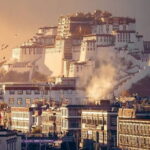
- Potala Palace, Jokhang Temple, and Barkhor Street
- The Road North: Yamdrok Lake, Karola Glacier, Gyantse, and Tashilunpo
- Yamdrok Yumtso Lake and Karola Glacier
- Pelkor Chode Monastery in Gyantse
- Tashilunpo Monastery in Shigatse
- Into the Everest National Nature Reserve: Passes and Base Camp Camping
- High passes on the way in
- Everest Base Camp sunrise plans (weather-dependent)
- What you should be ready for
- Mt Kailash Kora Trek: The Real Challenge and the Real Payoff
- The eco-bus transfer and starting at Sarshung Valley
- Dromala pass day: the hardest push (5630m)
- Manasarovar day: finishing the Kora and the 9km trek
- More Sacred Stops: Lake Manasarovar, Sakya Monastery, and the Northern Return
- Sakya Monastery on the way back
- Northern route back to Lhasa: Yarlung Tsangpo valley and Nyemo
- A buffer day in Lhasa
- Group Dynamics, Comfort, and Altitude Safety Notes
- Who Should Book This Everest and Kailash Kora Tour
- Should You Book It
- FAQ
- FAQ
- What is the duration of this tour?
- Where does the tour start and where do you end?
- What is the meeting time?
- Is airport pickup and drop-off included?
- How many people are in the group?
- What does the tour price include?
- What is not included in the tour price?
- Do I need to arrange the Tibet permits myself?
- Are any high passes or trekking points included?
- Is oxygen provided for altitude safety?
- If I’m traveling alone, do I pay extra?
Key Things That Make This Tour Work
- Airport pickup and multiple transfer windows reduce last-minute logistics chaos.
- Max 12 travelers keeps the rhythm manageable during long driving days.
- Everest Base Camp camping is built into the plan, plus oxygen tank for emergency use.
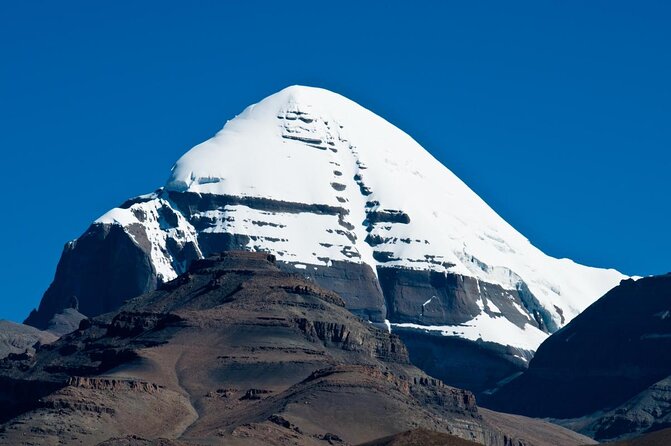
- Kailash Kora trek includes the Dromala pass (5630m), so it’s not a casual walk.
- All necessary Tibet permits are handled, with express delivery tied to your travel permit.
Why Everest and Kailash Make This Route Different
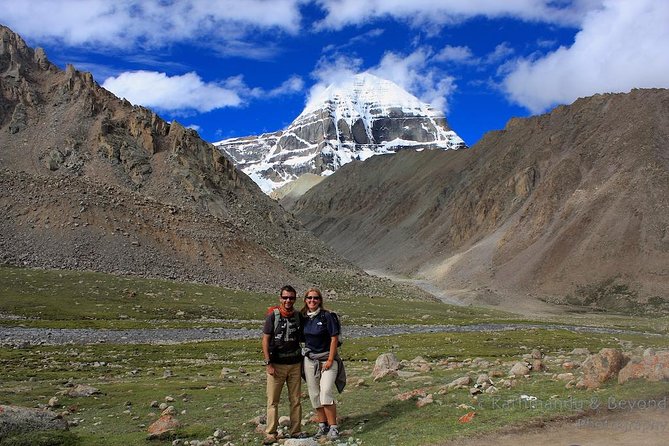
Most Tibet trips choose one big draw: either deep culture around Lhasa and Shigatse, or a pilgrimage focused purely on Mt Kailash. This one tries to do both, which changes the feel of the whole trip. You start in Lhasa with iconic religious architecture, then you swing north and west into the most remote parts of the plateau. The result is a journey with two different kinds of intensity: one is spiritual and architectural, the other is altitude, distance, and long road time.
You also get a smooth on-the-ground structure. You’re not just hopping between highlights; you’re moving through a corridor of Tibetan life and sacred geography: Lhasa monasteries, pilgrimage lakes, Gyantse and Shigatse religious powerhouses, then the far-west circuits around Darchen and Mt Kailash.
If you like travel that feels organized enough to stay calm, but real enough to feel remote, this works. If you hate early starts, high passes, or long days in a vehicle, I’d think twice.
You can also read our reviews of more tours and experiences in Lhasa.
Price and Value: What $2,280 Really Buys You
At $2,280 per person for about 15 days, the headline number looks straightforward. The value is in what’s bundled and what’s genuinely costly or annoying to arrange yourself.
Here’s what matters most for value on this specific kind of trip:
- Permits: The tour says it includes all necessary permits to Tibet, plus express delivery tied to your Tibet Travel Permit. In practice, this is one of the biggest friction points for independent travel.
- Sight-by-sight fees: Entrance fees mentioned in the plan are included, so you’re not doing the math every day.
- Safety buffer: An oxygen tank for emergency use is included. This doesn’t eliminate altitude risk, but it’s a real comfort on a high route.
- Sleeping gear for camping: A sleeping bag is provided (important for the Everest Base Camp camping night(s) referenced in the tour overview).
- Travel base in Tibet: Your transport vehicle (with travel license, gas, parking) and an experienced local English-speaking guide are included.
You still need to budget for things that are not in the package: travel insurance, personal expenses, and any extra activities. Also, flights and train tickets aren’t included. But if you’re trying to avoid the logistical whiplash of arranging permits, transport, and entrance fees across multiple regions, the bundled price starts to make sense fast.
One more value note: the group size is capped at 12 travelers. That matters when you’re spending 10+ hours in a vehicle across passes, or when you’re managing the human side of altitude planning.
Lhasa First: Potala, Jokhang, Drepung, Sera, and the Old Streets
Most of your early days are about learning the visual language of Lhasa. You don’t just see monuments—you see how the city organizes spiritual life around monasteries and markets.
Drepung Monastery and the Gelug world
You’ll visit Drepung Monastery (Zhebang Si), one of the great Gelug monasteries. The tour also frames the day around the idea that there are multiple Gelug monasteries in Tibet, and this is one of two stops in the Gelug category during your Lhasa sightseeing.
Practical thought: give yourself space to slow down. Monasteries move on their own time—repairs, prayer, people flowing in and out. If you treat it like a checklist, you’ll miss the feel.
Tibet Museum and Norbulingka
In the afternoon you’ll add the Tibet Museum and then Norbulingka (Precious Stone Garden), the Dalai Lama’s summer resort. The museum day is useful because it helps explain what you’re looking at later: clothing, house architecture, festivals, and daily-life scenes.
Potala Palace, Jokhang Temple, and Barkhor Street
Then comes the big trio:
- Potala Palace (winter palace of the Dalai Lama, per the tour’s description)
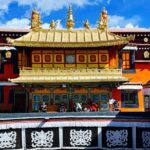
- Jokhang Temple, described as built in the seventh century and considered the most sacred temple in Tibet
- Barkhor Street, a lively ring of shops and souvenirs
This combination is great because it gives you contrasts. Potala is monumental and iconic. Jokhang is the sacred center that people come to again and again. Barkhor Street is where the city’s pilgrimage energy turns into everyday shopping and street life.
If you want the most out of these areas, plan for smaller pacing: drink water, step aside when you need air (Lhasa is already higher than sea level), and keep your camera ready but not glued to your hands.
The Road North: Yamdrok Lake, Karola Glacier, Gyantse, and Tashilunpo
Once you leave Lhasa, the days become a chain of dramatic drives and religious stops. This is where you start seeing how “Tibet travel” is really “Tibet roads + sacred waypoints.”
Yamdrok Yumtso Lake and Karola Glacier
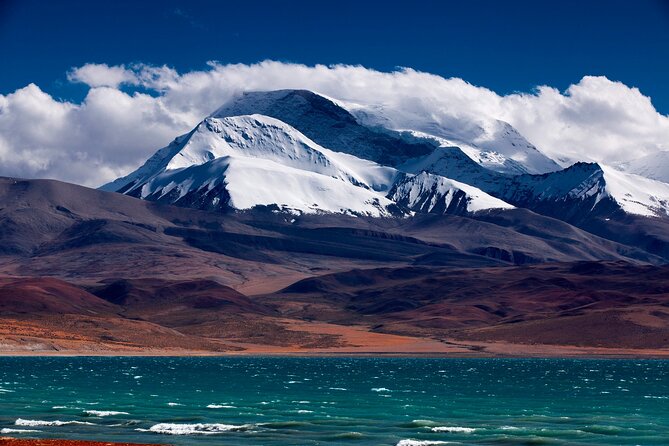
You’ll drive toward Shigatse with a stop at Yamdrok Yumtso Lake, described as stunning and holy, plus a roadside view of Karola Glacier on the way to Gyantse. Even without deep hiking, these are the kinds of stops that reset your brain: you get wide sky, big mountain shapes, and the feeling that you’re traveling through real pilgrimage geography.
Pelkor Chode Monastery in Gyantse
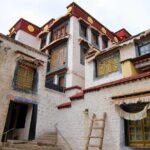
In Gyantse you’ll visit Pelkor Chode Monastery, known for its exquisite architecture and intact murals and statues. This is a good contrast to the mega-monasteries of Lhasa. The vibe tends to feel more specific, more local, and less “museum of famous buildings.”
Tashilunpo Monastery in Shigatse
Then you move on to Tashilunpo Monastery, the Panchen Lama’s home. It’s an important religious center, and this stop helps you connect Lhasa’s Dalai Lama orbit to Shigatse’s other major spiritual tradition.
Into the Everest National Nature Reserve: Passes and Base Camp Camping
This portion is the main physical and emotional shift on the trip. The tour starts layering in high passes and big reserve country, and you’ll feel it in how the days are paced.
High passes on the way in
On Day 5, you’ll pass Tsola Pass (4,600m) and Gyatsola Pass (5,248m) and enter Mt. Everest National Nature Reserve. That’s a lot of altitude change built into driving time. It’s not a trek day, but it still hits your body.
Practical advice: take it slowly during transitions. Eat small, drink water, and don’t treat this like a casual sightseeing drive.
Everest Base Camp sunrise plans (weather-dependent)
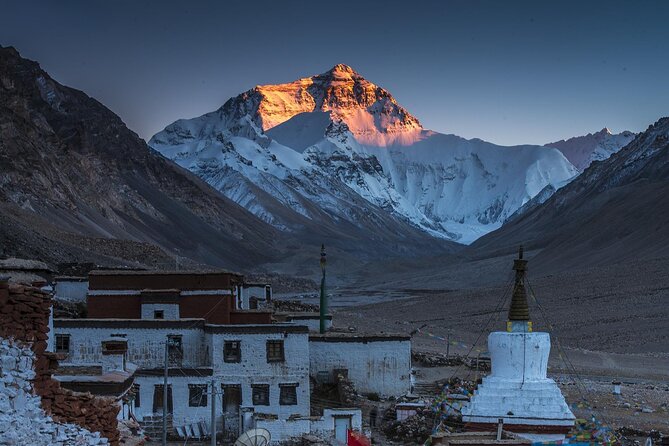
On Day 6, the plan includes the chance to rise early for sunrise at Everest Base Camp, if the weather is good. After that you continue toward Saga. The tour also references seeing Mt. Shishapangma (8,012m) along the way.
And yes—the tour overview says the route includes camping at Everest Base Camp. The itinerary details show the high-altitude staging and early-morning possibilities; with camping in the plan, that sleeping bag becomes more than a line item.
What you should be ready for
Even with an oxygen tank for emergencies, Everest-area conditions are tough. Cold nights, wind, and thin air can do more than you expect. Pack-wisely matters, even though the sleeping bag is included.
Also, don’t build your emotional plan on a single perfect view. If sunrise is fogged out, you’ll still get the Everest region’s scale—just on a different schedule.
Mt Kailash Kora Trek: The Real Challenge and the Real Payoff
Mt Kailash is the spiritual anchor here, and the Kora trek is the part that gives this tour its reputation. This is where your effort converts into meaning.
The eco-bus transfer and starting at Sarshung Valley
Day 8 begins with an eco-bus (included) to Sarshung valley, then you start the trek and meet your porters and yaks at Sarshung Valley. The inclusion of a scheduled transport step helps reduce unnecessary early fatigue so you can focus on the trek itself.
Tip: keep your layers tight and simple. You’re moving between sun and wind, plus big altitude swings.
Dromala pass day: the hardest push (5630m)
Day 9 is described as the most challenging day because you’ll climb over the Dromala pass (5,630m). After a brief break at the top, you descend into a long valley for lunch and more walking.
This is the day to respect. It’s not just altitude; it’s long uphill effort and the mental strain of knowing you’re at the highest point of the circuit.
Manasarovar day: finishing the Kora and the 9km trek
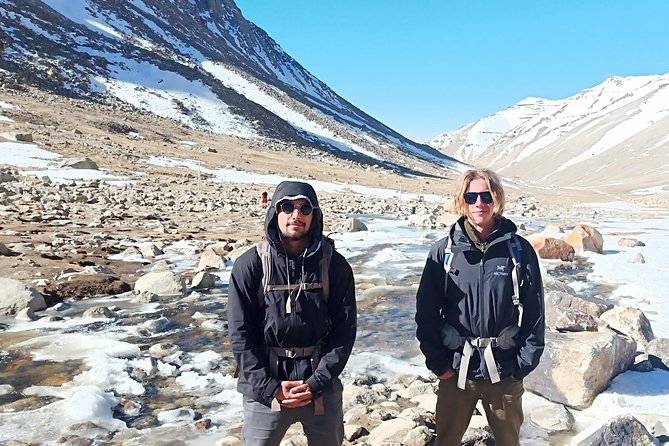
Day 10 is an easier trek day where you’ll trek about 9km to complete the Kora, then take the eco bus back to Darchen. It also mentions Lake Manasarovar, which is held as sacred in Buddhism in connection with the practice of doing the Kora around the holy mountain.
If you’re doing this trek for spiritual reasons, this timing makes sense: the route gives you a hard day (Dromala), then you shift into completion and a more manageable pace.
More Sacred Stops: Lake Manasarovar, Sakya Monastery, and the Northern Return
After Kailash, you’re not just driving home. You’re continuing to stitch together Tibetan religious geography.
Sakya Monastery on the way back
Day 12 includes Sakya Monastery, described as the main monastery of the Sakyapa, built in the 1360s. The walls around the monastery are also described as being mo… (the description cuts off), but the key point you can rely on is the monastery’s age and importance.
Northern route back to Lhasa: Yarlung Tsangpo valley and Nyemo
On Day 13 you drive back to Lhasa via the northern route and you’ll see Yarlung Tsangpo valley. In Nyemo, there’s an opportunity to visit a Tibetan Incense Workshop.
These return-day stops are useful because they soften the emotional hard landing after a pilgrimage trek. You’re still moving through meaningful places, just with less extreme effort.
A buffer day in Lhasa
Day 14 is free time in Lhasa with your tour guide. You can revisit areas at your own pace, do a final shopping round, or just recover. That kind of breathing room matters after Everest-area altitude and a Kora trek.
Group Dynamics, Comfort, and Altitude Safety Notes
This tour is built as a small-group experience for up to 12 travelers, which usually keeps things organized without feeling like a cattle line. It’s also why transfers and pacing can be smoother when the days are long.
Comfort-wise, the plan covers lodging from hotels to guesthouses and includes nomad tent style camping (as stated in the tour overview). That’s a big deal on a route that mixes city visits and remote high-country nights.
Altitude safety is treated in two ways:
- Oxygen tank for emergency use is included.
- The tour explicitly asks you to have strong physical fitness.
That’s your reality check. You can’t out-book physics. Bring your best self into this trip, pace your body, and follow your guide’s advice if conditions change.
Who Should Book This Everest and Kailash Kora Tour
This tour fits best if you:
- Want both major Lhasa religious sites and a pilgrimage-scale trek around Mt Kailash
- Are comfortable with altitude and high passes (including Dromala at 5,630m)
- Prefer a guided structure for permits, entrances, lodging mix, and long transfers
- Like the idea of traveling in a small group rather than a big bus
It’s also a good match for first-time Tibet visitors who don’t want to build the permit and logistics puzzle themselves.
If you’re sensitive to altitude, struggle with long walking days, or dislike cold camping conditions, you’ll want to rethink this or adjust expectations.
Should You Book It
I’d book it if you’re serious about seeing Tibet in the way most people dream about—Lhasa’s sacred centers plus the real pilgrimage corridor to Mt Kailash, with Everest-area high country thrown in. The strongest case is the bundled value: permits, entrance fees, lodging, transport, oxygen tank, and the sleeping bag for camping, all wrapped into one price.
I’d hold off if your priority is only easy sightseeing. This trip has real physical days—especially the Dromala pass—and it relies on weather for certain views. Still, if you can handle the effort, the combination of places is hard to beat.
FAQ
FAQ
What is the duration of this tour?
The tour is listed as about 15 days.
Where does the tour start and where do you end?
It starts with pickup from Lhasa Gonggar Airport on the first day and ends with a transfer to Lhasa Gonggar Airport or the railway station on the last day.
What is the meeting time?
The meeting start time is listed as 9:00 am.
Is airport pickup and drop-off included?
Yes. There is pickup from Lhasa Gonggar Airport to your hotel on the first day, and drop-off from your hotel to Lhasa Gonggar Airport on the last day.
How many people are in the group?
The tour has a maximum of 12 travelers.
What does the tour price include?
It includes accommodation, a licensed vehicle with parking and gas, an experienced local English-speaking guide, government tax, entrance fees, mineral water, oxygen tank for emergency use, and key items like a sleeping bag and necessary Tibet permits. It also includes shuttle bus fees to Kailash (USD 10 per person each way).
What is not included in the tour price?
Not included are travel insurance, personal expenses, optional sights, flights or train, and anything not mentioned in the included section.
Do I need to arrange the Tibet permits myself?
No—the tour states that it includes all necessary permits to Tibet and also includes express delivery of the Tibet Travel Permit. You do need to provide passport and China visa copies in advance.
Are any high passes or trekking points included?
Yes. The trek around Mt Kailash includes a climb over the Dromala pass at 5,630m. The itinerary also mentions Tsola Pass (4,600m) and Gyatsola Pass (5,248m) on the way into the Everest National Nature Reserve.
Is oxygen provided for altitude safety?
Yes. An oxygen tank for emergency use is included.
If I’m traveling alone, do I pay extra?
Yes. The quote is based on twin rooms. A single traveler pays a single supplement, though the provider says they will try to match you with another traveler to share a twin room and may refund the supplement.