REVIEW · LHASA
Panorama Multi Day Tour in Tibet
Book on Viator →Operated by Journey2Tibet · Bookable on Viator
Tibet hits you fast, then keeps going. This VIP small-group tour strings together Lhasa classics, huge lake days, and an Everest Base Camp push with serious logistics handled for you. I especially like the 4-star city-center hotels (close to both Potala Palace and Jokhang Temple) and the way the trip covers big, iconic sites without feeling like nonstop stamp-collecting. One consideration: you’ll be at real altitude and on some rough roads, so you want moderate fitness and a flexible attitude.
What makes the tour feel “worth it” is the coverage of the hard-to-arrange parts. You get a guaranteed Tibet Travel Permit plus an exclusive team doctor, and the group stays small (max 10). If you’re trying to save, the early-bird plan matters too—book sooner and the price can drop, and group bookings can bring extra discounts.
Still, don’t assume everything is totally effortless. Meals are partly included (breakfast is listed; dinner is listed as included, but lunches/dinners are also flagged as excluded), so I’d confirm what you’re actually paying for before you go—especially if you’re picky about food or timing.
In This Review
- Key highlights you’ll care about
- Lhasa Day 1: arrival that actually gets you started
- Potala Palace, Jokhang Temple, and Barkhor Street on Day 2
- Lakes and Mila Mountain Pass: the Lhasa to Nyingchi pivot
- Lulang Forest and Kadanggou Waterfall: nature time with real travel energy
- Yamdrok Yumtso Lake and Karola Glacier roadside: Shigatse comes into view
- Friendship Highway to Tingri and Qomolangma National Preserve
- Sunrise plans near Rongphu and the Everest Base Camp day
- Tashilunpo Monastery: the last big historic stop in west Tibet
- Namtso Lake and the Qinghai-Tibet Highway northern day
- Money and logistics: what you’re paying for in this $1,679-per-person trip
- Small group comfort, altitude planning, and road reality
- Should you book this Panorama Multi Day Tour in Tibet?
- FAQ
- How long is the Panorama Multi Day Tour in Tibet?
- How much does the tour cost?
- What’s included in the tour price?
- What isn’t included?
- How big is the group, and what level of fitness is expected?
- What is the cancellation window?
Key highlights you’ll care about
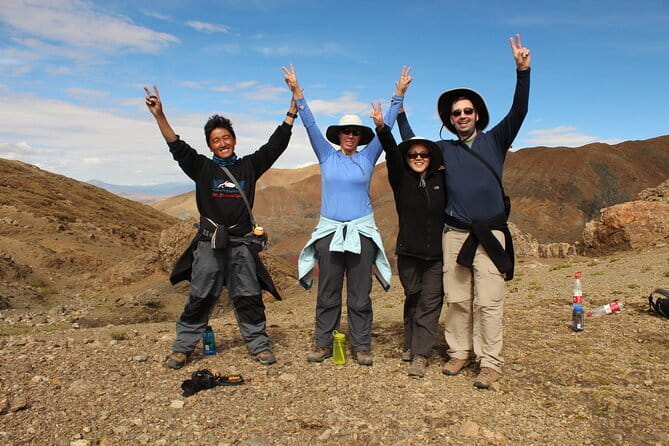
- VIP setup with lots of breathing room: over 30% of seats kept empty, plus a max 10-traveler group.
- Close-to-the-action hotels in Lhasa: within about 1–3 km of Potala Palace and Jokhang Temple.
- Big sights with tickets handled: major entries listed in the day plan are covered.
- Permit + medical support built in: guaranteed Tibet Travel Permit and an exclusive team doctor.
- A real Everest Base Camp day: Tingri sunrise timing and a half-hour local bus leg to the base camp area.
- Northern Tibet payoff at Namtso Lake: early start, Qinghai-Tibet Highway driving, and prayer flags on the grasslands.
Lhasa Day 1: arrival that actually gets you started
Your first day is all about getting into Lhasa smoothly. You can pick from flights recommended by the local agency and then arrive on your own schedule. Once you land, your guide meets you in the arrival hall and takes you to your hotel setup.
I like this approach because it removes the most stressful part: figuring out transport in a place that’s new, high, and paperwork-heavy. You’ll also get a feel for Lhasa early—your hotel location is described as city-center and close to Potala Palace and Jokhang Temple, so you’re not stuck far from the first big cultural stops.
A practical note: that “city center” location also helps if you want short, low-effort exploring on your own after you settle in.
You can also read our reviews of more tours and experiences in Lhasa.
Potala Palace, Jokhang Temple, and Barkhor Street on Day 2
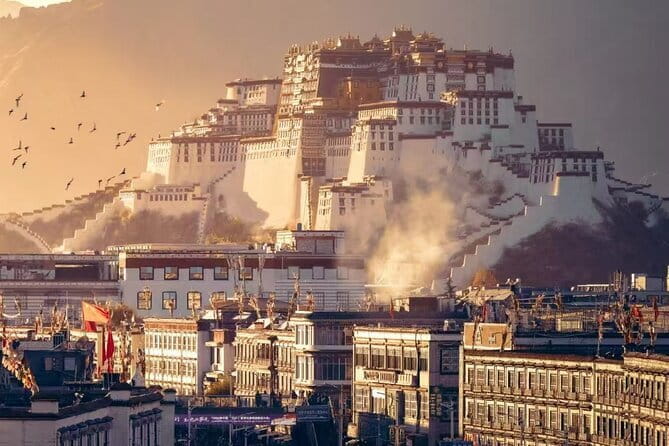
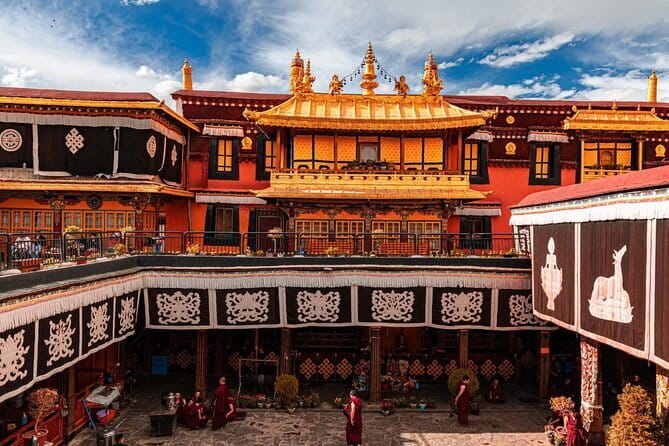
Day two is the classic Lhasa power trio: Potala Palace, Jokhang Temple, and then Barkhor Street. Potala Palace is described as the world’s highest ancient palace-style complex and the historic home of the Dalai Lamas, tied to the political and religious center of Tibet. Jokhang Temple is treated with reverence in Tibetan Buddhism, and the tour frames it as an architectural blend of Tibetan, Tang, Nepalese, and Indian styles.
After that, you get Barkhor Street in the afternoon—a clockwise wander where you can browse handicrafts or just watch daily life. This matters because it’s the transition from “museum mode” to “street rhythm” mode. You’ll get to see how pilgrims and shoppers move through the area around the temples.
Possible drawback: it’s a heavy day emotionally and physically. You’ll be walking and absorbing a lot, so keep your pace calm and give your body time to adjust if you’re sensitive to altitude.
Lakes and Mila Mountain Pass: the Lhasa to Nyingchi pivot
On the next travel block, the trip pushes away from central Lhasa and into the lake-and-mountain rhythm. You start with a lake stop tied to Basomtso/Cuogao Lake (in Gongbujiangda County), and then you head toward Nyingchi, described as the Throne of the Sun.
The drive includes a major altitude pass: Mila Mountain Pass (listed at about 5,013 meters), plus the route descends toward southern Linzhi. This is a big “camera-to-body” day: you’ll want to look, but you’ll also want to take breaks before you feel winded.
Then Nyingchi comes as more of a decompression moment—forests, the Nyang River Valley scenery, and a less intense city feel than Lhasa. The tour gives you the contrast you need: you see the religious core first, then you move toward the natural scale that makes Tibet feel huge.
Lulang Forest and Kadanggou Waterfall: nature time with real travel energy
Day four continues the move westward through mountain terrain and gives you forest and pasture scenery around Lulang. The tour highlights the meaning of Lulang as the place where gods reside, then mentions Lulang Forest and Lulang Pasture.
Expect driving over Segrila Mountain (about 4,515 meters) and then time on foot among the trees. This is a day where your attitude matters. If you treat it like a scenic bonus between bigger stops, you’ll enjoy it more; if you expect a casual “walk in a park,” you may feel the fatigue from the altitude and road time.
Day five leans into a more dramatic sight: Kadinggou Scenic Spot, described as a primitive forest around the Kadanggou Waterfall, or Heavenly Buddha Waterfall. The tour notes gorge-style scenery with towering mountains and deep valleys.
A consideration here: the day stretches out, so you’ll want to be ready for longer periods in a vehicle. Also, this is one of the spots where photos are easy, but comfort depends on weather. If you’re sensitive to cold or wind, bring layers that handle sudden temperature changes.
Yamdrok Yumtso Lake and Karola Glacier roadside: Shigatse comes into view
The next transition day takes you toward Yamdrok Yumtso Lake and then west toward Shigatse. The tour describes passing Nyangchu Valley farmland and then moving by Karola Glacier roadside at around 4,960 meters.
Yamdrok Lake is positioned as a major highlight, and the route’s framing helps: you’re not just arriving at the view, you’re getting a sequence of high-elevation roadside stops that build anticipation. Driving to Shigatse also changes the feel of the trip—this is where Tibet starts to feel less like a capital sightseeing loop and more like the start of a long “go west” story.
The Shigatse stop itself is described as a spiritually hosted area, but what I’d take from the plan is the pacing. You’re given time to settle into the middle of the journey, rather than racing directly to the Everest day.
Friendship Highway to Tingri and Qomolangma National Preserve
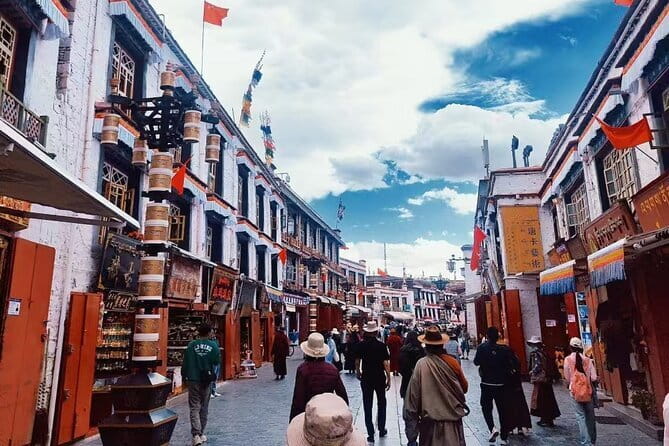
Day seven shifts you onto the Friendship way toward Tingri. The tour flags that the road from Tingri to Rongpuk has about 90 km of bumpy travel and is under construction. That’s not a deal-breaker, but it’s a heads-up: you should plan to feel the road, not just enjoy the view.
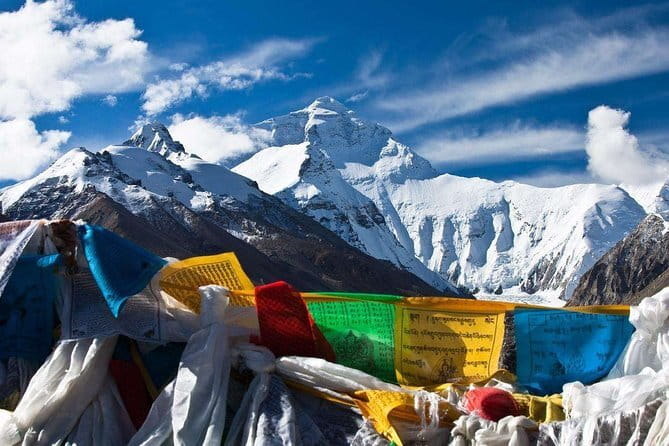
From Tingri, you continue toward the Qomolangma National Nature Preserve and then onward to the route leading to Everest Base Camp. The tour describes very rough road conditions, passing wild grasslands, crossing rapids, and going over high mountains. If you’re prone to motion sickness, pack what works for you—and keep your expectations realistic.
That roughness is part of why Everest days feel special afterward. You’re earning the horizon. You don’t arrive at a viewpoint by accident; you get there through long-distance effort.
Sunrise plans near Rongphu and the Everest Base Camp day
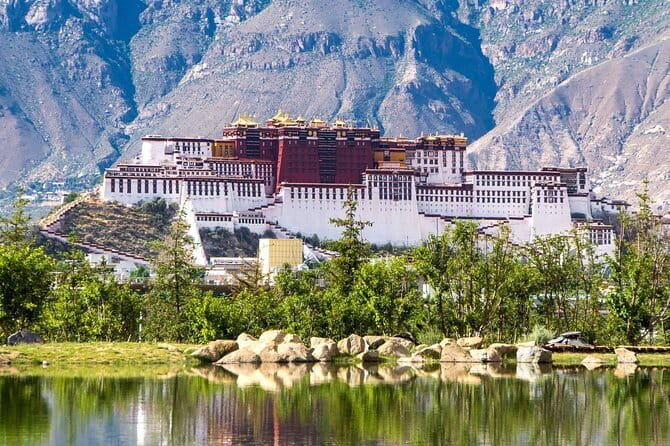
This is the day you book Tibet for. You start early to see sunrise from Rongphu, then view Mt. Everest. The tour also notes that the view can be fabulous and splendid, which lines up with why early starts matter: lighting changes fast, and clouds can move in.
After walking, the plan is to get on a local bus and drive about half an hour to reach the Everest Base Camp area. This is a useful detail because it tells you what to expect physically: it’s not just sitting in a car for hours. You’ll likely combine some walking and then a vehicle leg.
If you want to manage altitude stress, take it slow. The tour includes an Everest day, and it’s easy to get overexcited and then pay for it. Drink water, move gently, and don’t treat the sunrise like a sprint.
Tashilunpo Monastery: the last big historic stop in west Tibet
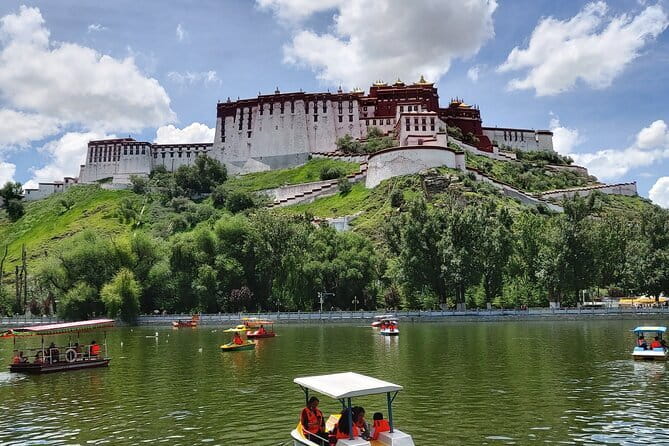
Coming back toward Lhasa, you do Tashilunpo Monastery near Shigatse. It’s described as the largest monastery in west Tibet and framed as a famous historic site and a final landmark stop before returning.
The tour positions this as a “last but famous” cultural capstone. I like that because it gives you a calmer, reflective day after the intense Everest push. Monasteries are also a good place to slow your breathing and reset your legs.
Note: monasteries are still active places. Even if the tour gives you set visiting windows, you’ll benefit from dressing respectfully and keeping your pace steady.
Namtso Lake and the Qinghai-Tibet Highway northern day
Day ten goes to Lake Namtso early, driving through vast northern grasslands. The plan calls out colorful prayer flags fluttering in the wind and horseback-grazing-style views along the Qinghai-Tibet Highway.
The route crosses a listed high pass (about 5,190 meters) and then continues across northern terrain. After that, you reach the lake experience the trip is selling: a big, open setting where the religious symbolism and the weather can change what you see within minutes.
A practical consideration: open high country can feel brutal when the wind picks up. Even on clear days, bring a warm layer and something windproof. That’s the difference between enjoying Namtso and just trying to survive it.
Money and logistics: what you’re paying for in this $1,679-per-person trip
The price is listed at $1,679.00 per person for an 11-day trip (approx.). That can feel steep until you look at what’s built in.
Here’s the value picture as I see it:
- Hotels included, described as standard four-star in the city center, close to Potala and Jokhang.
- Tickets included for the attractions named in the plan.
- Tibet Travel Permit guaranteed, which is often the hardest “paperwork cost” to manage on your own.
- Insurance included (agency liability and vehicle seat insurance are listed).
- Transportation handled using regular licensed tourist buses.
- Pickup offered and a mobile ticket option is available.
Meals are where you should double-check. The package lists breakfast (8) and says dinner is included, but it also says lunches and dinners are excluded. Before you book, confirm what’s covered in your exact departure. If dinner truly is included on your date, that’s a real value boost; if not, you’ll want a meal budget.
Also note the single-room supplement is listed as about $25 per day. If you’re traveling solo, that can change the real cost.
Small group comfort, altitude planning, and road reality
This is a max 10 travelers tour with a VIP-style comfort claim: over 30% of seats remain empty. On paper that sounds like marketing. In real life, it usually means you can sit more comfortably on long drives and avoid the cramped-feeling “human bus load” that can drain your energy.
You also get a team doctor support element, and the company emphasizes moderate physical fitness as the baseline expectation. That matters because Tibet isn’t just pretty; it’s physically demanding. Even with a doctor on the team and a permit handled for you, you should still treat the first few days gently.
Road conditions are another repeat theme: bumpy sections near Rongpuk, very rough roads toward the Everest route, and long drives to reach high points. If you’re sensitive to jolts, consider packing motion sickness meds or ginger chews that you know work.
Finally, keep in mind the tour runs year-round within the listed opening window, with operating days Monday through Sunday across a broad time frame. In other words: you’re not locked into a single departure style. The early-bird plan and group discounts can also help you time your trip for better value.
Should you book this Panorama Multi Day Tour in Tibet?
Book it if you want a guided route that hits the big-ticket items—Potala Palace, Jokhang Temple, Everest Base Camp, and Namtso Lake—while keeping hotels central and logistics handled. This is especially a good fit if you dislike paperwork (the permit is handled) and you want the security of an exclusive team doctor and insurance included in the package.
I’d hesitate if you’re very road-sensitive, motion-sensitive, or you need ultra-flexible meal planning without any surprises. Also, because the meal details are slightly conflicting in the provided info, confirm what you’re paying for on your specific date.
If you’re the kind of traveler who likes a clear plan, decent comfort, and enough guidance to focus on the views (not the hassles), this one is a strong candidate. If you’d rather freelance and manage permits yourself, you might find cheaper options—but you’d be trading away a lot of the support that makes a trip to Tibet smoother.
FAQ
How long is the Panorama Multi Day Tour in Tibet?
It’s listed as 11 days (approx.).
How much does the tour cost?
The price is listed at $1,679.00 per person.
What’s included in the tour price?
Included items listed are dinner, regular licensed tourist bus transportation, 4-star hotels, attraction tickets mentioned in the itinerary, travel insurance (agency liability and vehicle seat insurance), Tibet Travel Permit, and breakfast (8). The package also notes pickup offered and a mobile ticket option.
What isn’t included?
Lunches and dinners are marked as excluded in the provided details, though the inclusions list also mentions dinner. International transportation is excluded, but the provider says it can help with booking. A single-room supplement is charged at about $25 per day.
How big is the group, and what level of fitness is expected?
The maximum group size is 10 travelers, and the tour notes travelers should have a moderate physical fitness level.
What is the cancellation window?
You can cancel up to 6 days in advance for a full refund. Cancelling 2–6 days before gives a 50% refund, and cancelling within 2 days has no refund.