REVIEW · SHIMLA
Shimla Private Guided Walk Tour exploring the colonial trails
Book on Viator →Operated by Wonders of Himalaya · Bookable on Viator
Shimla has a way of surprising you on foot. This private guided walk traces Shimla’s colonial-era story from Christ Church down to the Indian Institute of Advanced Study, with plenty of quick stops for photos and local context. It’s a one-way route, designed to help you connect the dots without spending half your day in transit.
I love how the tour is built around recognizable landmarks you can actually see and discuss: the Ridge, Scandal Point, the red-brick Telegraph building, and the grand rail-era structure. I also like that you get a local expert who can speak English, Hindi, and Pahari, plus that human touch the description promises through stories and local gossip.
One consideration: admission tickets are not included, and you won’t enter attractions that require paid admission. So if you’re hoping for inside access to specific sites, this walk is more about seeing the architecture, hearing the stories, and moving on.
In This Review
- Quick Hits on Shimla’s Colonial Trails Walk
- Starting at Christ Church and Using the Ridge as Your Compass
- Ridge-to-Rail: Telegraph and Railway Buildings Without the Ticket Hassle
- Bantony Castle and Kali Bari: When Colonial Power Meets Local Faith
- Small Stops That Add Up: Gorton Castle, CPWD Office, and Vidhan Sabha Chowk
- The Cecil and All India Radio: A Later Chapter on the Same Spine
- Arriving at IIAS: From Colonial Shimla to Research in Modern India
- Value, Pace, and How to Make This 2-Hour Walk Pay Off
- Who Should Book This Colonial Trails Walk
- Should You Book This Shimla Colonial Trails Walk?
- FAQ
- How long is the Shimla private guided walk?
- Where does the tour start and where does it end?
- How much does it cost per person?
- Is this tour private?
- What languages does the guide speak?
- Are admission tickets included for attractions?
- Is a mobile ticket provided?
- How far in advance is it typically booked?
- What is the cancellation policy?
- Who is the experience provider?
Quick Hits on Shimla’s Colonial Trails Walk
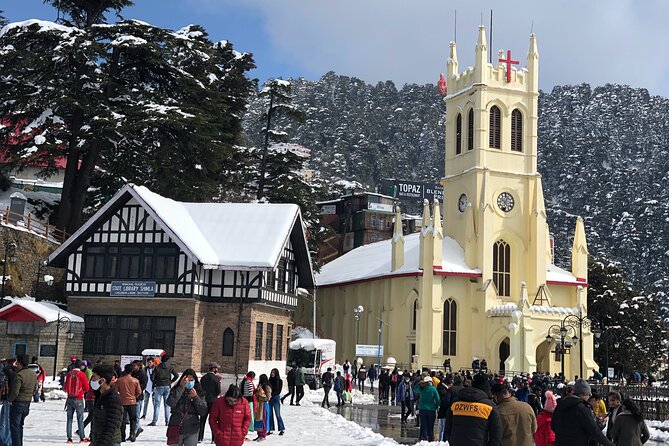
- Christ Church start point: second-oldest church in North India after St John’s Church in Meerut, with services in Hindi and English
- Ridge + Scandal Point: the open central space where the Mall road meets Ridge road on the west side
- Telegraph-and-rail era buildings: from the 1922 Scott Begg-designed red brick BSNL office to the 1896 Railway Board building of cast iron and steel
- Bantony Castle and Kali Bari: a 19th-century summer palace next to a temple tied to the story of Shyamala, after whom Shimla is named
- Government landmarks on the route: including Vidhan Sabha Chowk, home to Himachal Pradesh’s unicameral legislature
- Finish at IIAS: the research institute set up by India’s Ministry of Education in 1964, operating from 20 October 1965
Starting at Christ Church and Using the Ridge as Your Compass
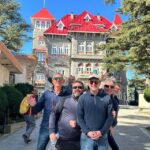
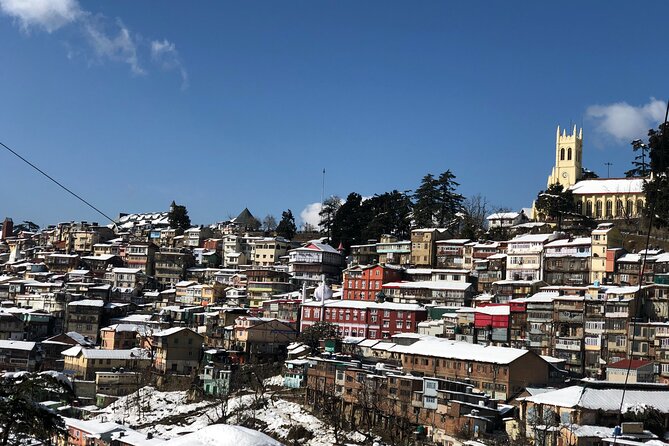
Most hill-station days start with chaos: taxis, crowds, photo stops, and you wondering where you even are. This walk solves that fast by beginning at Christ Church, outside the church itself. It’s the second-oldest church in North India after St John’s Church in Meerut, and the tour notes worship is held in Hindi and English. The guide can also point you toward the current parish connection (the description mentions Rev. Sohan Lal), which helps the place feel living, not just historical.
From there, you flow into the heart of Shimla’s public space: The Ridge. This large open area sits at the center of Shimla, and it’s where you get your spatial sense of the town. A minute or two later, you reach Scandal Point, the spot where the Mall road joins Ridge road on the west side. That “junction” detail matters because it explains why the area became a stage for politics, trade, and social life—people gathered there, and buildings faced the flow.
The pace here is intentionally light. The early stops are short, but they’re doing real work: you’re orienting your eyes before the walking gets more story-heavy.
You can also read our reviews of more walking tours in Shimla

Ridge-to-Rail: Telegraph and Railway Buildings Without the Ticket Hassle
If colonial Shimla has a visual theme, it’s infrastructure—how power, communication, and administration were built into daily life. Two stops highlight that cleanly.
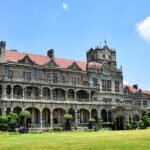
First is the BSNL Office Shimla, described as the red-brick Telegraph Office designed by Scottish architect Scott Begg in 1922. This is one of those “you can’t miss it once you know what you’re looking for” buildings. The red brick and the date give you a quick timeline anchor: you’re not just seeing old walls, you’re seeing a specific era of communication systems.
Next comes the Railway Board Building, constructed in 1896. The tour notes it was the first of its kind in India and was made predominantly out of cast iron and steel, with a design goal of being resistant to fire. Standing near (rather than inside) a building like this helps you appreciate how engineering and governance used to go hand in hand. It’s also a relief that admission isn’t required for the tour experience itself—your time stays focused on what’s visible along the walk.
Because these stops are primarily look-and-learn, this is a good option if your schedule is tight. You’re collecting context at each point rather than spending your day hunting for ticket counters.
Bantony Castle and Kali Bari: When Colonial Power Meets Local Faith
The route swings from colonial administration and communications into something more personal and spiritual at Bantony Castle and Kali Bari Temple.
Bantony Castle is described as the summer palace of the Maharaja of Sirmaur, built in the 19th century. The fact that it was a summer palace is useful context: it suggests how elites used Shimla’s climate and geography, and it explains why “palace architecture” shows up in the hill-station story at all.
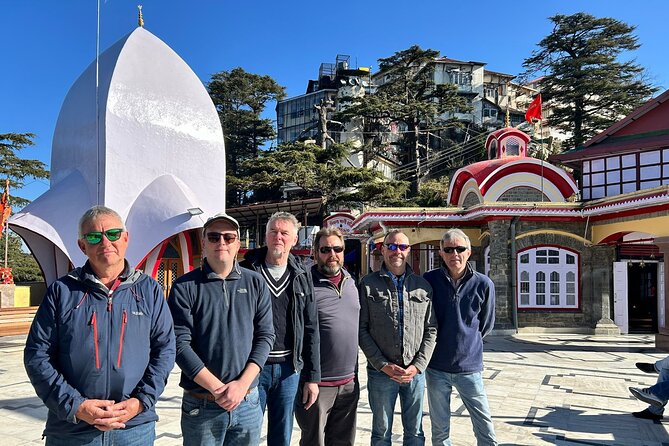
Right nearby, you reach Kali Bari Temple, dedicated to Shyamala, described as the fearsome reincarnation of Goddess Kali. The tour also ties Shyamala directly to the name of Shimla itself. That’s the kind of connection many first-time visitors miss: Shimla isn’t only a British administrative project. It has its own local religious identity, and the city’s name connects to that belief system.
If you like tours where the guide connects architecture to meaning—rather than listing dates—this section is usually the one that sticks in your head.
Small Stops That Add Up: Gorton Castle, CPWD Office, and Vidhan Sabha Chowk
Not every stop needs to be famous worldwide to be worth your time. This walk uses several shorter photo points to build a fuller picture.
Gorton Castle is one of those in-between highlights. It’s described as a heritage monument with a blending of innovative minds and intelligent craftsmanship. Even without a long deep-dive, that description points you toward what to notice: details, structure, and design ambition.
Then there’s the CPWD Office, linked to early Shimla settlement history. The tour mentions Lieutenant Ross, assistant political agent in the hill states, set up a wood cottage in 1819. Three years later, his successor, Scottish civil servant Charles Pratt Kennedy, built the first pucca structure (the description cuts off, but the timeline point is clear: you’re moving from early wooden settlement to more permanent building).
Finally, you reach Vidhan Sabha Chowk. The tour identifies the Himachal Pradesh Legislative Assembly (Vidhan Sabha) as the unicameral legislature of the state. That matters because the walk isn’t only “old Europe-style buildings.” You’re also seeing how Shimla’s political role evolved into modern governance.
These stops are short, but they’re strategically placed. You finish this stretch with a clearer map of who built what, why they built it, and how the function of the city changed over time.
The Cecil and All India Radio: A Later Chapter on the Same Spine
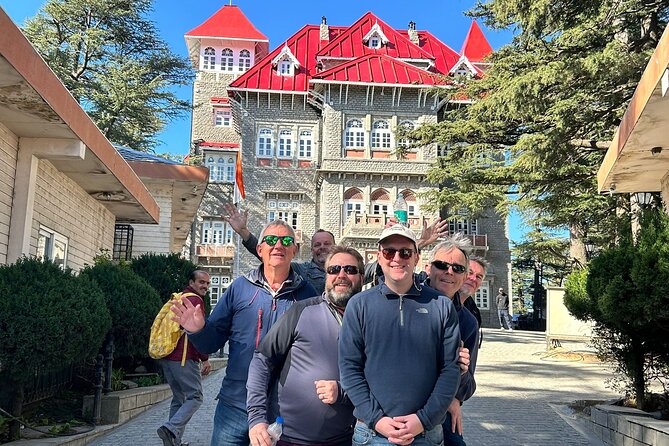
Toward the middle-to-late part of the walk, the scenery shifts from public-era institutions into places that represent later stages of Shimla’s story.
You’ll pass by The Oberoi Cecil, described as a historic luxury hotel in Shimla. Even if you don’t go inside, it’s a useful checkpoint. Hotels like this usually sit on the same corridors that once mattered for administration and society, so you’re watching the city’s “who’s here” story evolve.
The route also includes the All India Radio Centre, set up in Shimla in 1955. This is a different type of legacy: less about architecture for rulers, more about broadcasting culture and public communication. It broadens the tour beyond the early colonial frame and gives you a mid-20th-century anchor.
In other words, the walk doesn’t freeze Shimla in the past. You get a sense of continuity—communication and institutions still matter, just in new forms.
You can also read our reviews of more guided tours in Shimla

Arriving at IIAS: From Colonial Shimla to Research in Modern India
The walk ends at the Indian Institute of Advanced Study (IIAS), Shimla. The tour description notes that IIAS was set up by the Ministry of Education, Government of India in 1964 and started functioning on 20 October 1965. The guide drops you outside the main entrance.
That ending location is smart. A lot of city walks end at a viewpoint. This one ends at a working institution. It leaves you with a “then and now” feeling: Shimla’s role didn’t stop with colonial structures. It kept transforming into administrative and educational functions.
If you’re planning other activities the same day, this finish point is practical because it’s a clear destination rather than a loose wandering stop.
Value, Pace, and How to Make This 2-Hour Walk Pay Off
At $16.67 per person, this is priced for a quick, high-impact overview. A private walking tour for two hours is often at its best when you’re doing it early in your trip—so the rest of your sightseeing makes sense.
A few value points to keep in mind:
- Private by default: only your group participates. That’s helpful if you prefer asking questions and getting tailored explanations instead of competing for attention in a crowd.
- Short stops: the route is structured around many brief stops, which usually works well for first-time visitors.
- Language support: guides can speak English, Hindi, and Pahari, which can make the stories easier to follow even if you’re not fluent in local terms.
- Local gossips included: it’s not just facts. The idea is to give you the social flavor of Shimla—how places were used, who mattered, and why certain corners became important.
The biggest “how to win” tip is simple: treat this like a guided orientation. Before you go, decide what you care about most—architecture, politics, religion, or the rail-and-telegraph era—and then ask your guide for an extra example or two at the relevant stops.
The way guides are described in past sessions also suggests flexibility. For example, a guide named Pawan Sharma has been praised for waiting patiently for a late arrival and for pausing while coffee was ordered. That’s not a guarantee for every tour, but it’s a good sign that the guide’s goal is a smooth experience rather than a rushed checklist.
Who Should Book This Colonial Trails Walk
This walk is a great fit if you:
- want an overview of Shimla’s colonial-era footprint in a short time
- like guided storytelling that connects buildings to people and purpose
- prefer walking with a guide rather than trying to self-navigate the Ridge and Mall area
- are traveling as a solo visitor and want someone to translate the city’s “why” quickly
It may be less ideal if you want long museum-style time or lots of inside access, because admission-based entries are not part of the tour promise.
Should You Book This Shimla Colonial Trails Walk?
I’d book it if you want a compact, private way to understand what you’re seeing in Shimla—especially around Christ Church, the Ridge, the telegraph-and-rail buildings, and the mix of civic and spiritual landmarks. For the money, the best value comes from doing it early and using the walk to set your mental map.
Skip it if inside visits to ticketed attractions are your main goal. This is built for seeing from the outside, learning the story, and keeping moving.
If you like walking tours that feel personal and local, this one is a strong choice for your Shimla time.
FAQ
How long is the Shimla private guided walk?
The tour runs for about 2 hours.
Where does the tour start and where does it end?
It starts at Christ Church, Shimla and ends at the Indian Institute of Advanced Study (IIAS), with the guide dropping you outside the main entrance.
How much does it cost per person?
The price is $16.67 per person.
Is this tour private?
Yes. It’s a private tour, and only your group will participate.
What languages does the guide speak?
The guide speaks local English, Hindi, and Pahari.
Are admission tickets included for attractions?
No. Admission tickets are not included, and you will not enter attractions that require admission.
Is a mobile ticket provided?
Yes, the tour includes a mobile ticket.
How far in advance is it typically booked?
On average, it’s booked 30 days in advance.
What is the cancellation policy?
There is free cancellation. You can cancel up to 24 hours in advance for a full refund. If you cancel less than 24 hours before the experience starts, the amount paid is not refunded.
Who is the experience provider?
The provider is Wonders of Himalaya.