Shimla on foot is one of the smartest ways to get oriented. This 2-hour loop strings together colonial-era highlights, quick museum and bird moments, and ends at a major temple. The price is low, the route is tight, and the tour is built around stories plus photo tips. One thing to watch: the tour description says admission is included at stops, but you may want to confirm at the gate to avoid surprises.
I like that the experience is designed as a walk-through of Shimla’s key “why is this here” landmarks, not just photo stops. You get a trained guide who can speak English & Hindi, and the pace is short enough that you can still enjoy the city afterward. A possible drawback is that some stops are described as “pass through,” so your time at each landmark can feel a bit more like a guided sight window than a deep visit.
Here’s the good news: if you want a guided first pass through Shimla’s colonial story and religious end point, this tour gives you a clear spine for the day. Bring your camera, keep your expectations practical, and you’ll get a lot out of two hours.
In This Review
- Key things to know before you go
- A 2-hour colonial loop from Rashtrapati Niwas to Kali Bari
- Meeting at Viceregal Lodge: the British Viceroy’s Shimla base
- Himalayan Bird Park: quick bird viewing and easy photo practice
- Himachal State Museum: coins, Pahari-influenced art, and handicrafts
- Passing by Vidhan Sabha canteen and an old library: a “glance, then go” moment
- Gorton Castle’s neo-Gothic style: a 19th-century stop you can read quickly
- St Michael’s Cathedral, the Shimla–Kalka railway track, and a final climb to Kali Bari
- What you actually get from the guide: stories, photo tips, and local context
- Price and value: is $11.97 a good deal?
- Logistics that affect your day: walking pace, group size, and your expectations
- Who should book this colonial walking tour
- Should you book Colonial Trails of Shimla?
- FAQ
- How long is the Colonial Trails of Shimla walking tour?
- Where do I meet and where does the tour end?
- What does the tour include?
- Do I need to buy tickets or pay admission at the stops?
- Is hotel pickup included?
- What is the group size and language of the guide?
Key things to know before you go
- Tight, two-hour route with about six landmark stops, each roughly 20 minutes.
- Photo-first guidance is part of the deal, not an add-on.
- Small groups (max 15), which helps keep the walk moving and questions flowing.
- Guide language: English and Hindi.
- Hot beverage included, so you’re not walking the whole loop empty-handed.
- Admission is listed as free, but one mismatch has been reported for some venues—confirm on arrival.
A 2-hour colonial loop from Rashtrapati Niwas to Kali Bari
This is a straightforward walking tour with a clear start and finish. You begin at Rashtrapati Niwas (also known locally as Viceregal Lodge) on Observatory Hill, then you work your way through Shimla’s colonial landmarks, ending at Kali Bari Temple on Jakhoo Hill. The whole experience is about 2 hours, and the timing is built around short, efficient stops.
What makes this format work for you is that it’s not trying to do everything. It gives you a spine of major places in one go, so later you can decide what’s worth revisiting on your own. I also like that it’s sold as a storytelling walk—so you’re not just looking at buildings, you’re learning how they fit into Shimla’s culture and identity.
Group size matters here. With up to 15 people, you get enough attention from the guide without feeling stuck behind a crowd. Also, this kind of tour is at its best when you travel with a camera and curiosity.
You can also read our reviews of more walking tours in Shimla
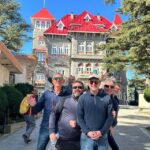

Meeting at Viceregal Lodge: the British Viceroy’s Shimla base
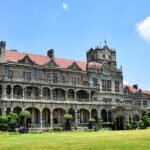
Your starting point is Rashtrapati Niwas, the grand colonial mansion known as Viceregal Lodge, located on Observatory Hill near Chaura Maidan. The tour sets the tone right away: this was the residence of the British Viceroy of India. Even if you’ve only seen pictures, the building’s role in colonial power is the kind of context that helps everything else click once you start walking.
You’ll have about 20 minutes at this opening stop, and the tour description lists admission as free for the photographic destinations here. That matters because Viceregal Lodge can be one of those places where entry rules can feel inconsistent depending on the day, the section you’re entering, or on-site ticketing.
Practical takeaway: if the gate asks for payment, be ready to confirm what is included. The tour concept is clear, but one reported issue is that the admission promise didn’t match what happened onsite. If you want to avoid a “wait, what?” moment, ask the guide at the start of the walk how the entry will work for this stop.
Himalayan Bird Park: quick bird viewing and easy photo practice
Next comes Himalayan Bird Park, where the focus is on birds associated with Himachal. This is a lighter stop than the museum, and that’s a good thing. In a short tour, you want one or two breaks where you can breathe and reset your eyes—birds are a great change of pace from stone and architecture.
The tour gives you about 20 minutes here, and again, admission is listed as free. Since the tour is photo-guided, you can use this segment to practice how you’ll frame your shots around Shimla’s hilly setting.
One thing to keep in mind: bird parks often involve movement at a slow walking pace, so if you’re the type who hates waiting, treat this as “watch and shoot, don’t overthink.” If you love nature details, you’ll likely enjoy the small, color-and-feather textures that these bird collections can offer.
Himachal State Museum: coins, Pahari-influenced art, and handicrafts
From birds you shift to the Himachal State Museum, with about 20 minutes allocated. This stop has a different kind of value: it’s not only about colonial buildings. It’s about what local art and objects can tell you about the region.
The museum is described as holding unique collectibles like ancient coins, paintings, and other handicraft items. The artistic influence is tied to Pahari form of art, which is exactly the kind of phrase you want to remember when you’re later spotting motifs in local craftwork.
What I like about slotting a museum stop into a walking tour is that it changes your lens. When you return outdoors, you notice that Shimla’s architecture isn’t the whole story. The region’s visual culture is part of the same identity.
Drawback to be aware of: museums can run long fast, especially if you read every label. With a short 20 minutes, your best move is to choose what you’ll focus on—coins first, then paintings, then look for handicraft pieces that connect to what you’re seeing in town.
Passing by Vidhan Sabha canteen and an old library: a “glance, then go” moment
After the museum, you’ll pass through colonial buildings and reach an important landmark area tied to Vidhan Sabha. The tour description also mentions an old library and calls out the stop as a “Vidhan sabha canteen” experience, with roughly 20 minutes.
Here’s the tricky part: this stop reads more like a corridor walk and photo moment than a full visit. The itinerary doesn’t promise a long indoor break or a ticket-based museum-style experience. If you’re hoping for a sit-down meal at a canteen, the tour description doesn’t clearly say that’s included as a dining stop—so think of this as a heritage-photo segment.
Still, there’s real value in passing by major government and heritage structures in a guided way. You learn how the colonial-built environment was repurposed and how it anchors modern civic life. That context can make the rest of Shimla feel less random.
You can also read our reviews of more guided tours in Shimla
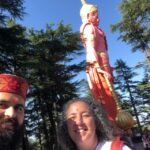

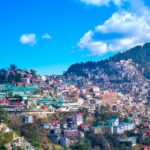
Gorton Castle’s neo-Gothic style: a 19th-century stop you can read quickly
Then you move on to Gorton Castle, constructed in the 19th century and described as neo-Gothic in style. This is the kind of building that rewards quick observation. Even with limited time, you can look for the Gothic cues—shapes, outlines, and that “European” silhouette that makes Shimla feel like a scaled colonial copy of older architectural styles.
The tour gives about 20 minutes here, and the entry is again listed as free for photographic destinations. As with Viceregal Lodge, the only real caution is to be alert for on-site entry requirements. With only one negative report in the available information, I wouldn’t panic—but I would verify what’s included at the gate.
How to get more out of this stop: treat it like an architecture scavenger hunt. Pick one feature you can spot easily, then compare it with the next landmark you see. That quick mental comparison makes the two-hour loop feel richer.
St Michael’s Cathedral, the Shimla–Kalka railway track, and a final climb to Kali Bari
As you near the end, the tour description says you’ll pass by the Shimla–Kalka railway track, described as an important witness of British craftsmanship. Along the same segment, you also pass by St. Michael’s Cathedral, noted as famous for French-Gothic style architecture.
This kind of “pass-by” content is useful because it expands the route beyond just the listed stops. You get more architectural variety without adding length to the tour.
The final stop is Kali Bari Temple on Jakhoo Hill. The description calls it an ancient place of worship dedicated to Goddess Kali, built in 1845, and considered of immense religious importance for devotees. This is where the tour’s tone shifts from colonial sites toward active spiritual life.
You get about 20 minutes here, and since it’s a temple area, plan for the practical reality of religious spaces: you’ll likely need to move respectfully and keep your photo use considerate. If your goal is to understand Shimla as a living city, not a museum town, this ending point is the best kind of close.
What you actually get from the guide: stories, photo tips, and local context
This tour is guided by a “Storyteller/Guide” from Yo Tours, described as friendly and highly trained, speaking English and Hindi. The format emphasizes “heart warming stories” around each point and aims to help you develop a better perspective of Shimla’s culture by the end.
The photo guidance is listed as part of the included experience, which is a big deal on a short walk. A lot of tours basically point you at a view and tell you to take pictures. Here, the promise is closer to: you’ll get help with framing and capturing the colorful lanes, houses, and monuments you pass. Even if you’re an experienced photographer, a guide can help you avoid the most common angles that make historic buildings look flat.
One more practical benefit: the guide is said to share insider tips and tricks to save money and to explore the best of the city. The exact tips aren’t specified in the information, so you’ll want to ask questions in real time—like what to skip, what to combine on the same day, or where you might get better value.
Price and value: is $11.97 a good deal?
At $11.97 per person for about 2 hours, this is priced for accessibility. The key question is what you’ll actually walk away with: a guided route, photo help, a hot beverage, and entry to photographic destinations (as described).
Here’s where the value becomes a little nuanced. The tour lists admission as free for the main stops, and it also says entry to photographic destinations is included. But there’s one reported issue where admission was paid anyway at multiple venues. That mismatch is the one financial downside that could matter to you.
Still, even with a small unexpected entry cost, the structure can be worth it if you:
- want an organized overview of colonial and cultural landmarks in a short time,
- like photo guidance instead of solo guessing,
- appreciate a guide who can explain context in English or Hindi.
The hot beverage inclusion is also a small but real comfort in Shimla’s cooler conditions. Bottled water isn’t included, so you’ll likely want to budget for that separately.
Logistics that affect your day: walking pace, group size, and your expectations
This is near public transportation and ends at Kali Bari Temple, which is handy if you want to continue exploring on your own after the tour finishes. There’s no hotel pickup or drop included, so you’ll need to get to the meeting point at Viceregal Lodge (Rashtrapati Niwas area) yourself.
The route is built around about six stops with roughly 20 minutes per stop. That means the pacing is brisk by design. If you’re the kind of visitor who wants to linger, read every sign, and take 40 minutes to “just enjoy,” you might feel rushed.
But if you want a guided first pass, the tight timing can be a plus. It forces decisions. You’ll learn what grabs you, and you can return later for a deeper look if you want.
Another expectation-setting point: not every segment is framed as a full “visit.” Some parts are described as passing through or viewing landmarks from the walkway. That’s normal for a walking tour, but it’s worth knowing so you don’t feel you missed a scheduled indoor stop.
Who should book this colonial walking tour
This tour fits best if you:
- are short on time and want a 2-hour overview of Shimla’s major landmark story,
- like guided context for architecture and local culture,
- value photo tips and a camera-friendly route,
- want a small-group feel with a maximum of 15 people.
It may not be ideal if you:
- strongly depend on the tour covering every entry fee with no onsite verification,
- expect every stop to be a full, multi-room interior visit rather than a time-boxed look,
- are very sensitive to guide language clarity and depth for all stops.
Should you book Colonial Trails of Shimla?
Book this tour if you want a practical, guided “spine” of Shimla in only two hours—colonial architecture first, a museum and bird stop for variety, and a spiritual ending at Kali Bari Temple. The low price plus photo coaching plus a hot drink makes it a sensible choice for first-time visitors who like walking and short guided stops.
Don’t book it blindly if you’re budgeting tightly for admissions. The tour description says entry is included at stops, but a reported mismatch suggests you should confirm onsite at the beginning, especially for Viceregal Lodge and other venues. Also, if you want lots of indoor time at every stop, this format might feel fast.
If you want an organized, story-led walk with clear landmarks and photo help, this is the kind of small-group tour that can actually save you time in Shimla.
FAQ
How long is the Colonial Trails of Shimla walking tour?
It’s about 2 hours.
Where do I meet and where does the tour end?
You start at Viceregal Lodge / Rashtrapati Niwas on Chaura Maidan Road near Observatory Hill, and the tour ends at Kali Bari Temple on Mall Rd.
What does the tour include?
It includes a guide (English and Hindi), entry to the photographic destinations as described, photography tips, one hot beverage, and conversations about local religious and cultural importance.
Do I need to buy tickets or pay admission at the stops?
The tour description lists admission as free for the stop locations and says entry is included for photographic destinations. However, there is a reported case where admission was paid at some venues, so it’s smart to confirm at the gate when you arrive.
Is hotel pickup included?
No. Hotel pickup and drop are not included.
What is the group size and language of the guide?
The tour has a maximum of 15 travelers, and the guide can speak English and Hindi.