REVIEW · BHUTAN
Private Phuentsholing to Thimphu 6-Days Adventure
Book on Viator →Operated by Your Trip Planner · Bookable on Viator
Phuentsholing to Tiger’s Nest in six days sounds ambitious. The magic here is the mix: Thimphu culture, Punakha temples, and Paro’s most iconic hike, all handled with a private, English-guided pace.
What I like most is how smoothly the days are structured around major sites without turning it into a sprint, and how much you get from the stops that explain Bhutan’s everyday life, like museum and craft time. You’ll also appreciate the professional English guide who keeps context clear while you’re walking.
One thing to weigh is the cost of entry fees and the required SDF/Visa charges, plus meals that are not included. If you want to walk into every site, your daily budget needs to stretch a bit.
In This Review
- Key highlights you’ll feel on the trip
- Private Bhutan with a guide: what this route is really like
- Day 1 in Thimphu: immigration done, then temples and crafts
- Day 2 Thimphu circuit: museums, takin, and big Buddha moments
- Day 3 to Punakha: Dochula Pass with 108 chortens
- Punakha’s best hits: Dzong, fertility temple, and a suspension bridge
- Paro’s history stop: Ta-Dzong, Rinpung Dzong, and a quick view above the airport
- Tiger’s Nest day in real life: Plan your pace and energy
- Kyichu Lhakhang and the return drive to Phuentsholing
- Price and value: what $1,014.80 per person buys you
- What to budget beyond the tour price
- Who this Bhutan route is best for (and who should rethink it)
- Should you book this Phuentsholing to Thimphu 6-day adventure?
- FAQ
- What time does the tour start?
- Is pickup offered for this private tour?
- Is this a private tour or shared group?
- What’s included in the price?
- Are lunch and dinner included?
- Are entry fees included for the sites?
- What are the SDF/Visa charges?
- Is the experience dependent on weather?
- How does cancellation work?
- How long is the drive back to Phuentsholing on the final day?
Key highlights you’ll feel on the trip
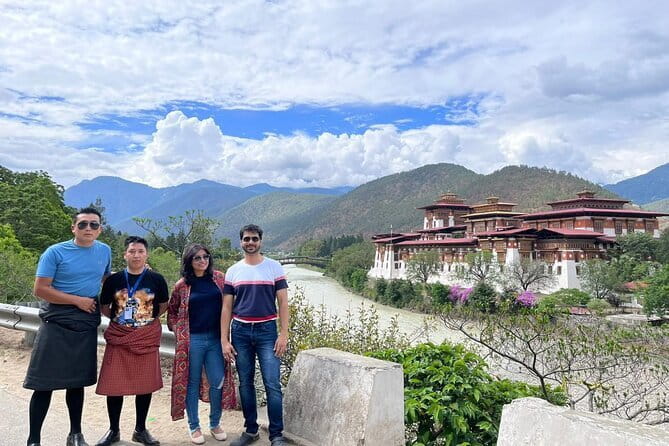
- Private group, your own pace: only your group participates.
- English guidance built into the day: a professional English guide and a tourist guide included.
- Temple + culture balance: from dzongs and lhakhangs to museums and craft shopping time.
- Dochula Pass with 108 chortens: a spiritual landmark break on the Thimphu–Punakha drive.
- Tiger’s Nest day is the centerpiece: plan for a long trek day and bring comfortable shoes.
- Good weather matters: this route specifically requires it for the experience to run.
Private Bhutan with a guide: what this route is really like
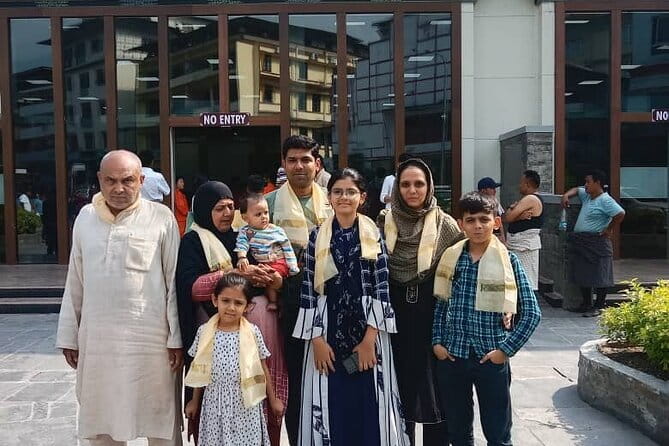
This is a private Bhutan adventure, so you’re not sharing vehicles or tours with strangers. That matters in Bhutan, where roads take time and visiting sites often means a slower, more thoughtful pace. Your guide’s job is to translate what you’re seeing into something you can actually use in your head, not just a checklist of names.
You start at 9:00 am, with a plan that runs across Thimphu, Punakha, and Paro. The first day includes immigration formalities and then a transfer to Thimphu, which can be the part that feels most stressful when you’re crossing borders. With a guide and transport arranged, you can focus on the scenery and the sites instead of paper-chasing.
Also, this route is designed for most travelers. It’s not described as extreme, but it does include long walking days and the famous Tiger’s Nest trek later on, so bring realistic expectations.
You can also read our reviews of more private tours in Bhutan
Day 1 in Thimphu: immigration done, then temples and crafts
After an early breakfast, you handle immigration formalities and transfer to Thimphu. Right away, the day sets a good tone: you’re not jumping into sightseeing while you’re still mentally in transit.
Your first stop is Kharbandi Gumba. Even without going super deep into the backstory, it’s a classic Bhutan temple experience: calm grounds, religious architecture, and the feeling that this place is lived-in—not staged for tourists.
Then you get Zangto Pelri Lhakhang, described as the celestial abode of Guru Rinpoche. This is the kind of stop where the surroundings matter. The gates greet you with flower gardens and a fountain, so it’s not just a quick photo stop. It’s a slower, more atmospheric pause.
The day also includes Bhutan Gate, which is brief but useful. It helps you orient yourself in Thimphu’s city rhythm before the evening portion.
In the evening, you can stroll through the Government-run Handicrafts Emporium and local craft bazaars. This is one of the best “value for time” moments on the trip because you’re learning what Bhutanese artisans actually make: hand-woven textiles, thangkas, masks, ceramics, carvings, jewelry, and items from local materials. If you’ve ever bought a souvenir and later wished you had understood it first, this is your chance.
You’ll sleep in Thimphu at about 2,320 m altitude on Day 1, so keep expectations for air and rest. Nothing dramatic is mentioned, but altitude is part of why Bhutan feels different.
Day 2 Thimphu circuit: museums, takin, and big Buddha moments
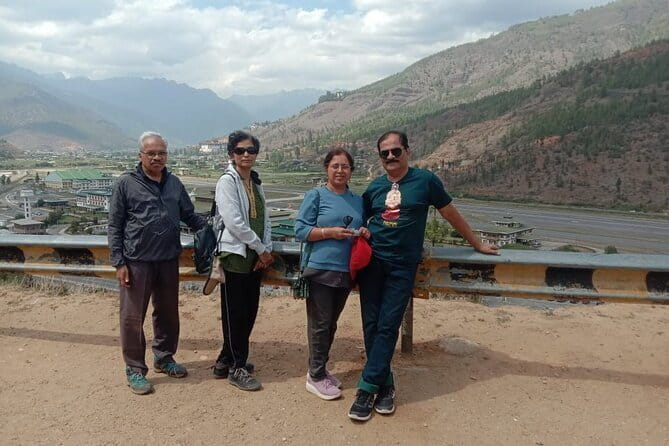
Day 2 is where Thimphu’s “what makes Bhutan Bhutan” feeling really kicks in. It’s not all temples—there’s a strong culture block.
Start at National Library and Archives of Bhutan. It’s focused on preservation and promotion of Bhutan’s rich cultural and religious heritage. You’ll spend about 45 minutes here, and it’s the kind of stop that gives you context so the later sacred sites land with more meaning.
Next is Thimphu Chorten (Memorial Chorten). It’s a memorial stupa near the main roundabout area. This makes it easy to work into the flow of the city, and it’s the kind of place where locals pass by in their daily routines.
Then comes Motithang Takin Preserve, a wildlife reserve for takin, Bhutan’s national animal. This is one of those stops that’s surprisingly memorable because it’s not a generic zoo-style visit. The data explains it started as a mini-zoo and was later converted into a preserve when takin didn’t inhabit the surrounding forest even when released. It’s a small detail, but it hints at how Bhutan manages living things and natural behavior instead of forcing animals into human expectations.
After that, you’ll visit a set of culture stops:
- National Folk Heritage Museum, also known as Phelchey Toenkhyim
- Simply Bhutan Museum, which resembles a Bhutanese village with traditional cuisine, demonstrations, and performances
- Tashichho Dzong (Thimpu Dzong), a monastery and fortress on the edge of Thimphu
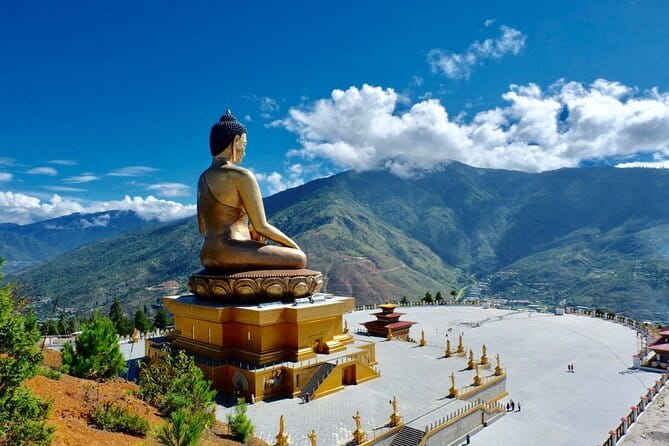
- Buddha Dordenma, a huge Shakyamuni Buddha statue celebrating the 60th anniversary of the fourth king Jigme Singye Wangchuck
These aren’t “extra” stops. They build a ladder: archives → daily religion → national symbol (takin) → folk culture → fortress-monastery architecture → monumental Buddha. By the time you see Buddha Dordenma, you’re already reading Bhutan’s spiritual language more confidently.
One consideration: some museum and fortress-monastery stops have rules. In the later Paro museum, cameras are not allowed inside. You might find similar “respect the site” policies elsewhere too, so keep your phone ready for outdoor photos and your best listening skills for indoors.
Day 3 to Punakha: Dochula Pass with 108 chortens
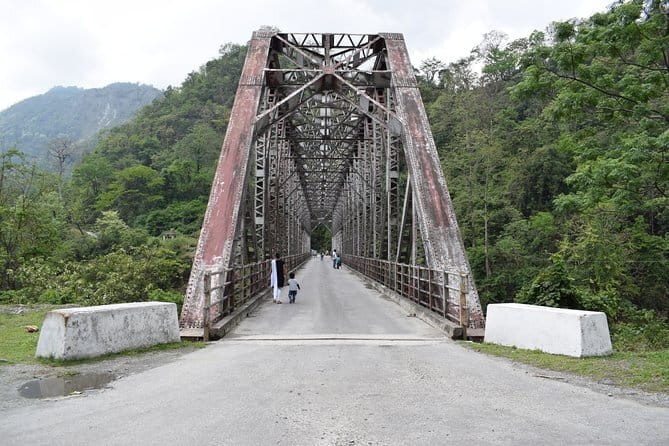
On Day 3, you head from Thimphu toward Punakha with Dochula Pass as the highlight stop.
Dochula Pass is famous for its 108 memorial chortens (Druk Wangyal Chortens) built by Ashi Dorji Wangmo Wangchuk. If you like places where symbolism is physical, this is one of Bhutan’s strongest examples. It’s not only a viewpoint; it’s a spiritual installation that turns a road crossing into a meaningful break.
You’ll also find the Druk Wangyal Lhakhang (temple) at the pass, built to honor the fourth Druk Gyalpo Jigme Singye Wangchuck. The open grounds in front are the venue for the annual Dochula Druk Wangyel Festival, so even though you might not attend the festival itself, you’re visiting a site that has an active role in Bhutan’s calendar.
One bonus detail: the pass is adjacent to the country’s first Royal Botanical Park. Even if your time there is limited, knowing it’s next door makes the area feel less like a single landmark and more like an intentional stop in a living natural corridor.
After the pass, the day transitions into Punakha’s heart.
Punakha’s best hits: Dzong, fertility temple, and a suspension bridge
Punakha is where the trip starts to feel more intimate and valley-focused. You visit Punakha Dzong, built in 1637 by Shabdrung Ngawang Namgyal at the junction of the Phochu and Mochu rivers. The description is specific: it has a six-story, gold-domed tower and once served as both religious and administrative center. That’s a big reason this place matters. You’re not only seeing a building; you’re seeing Bhutan’s old governance style and religious power combined.
Inside are courtyards and religious statuary. If you’re the type who likes “architecture that tells you how people lived,” you’ll appreciate taking your time here.
Then you move to Chimi Lhakhang, also called the temple of fertility. This is a very Bhutanese type of site: faith expressed through place. The data notes a belief that couples who don’t have children and pray here are usually blessed with a child soon. You’ll also walk through a village area near the temple, which gives you rare glimpses into daily life and lifestyle.
After that spiritual and human-scale stop, you go to the Punakha Suspension Bridge. It’s listed as a free admission stop with a 45-minute window. Even if you just cross or stand for a moment, the bridge gives your brain a different kind of photo opportunity than courtyards and temples. It also helps break up the day so you’re not temple-saturated.
Paro’s history stop: Ta-Dzong, Rinpung Dzong, and a quick view above the airport
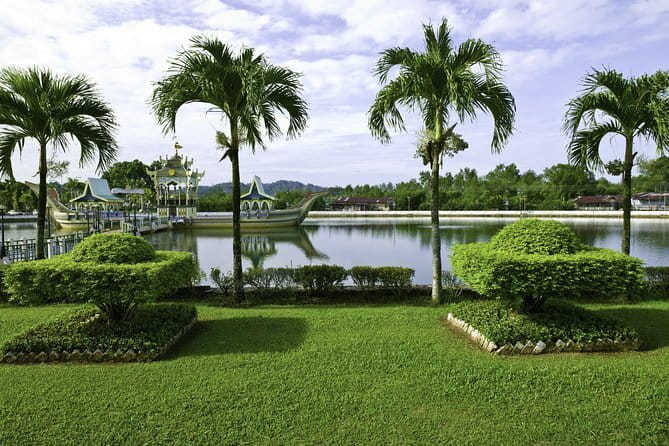
Day 4 shifts you into Paro, and it starts with National Museum, Ta-Dzong. Ta-Dzong is an ancient watchtower, now used as the museum. It’s about 5.5 km from Paro town and close to Rinpung Dzong below it.
A practical detail: cameras are not allowed inside the museum, but you can photograph the Ta-Dzong and the surrounding grounds. So if you want photos, plan them around the outside views and keep your best patience for the exhibits without expecting to shoot everything.
Then comes Rinpung Dzong (Paro Dzong), construction ordered by Zhabdrung Ngawang Namgyal in 1644. The description includes two key historical notes: it survived the massive 1897 earthquake though it was damaged by fire in 1906. You’ll also hear that it’s approached through a traditional covered bridge called Nemi Zam. That covered approach is not just scenic; it changes how the fortress feels as you walk in—like you’re being guided into Bhutan’s religious geography.
Finally, there’s a quick Paro Airport Bird’s Eye View Point stop. It’s only 45 minutes, but it’s the kind of viewpoint that helps you understand why Paro is tucked the way it is. For many people, this view also sets context for the Tiger’s Nest day ahead.
Tiger’s Nest day in real life: Plan your pace and energy
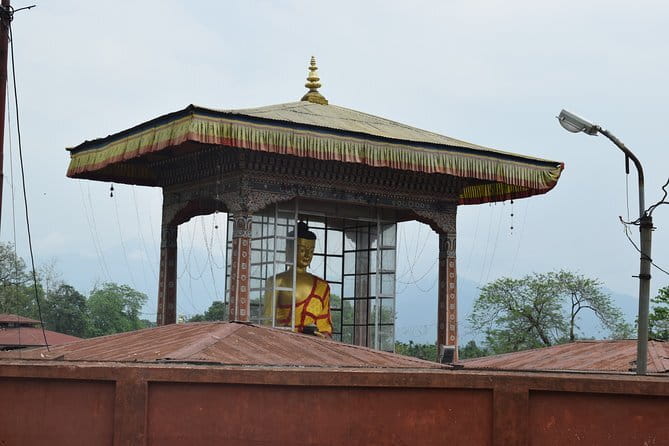
Day 5 is the day you probably circled on the calendar: Paro Taktsang, Tiger’s Nest (Taktsang Lhakhang).
The data is clear that it can take up to about 6 hours round trip, so treat it as a full-day commitment. The route even suggests practical recovery: after trekking, take a hot stone bath and spa to relax your body, then you’ll have evening time for a walk around the main street and market area.
That last part is important. Many people do Tiger’s Nest and then feel too tired to enjoy Paro. The design here gives you a small window to come back to human-scale life: streets, shops, and an easy stroll rather than another heavy appointment.
What you’ll learn from the site’s story is also part of the draw. Taktsang translates to The Tiger’s Nest. It’s tied to Padmasambhava (Guru Rinpoche) and the tale of him flying from Tibet on the back of a tigress from Khenpajong, then consecrating the location to tame a tiger demon. The monastery is believed to have been built starting in 1692 at a cave where Guru Rinpoche meditated. Whether you take the story literally or as spiritual tradition, it gives the place a reason to feel holy rather than just dramatic.
Practical advice for you: wear shoes that you trust for uneven paths, and bring a small layer. Even when the day is bright, mountain air can shift. The tour is also described as weather-dependent, so don’t ignore that instruction—if conditions aren’t right, plans can change.
Kyichu Lhakhang and the return drive to Phuentsholing
Day 6 is lighter on-site and heavier on travel. You’ll visit Kyichu Lhakhang Monastery for about 45 minutes. It’s a good final spiritual stop because it’s not competing with Tiger’s Nest energy; it feels more like a calm close.
Then you drive from Paro to Phuentsholing, about 160 km and roughly 4 hours.
That return drive is a realistic reminder: even when Bhutan feels like slow time, distances are still distances. If you can, don’t plan anything intense immediately after you arrive back.
Price and value: what $1,014.80 per person buys you
At $1,014.80 per person for an approx. 6-day private route, this is positioned as a guided, high-touch experience. Here’s where the value comes from, based on what’s included:
Included elements you’re paying for:
- Transportation and parking fees, plus toll tax
- 1 tourist guide and a professional English guide
- Breakfast (5)
Not included:
- Lunch and dinner
- Personal expenses like laundry and tips/gratuity
- Entry fees (roughly 10,000/- per person approx if you enter all the places)
- SDF/Visa charges: 100 dollars per person per night
So is it worth it? For many people, yes, if you value having one accountable guide coordinating temples, museums, and timing—especially for border/immigration days. Bhutan can be tricky to self-plan, and you don’t want your trip to become route-finding when you could be reading monuments and learning what you’re seeing.
If you’re the type who prefers to move independently and only pay for a few top sites, then the entry fee total might feel like a letdown. But if you like seeing the range—archives, folk culture, wildlife preserve, dzongs, and Tiger’s Nest—this format makes sense.
What to budget beyond the tour price
Even though the base price covers key logistics, you’ll want to hold money aside for the trip’s “running costs”:
- Meals: breakfast is included for 5 days; lunch and dinner are not included.
- Entry fees: the estimate says about 10,000/- per person if you enter all the places.
- SDF/Visa: listed as 100 dollars per person per night.
If you’re planning this as a one-trip-to-Bhutan moment, I’d rather you over-prepare your budget now than get surprised halfway through.
Who this Bhutan route is best for (and who should rethink it)
This route fits best if you:
- Want a private Bhutan experience with an English-speaking guide
- Like a balanced mix of culture, temples, museums, and nature
- Are excited by the big icons: Punakha Dzong and Tiger’s Nest
- Prefer having transport and timing handled
You might rethink if:
- You’re on a tight budget and hate paying for entry fees and separate government charges
- You don’t want a long trek day (Tiger’s Nest can be around 6 hours round trip)
- You prefer highly flexible, do-what-you-want scheduling with no guided structure
Should you book this Phuentsholing to Thimphu 6-day adventure?
If you want Bhutan with less stress and more context, I think this one is a strong pick. The big win is the guided private format paired with a route that actually shows multiple sides of the country: Thimphu’s culture institutions, Punakha’s spiritual power, and Paro’s signature landmark.
Book it if your priority is seeing the major sites with a guide you can ask questions to, and if you’re ready for the Tiger’s Nest trek day. Skip it if you’d rather keep costs low and would rather visit only a couple of highlights.
In Bhutan, the difference between a good trip and a great one is often pacing and interpretation. This tour is built for both—and that’s the kind of value you feel at the end of the day, not just on paper.
FAQ
What time does the tour start?
The experience start time is 9:00 am.
Is pickup offered for this private tour?
Yes, pickup is offered.
Is this a private tour or shared group?
This is a private tour/activity. Only your group will participate.
What’s included in the price?
Transportation, parking fees, toll tax, 1 tourist guide, a professional English guide, and breakfast (5) are included.
Are lunch and dinner included?
No. Lunch and dinner are not included.
Are entry fees included for the sites?
Entry fees are not included. The estimate is about 10,000/- per person if you enter all the places.
What are the SDF/Visa charges?
The SDF/Visa charges are listed as 100 dollars per person per night.
Is the experience dependent on weather?
Yes. The experience requires good weather, and if it’s canceled due to poor weather you’ll be offered a different date or a full refund.
How does cancellation work?
You can cancel for free. If you cancel up to 24 hours in advance of the start time, you get a full refund.
How long is the drive back to Phuentsholing on the final day?
The drive from Paro to Phuentsholing is about 160 km and roughly 4 hours.