REVIEW · MOUNT EVEREST
From Kathmandu: Everest Base Camp Landing Helicopter Tour
Book on GetYourGuide →Operated by Welcome Nepal Treks P.Ltd · Bookable on GetYourGuide
One morning, the Himalaya comes to you fast. This Everest Base Camp landing helicopter tour is built for people who want huge views of Mount Everest without spending weeks hiking. You start early in Kathmandu, then trade roads for rotor noise and instant altitude.
I love how the route gives you multiple “levels” of seeing the Everest region: big aerial fly-overs of places like Namche Bazar and Tengboche, then a close look from the Kalapatthar area. I also like the human touch of time at the Everest View Hotel at 3,880 meters, where you can sit on an open terrace and take breakfast or tea/coffee with the mountains right there.
The main drawback to plan around is weather. Helicopters are subject to flying conditions, so your day may be rescheduled (or money handled differently) if visibility or safety rules don’t cooperate.
In This Review
- Key Points You’ll Care About
- How the Early 6 AM Kathmandu Pickup Changes Everything
- From Kathmandu to Lukla: Shared Helicopter Flight and a Short Landing Break
- Kalapatthar and Everest Views: Why 6,000 Meters Means Something
- Fly-Over Highlights You’ll Actually Recognize From the Window
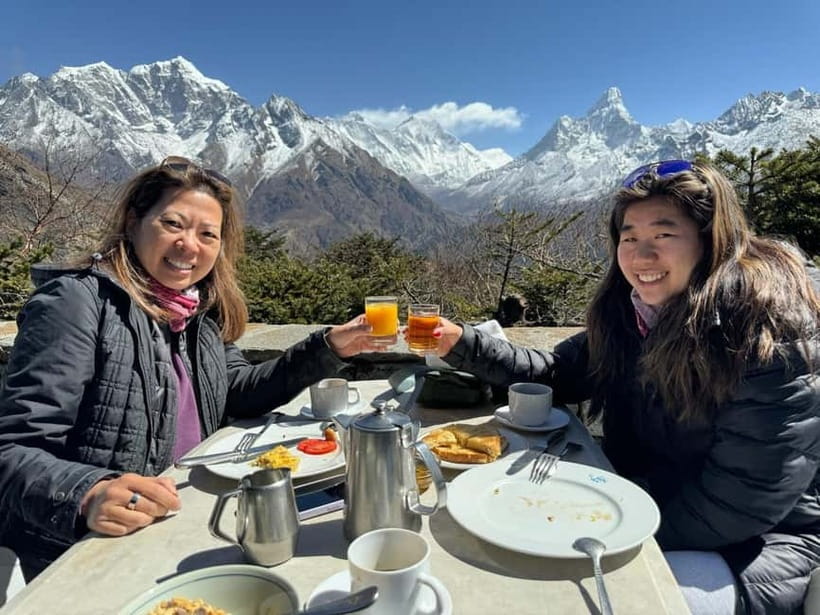
- Everest View Hotel at 3,880 Meters: Breakfast on the Open Terrace
- The Return Flight: How You Stay Inside the 3–5 Hour Window
- Price and Value: What $2,004 Buys You for an Everest Day
- What to Bring, What’s Not Allowed, and Weather Reality
- Should You Book This Everest Base Camp Helicopter Tour?
- FAQ
- How long is the Everest Base Camp landing helicopter tour?
- What time is pickup in Kathmandu?
- Are transfers included?
- Is breakfast included?
- What fees might I need to pay in cash?
- What happens if weather conditions are unsuitable for flying?
Key Points You’ll Care About
- Window-seat views across the Khumbu: you’re set up to see the route clearly from above.
- Kalapatthar views from about 6,000 meters: the famous viewpoint is built into the flight plan.
- Everest View Hotel time at 3,880 meters: breakfast or tea/coffee break with mountain views.
- A route that includes more than Everest: Namche Bazar, Pheriche, Tengboche Monastery, Gorakshep, plus Chola Pass and Gokyo in the fly-over.
- Short landings, not long stops: you get breaks, but the tour stays tight to keep total time around 3–5 hours.
- Safety gear included: oxygen cylinder (in an emergency) and life insurance during the flight.
How the Early 6 AM Kathmandu Pickup Changes Everything
This tour starts with an early pickup around 6 AM from your hotel in Kathmandu, Bhaktapur, or Lalitpur (Patan area included). That matters more than it sounds. Morning flights often come with better visibility and calmer air, which helps you actually see glaciers, ridges, and the steep geometry of the valleys.
After you’re collected, you transfer to the Kathmandu domestic airport area. Expect a quick, focused flow: you’re not spending your day doing paperwork and waiting around town. The goal is simple—get you airborne, get you over Everest, then get you back so you still have a normal evening in Nepal’s capital.
You’ll also have an English host/greeter and an English audio guide. Even if you’re not the type who studies maps, the guide audio helps you place what you’re seeing from the sky—so the flight doesn’t feel like pure sightseeing through clouds.
And because this is a helicopter tour, the pace is intense by design. You’ll be watching, photographing, and shifting your attention constantly. If you hate “fast tours,” this one might feel like a sprint. If you want the Everest highlights with minimal time investment, it’s a good match.
You can also read our reviews of more tours and experiences in Mount Everest.
From Kathmandu to Lukla: Shared Helicopter Flight and a Short Landing Break
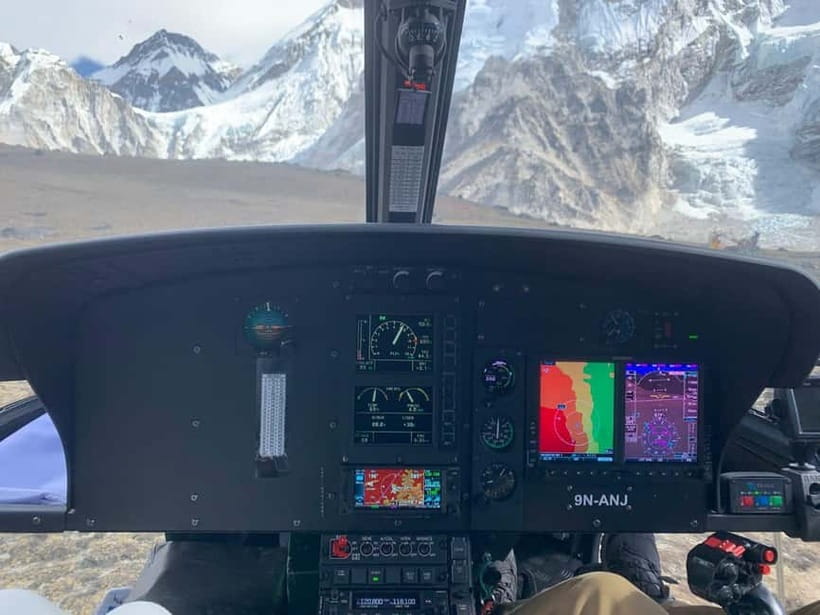
Your first helicopter segment is a commercial flight of about 50 minutes to Lukla Airport, shared with up to 5 other passengers. So yes, it’s shared, but not a cattle-car situation. You’re still close enough to see what’s happening outside your window, and you’re not stuck in a huge crowd.
On this leg, you’re looking for the big patterns: Himalayan ridgelines stepping down toward valleys, and glaciers cutting through the terrain like pale seams. The tour description also calls out mindblowing views of lakes and glaciers—this is where those show up first, before you reach the Everest-area viewpoints.
Then there’s a landing at Lukla for about 10–15 minutes. You’re not going to do a long walk here. Think of it as a breathing and photo moment, plus a chance to reset before the next helicopter hop.
A practical note: there’s no room for heavy luggage or large bags. Bring what you can comfortably carry and keep it warm. Even though you’re in a helicopter (fast and sheltered), the Everest region is cold, and you’ll want layers that you can actually live in for a couple of short stops.
Kalapatthar and Everest Views: Why 6,000 Meters Means Something
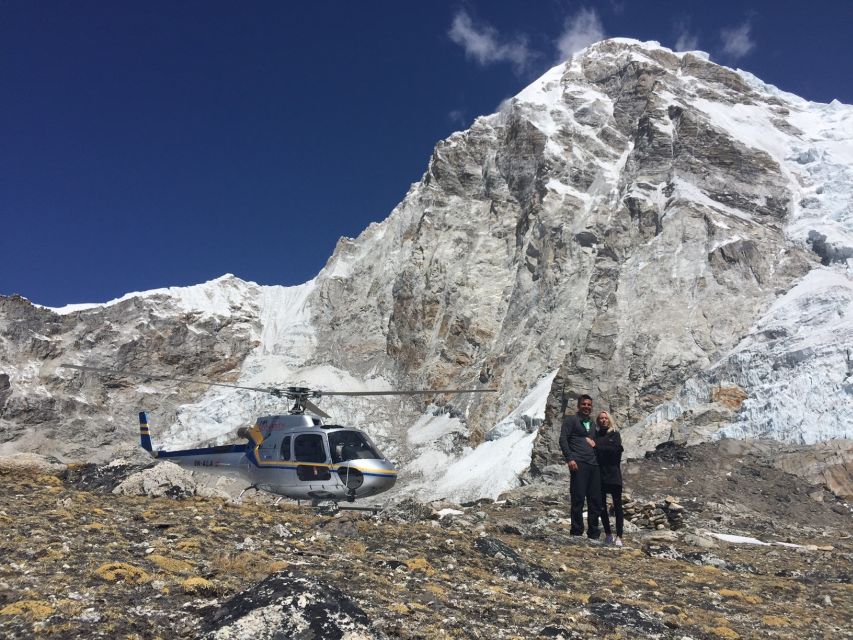
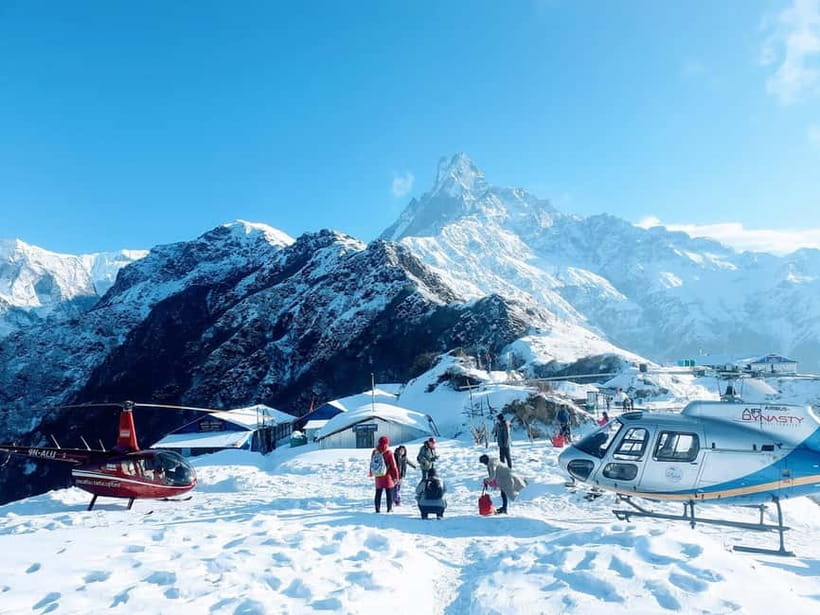
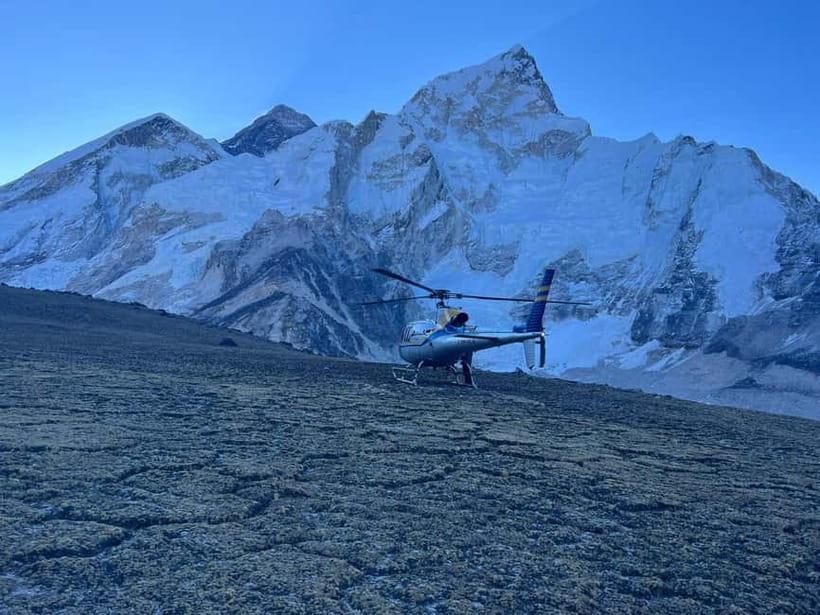
After Lukla, you fly about 30 minutes to the Kalapatthar area. Kalapatthar is famous because it offers a striking view angle onto the Everest Base Camp zone. In this tour’s plan, you fly over and make time for sightseeing and photos from up near the viewpoint, described as about 200 meters above Everest Base Camp.
Here’s what I think is the real value of this part: helicopter distance changes your relationship with the mountains. In trekking you earn altitude step by step. In a flight, you still get the payoff—just faster. From Kalapatthar elevation (the tour highlights best views from around 6,000 meters), your eyes can connect the dots between Everest, the Khumbu Glacier system, and the routes around Gorakshep and base camp.
You’ll also get a stretch described as about 25 minutes over the Everest region. That extra time in the air helps because Everest isn’t a single thing to look at—it’s a whole wall of terrain and angles. You want those seconds when clouds thin enough for the summit and neighboring ridges to show their shape. More flight time means more chances for that.
And because you’re not going down on foot, you won’t get that “breathless shuffle” feeling you get on the trail. Instead, your challenge is cold and concentration: keep your camera ready, keep an eye on the window clarity, and be prepared for fast transitions back into the schedule.
If you’re chasing a classic bucket-list moment—Everest in your frame—this is the centerpiece.
Fly-Over Highlights You’ll Actually Recognize From the Window
One reason this tour feels efficient is that it strings together several key Khumbu landmarks so you’re not just staring at snow. You fly over (and can see from above) colorful settlements like Namche Bazar, Pheriche, Tengboche Monastery, and Gorakshep.
Even if you’ve never been to the Khumbu before, these names help you understand what you’re seeing:
- Namche Bazar gives you the “human geography” of the region—settlement life squeezed into steep terrain.
- Pheriche and Gorakshep point you toward the higher trekking corridors, where the valley narrows and the mountains look closer.
- Tengboche Monastery adds a spiritual landmark element—set against a dramatic backdrop you can’t fake with a postcard.
The tour also includes an Everest fly-over that mentions Chola Pass and Gokyo. That’s a smart addition if you want more than one iconic peak. Gokyo-area terrain is visually distinct, and Chola Pass is one of those names that trekking folk bring up constantly. Seeing the area from above helps you understand why the routes exist in the first place.
One more practical detail: seating is described as all window seat. That matters because helicopter tours often sell “views,” but if you’re not on the side or your seat blocks sight lines, it’s a letdown. Here, the plan emphasizes window access, which is exactly what you want for photography.
Everest View Hotel at 3,880 Meters: Breakfast on the Open Terrace
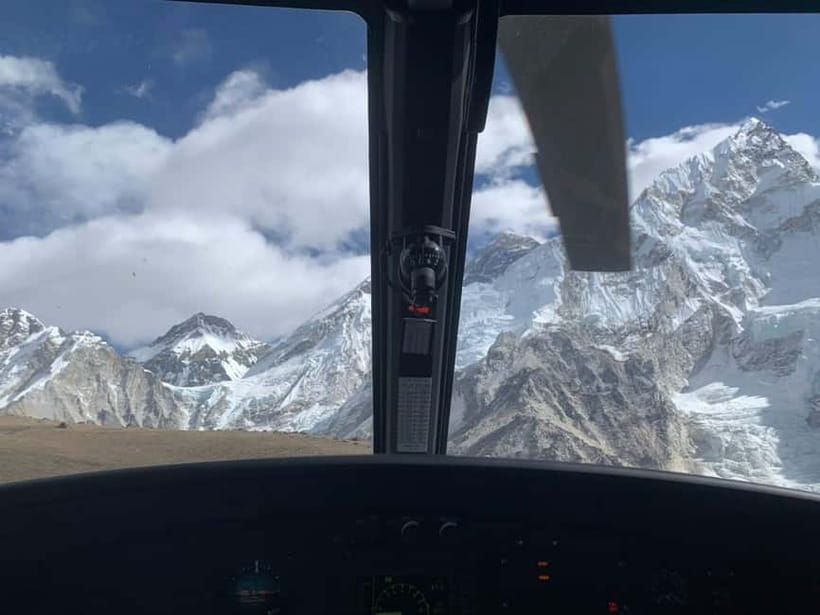
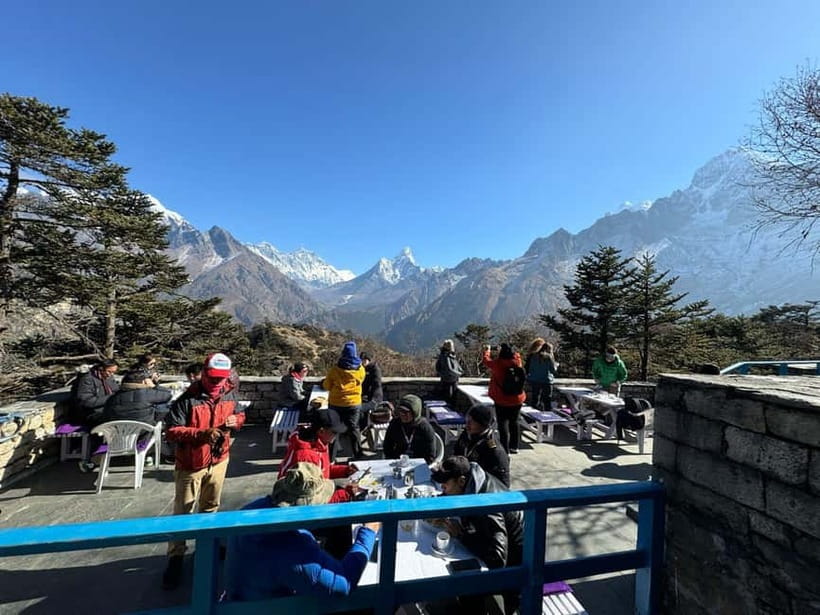
After the Everest-view segment, you glide about 12 minutes to Hotel Everest View at an elevation of 3,880 meters (Syangboche is also referenced as the area name). Landing here is one of the more relaxing parts of the day because the schedule stops being pure airborne time.
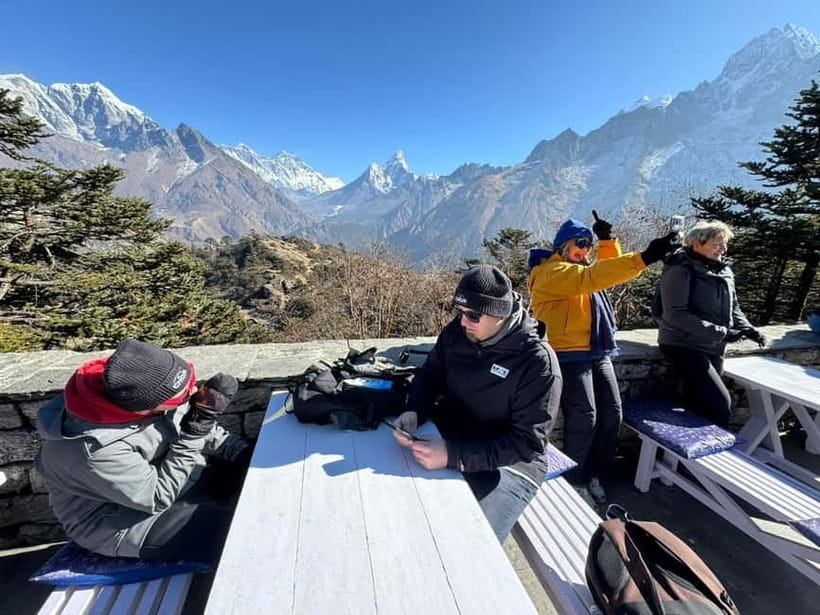
You then get about an hour at the hotel, including time for a guided component and free time for photos and sightseeing. The best part, if you like comfort even in cold places, is the meal moment: you sit on an open terrace for breakfast (or tea/coffee, depending on what you choose).
This is also where the tour earns its “easy” reputation. You’re not hauling snacks for altitude hikes or trying to find food after a long climb. You step into a scenic setting and take a break while the mountains stay in front of you.
What to watch for: cold + sun. At altitude, the light can be sharp. You’ll want sunglasses and a warm layer, even if the sky looks bright. If you’re the type who gets dry or chilled quickly, plan to spend a few minutes acclimating your body to the temperature difference as soon as you’re on the terrace.
There’s also a note in the pricing details that breakfast can be optional at a cost. So if you care about the specific meal (rather than just having a warm drink and time outdoors), budget for the optional breakfast listed.
The Return Flight: How You Stay Inside the 3–5 Hour Window
To keep the total duration around 3–5 hours, the itinerary cycles quickly. After your break at Hotel Everest View, the helicopter takes another flight (about 80 minutes) from HEV, Syangboche, to Lukla Airport and then onward to Kathmandu Airport.
That routing matters because it keeps the day efficient. You’re not stuck waiting in one place. You’re seeing multiple vantage zones and still getting back to the city the same morning.
When you return to Kathmandu, you get transferred back to your hotel. That’s a real convenience advantage over trying to DIY a flight arrangement. Instead of coordinating transport separately, you’re working inside one structured plan.
One more thing I’d emphasize: because timing is tight, you should keep your mind open to quick decisions and limited flexibility on the ground. This tour is about the experience overhead and the two scenic pauses (Kalapatthar area and Everest View Hotel), not slow pacing.
Price and Value: What $2,004 Buys You for an Everest Day
The price listed is $2,004 per person for a 3–5 hour experience. That’s a lot of money for a short window. But helicopter tourism has a simple math problem: you’re paying for altitude and time you can’t get any other way.
Here’s what you’re actually buying:
- Multiple major viewpoints: Everest fly-over, Kalapatthar-area views, and time at Everest View Hotel.
- A guided context layer: English host/greeter and English audio guide.
- Comfort basics: oxygen cylinder in the helicopter for emergency situations and life insurance during the flight (provided by aviation).
- Convenience: round-trip transfers between your hotel and the Kathmandu domestic airport.
What you still need to budget for:
- National park/airport fees listed as 6,000 NPR per person or 50 USD in cash.
- Optional breakfast listed at 30 USD per person or 4,200 NPR.
So the “value” question becomes: do you want the Everest region in hours instead of days? If you’re short on time, this is one of the few ways to compress an Everest-style view into a half-day. If you’re price-sensitive or you prefer slow travel, trekking will always cost less money in many cases—though you’ll pay with time and effort instead.
In plain terms, I see this as a high-ticket way to buy visibility. If your priority is getting your eyes on Everest from a strong angle, the price can make sense.
What to Bring, What’s Not Allowed, and Weather Reality
Pack like it’s cold. Bring warm clothing and comfortable shoes. You’ll be outside for photo moments and terrace time, and altitude adds a chill that you can feel even without hiking hard.
Also note what’s not allowed: no luggage or large bags, and no smoking. Keep it simple. If you’re bringing a camera, bring something you can secure quickly so you’re not fumbling with zippers at the wrong moment.
Weather is the real wildcard. The activity is subject to flying conditions. If flying conditions are unsuitable, it may be rescheduled for the next day or you may request a refund. Airport transfer costs may be deducted in those situations. That means you should have at least some buffer in your Kathmandu schedule if possible, or be ready for Plan B.
Finally, this tour isn’t suitable for wheelchair users, based on the information provided. The helicopter and moving parts of the day require mobility.
Should You Book This Everest Base Camp Helicopter Tour?
Book it if you want a fast, scenic Everest day with real viewpoint time—especially if Kalapatthar and the Khumbu Glacier area are on your mental checklist. This tour is built for big views: fly-overs of key Khumbu locations, a high viewpoint moment described near Kalapatthar, and a warm break at Everest View Hotel at 3,880 meters.
Skip or think twice if you need a slow pace, hate schedule intensity, or can’t tolerate weather risk. Also, if you’re expecting a lot of walking time on the ground, know that the day is designed around flight segments and short stops.
One last nudge: triple-check what you plan to spend on the optional meal and park/airport fees so you don’t get surprised at the last step. With that sorted, you’re set up for a memorable, high-altitude experience that stays inside a half-day window.
FAQ
How long is the Everest Base Camp landing helicopter tour?
The duration is listed as 3–5 hours.
What time is pickup in Kathmandu?
Pickup is described as an early 6 AM pickup from your hotel in Kathmandu, with pickup also available in Bhaktapur and Lalitpur.
Are transfers included?
Yes. Round trip transfer between Kathmandu domestic airport and your hotel is included.
Is breakfast included?
You’ll have time at Hotel Everest View for breakfast or tea/coffee. The optional breakfast cost is listed as 30 USD per person (or 4,200 NPR), so you may need to pay if you want the full breakfast.
What fees might I need to pay in cash?
National park/airport fees are listed as 6,000 NPR per person or 50 USD in cash.
What happens if weather conditions are unsuitable for flying?
The activity is subject to weather. If conditions are unsuitable, it may be rescheduled for the next day or you may request a refund, and airport transfer costs may be deducted in those situations.